What Is an Oil Extraction Plant?
An oil extraction plant is an industrial facility that separates edible, essential, or industrial oils from plant materials such as seeds, nuts, and beans. It works by breaking down raw material cell structures — using mechanical pressure (screw presses or expellers) or chemical solvents (typically food-grade hexane) — to release and recover the oil trapped inside.
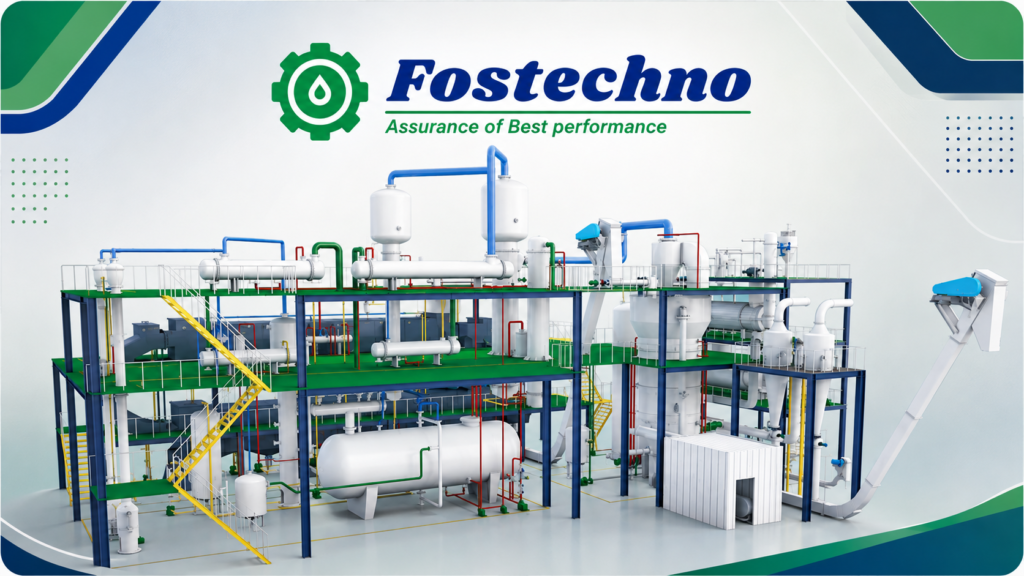
The output of an oil extraction plant is crude oil, which is later refined for cooking, cosmetics, pharmaceuticals, or biodiesel, along with a solid by-product called oilcake or meal, which is sold as high-protein animal feed.
In one sentence: an oil extraction plant converts raw oilseeds into usable crude oil and protein-rich meal through mechanical pressing, solvent extraction, or a combination of both.
Oil extraction plants exist at every scale — from small cold-press units producing a few hundred kilograms of oil per day to fully automated solvent extraction complexes processing 1,000+ metric tons of soybean, sunflower, or rapeseed daily.
Why Oil Extraction Plants Matter
Vegetable oil is one of the most traded agricultural commodities in the world, and demand is rising steadily across food, feed, cosmetics, biodiesel, and oleochemical industries. An oil extraction plant is the entry point of that entire value chain — it’s the first industrial step that turns a farm commodity (soybean, sunflower seed, groundnut, mustard, palm kernel, cottonseed, rice bran) into a tradable, storable, refinable product.
For entrepreneurs and agribusinesses, investing in an oil extraction plant matters because:
- It captures margin at the earliest, highest-volume stage of the oil value chain, rather than buying crude oil from someone else.
- It creates two revenue streams from one raw material — crude oil and oilcake/meal.
- It can be scaled from a small cold-press unit to a multi-hundred-ton-per-day solvent extraction complex as demand grows.
- It reduces dependency on imported refined oil in domestic markets, which is why many governments (India, several African and Southeast Asian nations) actively incentivize new plant setups.
The Two Core Extraction Methods
Every oil extraction plant, regardless of scale, is built around one of two extraction technologies — or a combination of both. Understanding the difference is the single most important decision point before designing a plant.
1. Mechanical Extraction (Expeller Pressing)
Mechanical extraction uses a screw press, also called an expeller, to physically squeeze oil out of conditioned seeds. The seed is fed into a rotating screw inside a barrel with a gradually narrowing pitch; as the screw compresses the material, pressure builds until oil is forced out through small slots in the barrel wall (the “cage”), while the compacted solid residue exits as oilcake.
There are two variants:
- Cold pressing — seeds are pressed at low temperature (below ~50°C) without pre-heating. This preserves natural flavor, color, and micronutrients, and is the standard method for premium and “virgin” oils such as cold-pressed olive, sesame, mustard, or coconut oil. Yield is lower (typically leaving 6–10% residual oil in the cake).
- Expeller (hot) pressing — seeds are cooked or conditioned with heat and moisture before pressing. Heat lowers the oil’s viscosity and breaks down cell walls further, increasing yield and throughput. Residual oil in the cake drops to roughly 4–6%, but flavor and some heat-sensitive nutrients are reduced.
Best suited for: smaller and mid-sized operations, cold-pressed/premium oil brands, oilseeds with naturally high oil content (sesame, groundnut, coconut, mustard, sunflower), and businesses that want lower upfront capital cost and simpler operation.
2. Solvent Extraction
Solvent extraction uses a chemical solvent — almost universally food-grade hexane — to dissolve oil out of pre-pressed or flaked seed material. The process is far more efficient at pulling oil out of low-oil-content seeds like soybean (typically only 18–20% oil by weight).
The seed flakes are passed through an extractor where hexane percolates through the material, dissolving the oil to form a solution called miscella (oil + solvent). The miscella is then distilled to separate the pure oil from the solvent, and the leftover solid material (now called de-oiled cake or meal) passes through a desolventizer-toaster to strip out residual hexane, making it safe for use as animal feed.
Solvent extraction typically pushes residual oil in the cake down to under 1%, compared to 4–10% with mechanical pressing alone — which is why nearly all large-scale soybean, rice bran, and cottonseed oil operations use this method.
Best suited for: large-scale industrial output, low-oil-content seeds (soybean, rice bran, cottonseed), and operations prioritizing maximum oil recovery over premium positioning.
3. The Hybrid Approach — Pre-Press Solvent Extraction
Most large modern plants don’t choose one method exclusively — they combine both. Seeds are first mechanically pre-pressed to remove the bulk of the oil (bringing residual oil down to roughly 15–20%), and the resulting press-cake is then sent through solvent extraction to recover the remaining oil. This hybrid model captures the speed advantage of mechanical pressing and the near-total recovery of solvent extraction, and it’s the standard configuration for high-oil-content seeds processed at industrial scale, such as sunflower and groundnut.
Key Stages of an Oil Extraction Plant — Step by Step
Regardless of scale or method, every oil extraction plant follows a broadly similar sequence. Here is the complete process, stage by stage.
Stage 1: Raw Material Receiving & Cleaning
Incoming seeds are weighed, sampled for moisture and oil content, and passed through cleaning equipment — magnetic separators, destoners, and vibrating screens — to remove stones, metal fragments, dust, and foreign plant matter. Clean feedstock is essential; even small amounts of contamination can damage downstream machinery and reduce oil quality.
Stage 2: Seed Preparation (Preparatory Section)
This stage conditions the seed so oil can be released efficiently:
- De-hulling/decortication — removing the outer husk or shell (common for sunflower, groundnut, cottonseed) to improve oil yield and cake quality.
- Cracking — breaking large seeds or nuts into smaller pieces.
- Conditioning/cooking — applying controlled heat and moisture to soften cell walls and denature enzymes, which improves both pressing efficiency and oil stability.
- Flaking — rolling conditioned seed into thin flakes (typically 0.3–0.4 mm), which dramatically increases surface area for either pressing or solvent penetration.
Stage 3: Mechanical Pressing (Expelling)
Prepared seed or flake is fed into the screw press. Crude oil is expelled and collected, while the compressed cake either becomes a final product (in expeller-only plants) or moves forward as pre-press cake for solvent extraction.
Stage 4: Solvent Extraction
Pre-press cake or oilseed flakes enter the extractor, where hexane dissolves the residual oil to form miscella, and the de-oiled solids continue toward desolventizing.
Stage 5: Miscella Distillation
The oil-solvent mixture (miscella) is heated in stages under vacuum to evaporate off the hexane, which is condensed and recycled back into the process. What remains is crude extracted oil.
Stage 6: Desolventizing, Toasting, Drying & Cooling (DTDC)
The de-oiled meal still contains residual hexane after extraction. It passes through a desolventizer-toaster, which uses steam to strip out remaining solvent while also improving the meal’s digestibility and nutritional value for animal feed use. The meal is then dried and cooled before bagging.
Stage 7: Crude Oil Filtration & Storage
Crude oil from either pressing or distillation is filtered to remove fine solid particles (“foots” or sediment) and pumped into storage tanks, ready either for sale as crude oil or for onward refining.
Stage 8: Refining (Optional but Common)
Many oil extraction plants add downstream refining to convert crude oil into a consumer-ready product:
- Degumming — removes phospholipids using water or acid.
- Neutralizing (alkali refining) — removes free fatty acids using caustic soda.
- Bleaching — removes color pigments using bleaching earth/activated clay.
- Deodorization — uses high-temperature steam distillation under vacuum to remove odor-causing volatile compounds, producing the clear, neutral-tasting oil sold in supermarkets.
- Winterization/dewaxing/fractionation — used for specific oils (like sunflower or palm) to remove waxes or separate solid and liquid fractions.
Oil Extraction Plant Equipment: Core Components
| Section | Key Equipment |
|---|---|
| Seed cleaning | Magnetic separator, destoner, vibrating screen, dryer |
| Seed preparation | Decorticator, cracking mill, conditioner/cooker, flaking mill |
| Mechanical pressing | Screw press/expeller, oil filter press |
| Solvent extraction | Rotary or loop-type extractor, miscella distillation column, evaporator |
| Desolventizing | Desolventizer-toaster (DT), meal cooler, meal grinder |
| Solvent recovery | Solvent recovery tower (mineral oil absorption system), condensers |
| Refining | Degumming/neutralizing tank, bleacher, deodorizer, dewaxing unit |
| Utilities | Boiler, steam generator, effluent treatment plant, cooling towers, air compressors |
| Storage & packaging | Oil storage tanks, meal storage silos, bottling/bagging lines |
A turnkey plant supplier typically bundles all of the above into a single engineered package, along with piping, electricals, automation/PLC controls, and civil layout drawings.
Oil Yield by Seed Type
Yield potential is one of the most important — and most searched — data points buyers want before investing. Approximate oil content (and therefore extractable yield, accounting for process losses) by common feedstock:
| Oilseed | Typical Oil Content | Recommended Method |
|---|---|---|
| Soybean | 18–20% | Solvent extraction |
| Sunflower seed | 38–48% | Pre-press + solvent |
| Groundnut (peanut) | 45–50% | Mechanical press or pre-press + solvent |
| Mustard/rapeseed/canola | 38–45% | Mechanical press or pre-press + solvent |
| Cottonseed | 15–20% | Solvent extraction |
| Sesame | 48–55% | Cold/mechanical press |
| Coconut (copra) | 60–65% | Mechanical press |
| Palm kernel | 44–50% | Mechanical press + solvent |
| Rice bran | 15–20% | Solvent extraction (time-sensitive — must be stabilized quickly) |
| Corn germ | 18–24% | Pre-press + solvent |
Low-oil-content seeds (soybean, cottonseed, rice bran) almost always require solvent extraction to be economically viable, since mechanical pressing alone would leave too much recoverable oil behind. High-oil-content seeds (sesame, coconut, groundnut) can be profitably processed with mechanical pressing alone, especially at smaller scale.
Cost of Setting Up an Oil Extraction Plant
Setup cost is driven primarily by capacity, extraction method, and level of automation. As a general guide:
- Small mechanical expeller unit (1–10 TPD): Lower six-figure to low seven-figure investment (USD), suited to cold-press/artisanal oil brands and rural agro-processing.
- Medium pre-press + solvent extraction plant (50–200 TPD): Typically in the range of USD 600,000–1.8 million depending on country, automation level, and civil infrastructure.
- Large industrial solvent extraction complex (500+ TPD): Multi-million-dollar investment, usually developed as a full turnkey EPC (engineering, procurement, construction) project.
Cost Components to Budget For
- Land and civil infrastructure — site development, factory building, storage, effluent treatment.
- Machinery and equipment — usually the single largest line item; scales with capacity and automation.
- Installation and commissioning — transportation, erection, testing.
- Utilities — boiler, power supply, water treatment.
- Labor and operational costs — skilled operators, energy, raw material working capital.
- Regulatory compliance and licensing — food safety, environmental clearances, factory licenses (varies significantly by country).
- Maintenance and spares — often structured as an annual maintenance contract (AMC) with the equipment supplier.
Buyers should always request a line-item quotation from suppliers rather than a lump-sum figure — this makes it possible to compare turnkey vendors apples-to-apples and identify where costs can be phased (e.g., starting with mechanical pressing and adding solvent extraction later as volumes grow).
Mechanical Expeller vs. Solvent Extraction: Which Should You Choose?
| Factor | Mechanical Expeller Plant | Solvent Extraction Plant |
|---|---|---|
| Initial investment | Lower | Higher |
| Best seed types | High oil content (sesame, groundnut, coconut) | Low oil content (soybean, cottonseed, rice bran) |
| Oil recovery | 85–92% of available oil | 97–99% of available oil |
| Residual oil in cake | 4–10% | Under 1% |
| Operational complexity | Simple, minimal utilities | Requires solvent handling, fire-safety systems, skilled operators |
| Product positioning | Cold-pressed/premium/natural | Refined, commodity-grade |
| Typical scale | Small to mid-size | Mid to large industrial |
| Regulatory burden | Lower | Higher (hexane handling, explosion-proof electricals, environmental permits) |
Rule of thumb: if you’re entering the market with limited capital, targeting a premium “cold-pressed” or “natural” positioning, or working with high-oil-content seeds, start with a mechanical expeller plant. If you’re processing high volumes of soybean or similarly low-oil seeds for a commodity market, solvent extraction (or pre-press + solvent) is the only economically viable route.
Turnkey vs. Modular Equipment Sourcing
Buyers generally choose between two procurement models:
- Turnkey project execution: A single EPC contractor handles design, equipment supply, civil work, installation, commissioning, and staff training, delivering a plant that’s ready to run. This reduces coordination risk and is common for first-time investors or large-scale projects.
- Modular/equipment-only sourcing: The buyer purchases individual machines (press, extractor, filtration, etc.) from one or multiple suppliers and manages installation and integration independently — often chosen by experienced operators who already have technical staff and want to control costs more tightly.
For most new entrants, a turnkey approach is safer despite the modest premium, because it shifts performance-guarantee risk onto the contractor and shortens time-to-production.
Applications of Extracted Oil
Oil extraction plants don’t only serve the cooking oil market. Extracted and refined oils feed into:
- Food industry — cooking oils, margarine, shortening, mayonnaise, bakery fats.
- Feed industry — de-oiled cake/meal is a primary protein source in poultry, cattle, and aquaculture feed.
- Cosmetics and personal care — carrier oils, soaps, lotions (especially cold-pressed coconut, sesame, and castor oil).
- Pharmaceuticals — excipients and specialty oils.
- Biodiesel and renewable fuel — crude and used oils are transesterified into biodiesel.
- Oleochemicals — fatty acids, glycerin, and soap noodles derived from processed oils.
This multi-industry demand is a key reason oil extraction remains one of the most resilient agro-processing investments globally.
Environmental and Safety Considerations
Because solvent extraction involves flammable hexane, plants must be designed with explosion-proof electricals, nitrogen blanketing in sensitive areas, proper ventilation, and strict fire-safety protocols. Solvent recovery systems aren’t optional extras — they’re both an economic necessity (hexane is expensive to keep replacing) and a regulatory requirement in virtually every jurisdiction.
On the sustainability side, modern plants increasingly incorporate:
- Effluent treatment plants (ETPs) to manage wastewater from degumming and refining.
- Energy-efficient boilers and heat-recovery systems to cut fuel consumption.
- Solvent-loss minimization systems to reduce both cost and emissions.
- Waste-to-value systems that convert soap stock, spent bleaching earth, and gums into secondary saleable products.
Regulators in most major oil-producing countries (India, the US, EU member states, Malaysia, Indonesia) now require environmental clearance and periodic emissions/effluent testing before and during plant operation.
How to Choose an Oil Extraction Plant Manufacturer
When evaluating turnkey suppliers or equipment manufacturers, assess:
- Track record and installed base — number of plants commissioned and in which countries; ask for references you can actually contact.
- Process guarantees — will the supplier commit, in writing, to specific yield and throughput numbers?
- After-sales support — availability of spare parts, service response time, and annual maintenance contract options.
- Customization capability — can the supplier adapt the plant design to your specific seed type, capacity, and local utility conditions?
- Compliance credentials — certifications relevant to food safety (FSSC 22000, ISO 22000) and industrial safety standards.
- Total cost transparency — a supplier who provides a clear, itemized cost breakdown (machinery, civil, installation, commissioning) rather than a vague lump sum is generally more trustworthy.
Common Mistakes First-Time Investors Make
Even experienced agribusiness operators run into avoidable problems when commissioning their first oil extraction plant. Watching out for these can save both capital and years of underperformance:
Under-sizing the seed preparation section. Buyers often focus their budget on the press or extractor and treat cleaning, decortication, and conditioning equipment as an afterthought. In practice, poor seed preparation is the single biggest cause of low yield and frequent breakdowns — undersized preparatory equipment becomes the bottleneck that limits the entire plant’s throughput, no matter how capable the extractor is.
Choosing solvent extraction before volumes justify it. Solvent extraction plants carry higher fixed costs, stricter compliance requirements, and more complex operations. Businesses that commit to a large solvent plant before securing consistent raw material supply and offtake often find themselves running well below capacity, which erodes the very cost advantage solvent extraction is supposed to deliver.
Ignoring solvent recovery efficiency. Because hexane is a recurring operational cost, a plant with a poorly designed solvent recovery system will bleed money every single production day through solvent loss, even if the extraction efficiency numbers look good on paper. Always ask suppliers for guaranteed solvent-loss figures (expressed in liters or kg of hexane per ton of seed processed), not just oil-yield figures.
Skipping effluent and utility planning. Refining stages (degumming, neutralizing, bleaching) generate wastewater and by-products that require proper treatment. Plants that don’t budget for an effluent treatment plant from day one frequently face regulatory shutdowns or expensive retrofits later.
Underestimating working capital needs. The plant itself is only part of the investment. Buying enough raw seed to run at efficient capacity, along with storage for both raw material and finished oil, ties up significant working capital that’s easy to underestimate when budgeting focuses only on machinery cost.
Not negotiating performance guarantees. A credible supplier should be willing to commit, contractually, to specific throughput and yield numbers under defined raw-material conditions. Buyers who skip this step have no recourse if the delivered plant underperforms its marketed specifications.
Operational Efficiency: What Determines Long-Term Profitability
Once a plant is running, day-to-day profitability comes down to a handful of controllable variables:
- Raw material quality and consistency — seeds with stable moisture content and oil percentage produce more predictable yields and fewer processing upsets than mixed or poorly stored feedstock.
- Uptime and maintenance discipline — scheduled maintenance on presses, extractors, and boilers prevents the unplanned downtime that’s the biggest single drag on annual output in most plants.
- Energy efficiency — steam and power typically represent a large share of operating cost; heat-recovery systems and well-maintained boilers materially affect margins at scale.
- By-product realization — plants that actively market oilcake/meal, spent bleaching earth, and soap stock as saleable by-products, rather than treating them as waste, add meaningful incremental revenue.
- Automation level — PLC-controlled plants reduce labor dependency and human-error-driven yield loss, though the payback period depends on local labor costs and plant scale.
Tracking these metrics from day one — not just installed capacity — is what separates plants that hit their projected ROI from those that quietly underperform for years without anyone identifying why.
Frequently Asked Questions
What is an oil extraction plant used for?
An oil extraction plant separates crude oil from oilseeds, nuts, or beans for use in food, animal feed, cosmetics, pharmaceuticals, and biodiesel production.
What is the difference between mechanical and solvent oil extraction?
Mechanical extraction physically presses oil out of seeds using a screw press, while solvent extraction uses a chemical solvent (typically hexane) to dissolve and recover oil, achieving much higher yield, especially from low-oil-content seeds.
Which oilseeds require solvent extraction?
Low-oil-content seeds such as soybean, cottonseed, and rice bran require solvent extraction because mechanical pressing alone leaves too much recoverable oil in the cake to be economically efficient.
How much does it cost to set up an oil extraction plant?
Cost ranges from roughly USD 100,000–300,000 for a small mechanical expeller unit to USD 600,000–1.8 million for a mid-sized pre-press and solvent extraction plant, and several million dollars for large industrial complexes, depending on capacity, automation, and location.
Is solvent extraction safe?
Yes, when the plant is engineered to standard — with explosion-proof electricals, solvent recovery systems, and proper ventilation — solvent extraction is a well-established, regulated industrial process used globally for the majority of commodity vegetable oil production.
What is done with the leftover oilcake or meal?
Oilcake/meal, the solid residue left after oil extraction, is a high-protein by-product sold primarily as animal feed for poultry, cattle, and aquaculture.
What is a turnkey oil extraction plant?
A turnkey oil extraction plant is a complete project delivered by a single contractor — covering design, equipment supply, installation, commissioning, and staff training — so the buyer receives a fully operational, ready-to-run facility.
Conclusion
An oil extraction plant is far more than a single machine — it’s an engineered system spanning seed preparation, extraction (mechanical, solvent, or both), solvent recovery, and optional refining, all sized and configured around your target seed type, capacity, and market positioning. The right choice between mechanical pressing and solvent extraction comes down to oil content in your feedstock, target yield, capital availability, and whether you’re building a premium cold-pressed brand or a high-volume commodity operation. Whichever path you choose, working with a manufacturer that provides transparent cost breakdowns, documented yield guarantees, and strong after-sales support will determine whether your plant delivers consistent returns for decades — not just years.
Oil Extraction Plant
Oil Extraction Plant
Oil Extraction Plant
Oil Extraction Plant
Oil Extraction Plant
Oil Extraction Plant
Oil Extraction Plant
Oil Extraction Plant
Oil Extraction Plant
Oil Extraction Plant
Oil Extraction Plant
Oil Extraction Plant



Leave a Reply