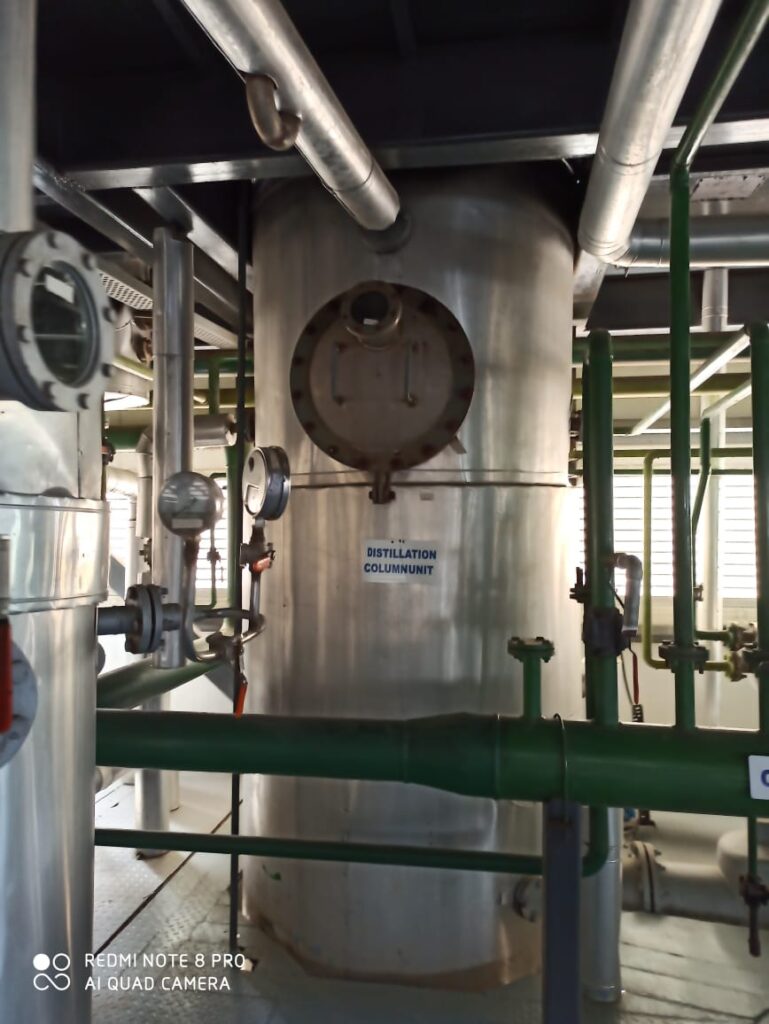
Fatty Acid Distillation Plant: The Complete Guide (2026)
If you are exploring the oleochemical business, sourcing raw materials for soap and cosmetics manufacturing, or planning to set up your own processing facility, understanding how a fatty acid distillation plant works is essential. This guide breaks down the entire process in plain, easy-to-understand language — what the plant does, how it is built, what equipment goes into it, and why it matters so much to industries ranging from soap-making to pharmaceuticals.
By the end of this article, you will have a clear, practical understanding of fatty acid distillation, fractionation, and the broader oleochemical ecosystem it belongs to.
What Is a Fatty Acid Distillation Plant?
A fatty acid distillation plant is an industrial facility that purifies crude fatty acids into high-quality, commercially usable oleochemical products. The crude fatty acids used as feedstock typically come from a fat-splitting or hydrolysis process, in which natural fats and oils are broken down using heat, pressure, and water (sometimes with a catalyst) into two streams: fatty acids and glycerine.
The fatty acids produced through splitting are not yet ready for industrial use. They are considered “crude” because they still contain a mix of unwanted components — glycerides, oligomers, oxidation products, moisture, and color- and odor-causing compounds. Depending on the feedstock and splitting conditions, crude fatty acid can contain anywhere from a small percentage up to several percent of these residual impurities. This is exactly the gap that a distillation plant is built to close.
Distillation works on a very simple scientific principle: different substances boil and vaporize at different temperatures and pressures. Fatty acids, glycerides, and the various contaminants in the crude mixture each have their own vapor pressure characteristics. By carefully controlling temperature and applying a strong vacuum, a distillation plant selectively vaporizes the fatty acid fraction, leaving behind the heavier residues and pulling away the lighter unwanted fractions — resulting in a clean, light-colored, low-residue fatty acid product.
Most fatty acid distillation plants operate somewhere in the range of 160°C to 250°C, under a deep vacuum of roughly 2 to 20 millibars. This combination of high temperature and low pressure is deliberate: fatty acids are naturally prone to heat-induced oxidation, discoloration, and corrosion-related degradation, so operating under vacuum allows the fatty acids to vaporize at a much lower effective temperature than they would at atmospheric pressure. This protects the product quality while keeping residence time inside the hot zone as short as possible.
Why Crude Fatty Acid Cannot Be Used Directly
For manufacturers in soap-making, cosmetics, rubber, lubricants, or specialty chemicals, raw material consistency is everything. Crude fatty acid straight out of a splitting plant has an unpredictable color, a strong odor, and a variable composition — none of which are acceptable for premium or even mid-tier finished products.
Distillation solves this by removing the low-boiling and high-boiling impurities together with the odor-causing bodies, yielding a fatty acid that is lighter in color, more consistent in composition, and suitable for direct use in downstream manufacturing. This is why almost every serious oleochemical producer — whether they are making industrial soap, stearic acid derivatives, or cosmetic-grade oleic acid — depends on distilled, not crude, fatty acid as their core input.
From a business standpoint, owning a distillation plant also means better control over cost and supply. Instead of purchasing already-refined fatty acid at a premium, a manufacturer can buy cheaper crude fatty acid or residue streams like PFAD and refine them in-house, capturing the margin that would otherwise go to a third-party processor.
The Three Core Sections of a Fatty Acid Distillation Plant
Regardless of scale, almost every fatty acid distillation plant is structured around three main process sections: de-gasification, the pre-cut system, and the main distillation system. Each of these plays a distinct role in taking crude fatty acid from its raw state to a purified, market-ready product.
1. De-Gasification / De-Aeration
The process begins with de-aeration. Crude fatty acid is first filtered to remove solid particles and debris, then preheated and passed through a vacuum stage that strips out dissolved moisture and gases.
This step is more important than it might seem. If moisture or trapped gases are carried forward into the high-temperature distillation stages, they can cause foaming, unstable vacuum conditions, pressure fluctuations, and even accelerated corrosion of downstream equipment. A properly designed de-aeration section keeps the rest of the process stable and predictable.
2. Pre-Cut Column
After de-aeration, the material is heated further in a heat exchanger and fed into a pre-cut column. Here, the lighter, low-molecular-weight fatty acid fractions are separated out early. These light fractions, if left in the mixture, tend to degrade color and odor quality in the final distilled product.
The pre-cut stage essentially acts as a protective filter for the main distillation column downstream — by removing the most volatile, easily-degraded components first, it allows the main column to run more efficiently and produce a cleaner final cut.
3. Main Distillation Column
This is where the bulk of the purification happens. The fatty acid stream is vaporized and then condensed, separating the purified fatty acid from the heavier residues — often referred to as “pitch” or “still bottoms” — which contain concentrated impurities, polymerized material, and any fatty acid that didn’t fully vaporize.
The residue is not necessarily wasted. In many plants, it is either used in lower-grade applications or re-hydrolyzed and redistilled in batches to recover additional usable fatty acid, improving overall yield and reducing waste.
If the goal is to produce narrow, specific fatty acid cuts — for example, isolating the C12–C14 chain-length range for lauric acid-rich products, or C16–C18 for stearic and oleic acid products — the plant uses fractional distillation instead of simple straight distillation. Fractionation columns are built with structured packing that allows for much sharper separation between fatty acids with closely spaced boiling points, letting the plant produce several distinct fractions from a single feedstock based on their differing vapor pressures.
Fractionation and Deodorization: Going Beyond Basic Purity
For many industrial applications, straight distillation is enough. But when a customer needs pharmaceutical-grade, food-grade, or premium cosmetic-grade fatty acid, additional refinement steps are often layered in.
Fractionation, as described above, allows a plant to isolate individual fatty acid chain lengths rather than producing a blended distillate. This lets manufacturers target specific commercial products — pure stearic acid, pure oleic acid, or pure lauric acid — instead of a general-purpose mixture.
Deodorization is a complementary step focused specifically on removing any remaining trace odor and oxidation-related compounds, using controlled steam stripping under vacuum. Combined, fractionation and deodorization ensure that oligomers, glycerides, and oxidation byproducts are reduced to the lowest possible levels, which is critical when the end product will be used in skincare, personal care, or other sensitive applications where smell, color, and purity are non-negotiable.
Key Equipment Inside a Fatty Acid Distillation Plant
Understanding the equipment helps clarify why these plants require specialized engineering rather than generic industrial fabrication.
Heat Exchangers raise the crude fatty acid to the required process temperature before it enters the distillation columns. Efficient heat recovery systems — often using the heat generated during condensation to preheat incoming feed — help reduce overall energy consumption, which is one of the biggest operating costs in a distillation plant.
Reboilers sit at the base of the distillation column and continuously generate vapor by heating the liquid fatty acid, sustaining the separation process.
Condensers convert the vaporized, purified fatty acid back into liquid form. Condensation can happen either inside the tower over structured packing, with an external cooling loop, or in separate shell-and-tube condensers outside the tower — and in well-designed plants, the heat released during condensation is often recovered to generate low-pressure steam elsewhere in the process.
Vacuum Systems, including vacuum pumps and steam ejectors, are the backbone of the entire plant, since the whole process depends on maintaining a consistent deep vacuum. Any instability here directly affects product quality and yield.
Distillation Columns with Structured Packing are the towers where the actual separation occurs. The packing increases the surface area available for vapor-liquid contact, improving separation efficiency and allowing the fatty acid to be distilled at the lowest possible temperature — which is exactly what protects it from thermal degradation.
Because fatty acids become highly corrosive at elevated temperatures, all the critical wetted components — columns, packing, heat exchangers, and reboilers — are typically fabricated from corrosion-resistant materials such as Stainless Steel 316L or duplex alloys. Cutting corners on metallurgy here is one of the most common and costly mistakes new plant owners make, since it leads to premature equipment failure, frequent shutdowns, and ballooning maintenance costs.
Straight Distillation vs. Fractional Distillation
It’s worth clarifying the difference between these two related but distinct processes, since the terms are often used loosely.
Straight distillation separates fatty acids from impurities as a group, producing a distillate that still contains a broad mix of fatty acid chain lengths — useful for general industrial applications like standard soap-making, where an exact chain-length profile isn’t critical.
Fractional distillation goes a step further, using multiple columns or advanced packing configurations to separate that distillate into narrower, more precise chain-length cuts. This is the process behind producing individually marketable fatty acids like lauric acid, myristic acid, palmitic acid, stearic acid, and oleic acid as distinct commercial products, each commanding different pricing and serving different downstream industries.
The Bigger Picture: Splitting Plant, Distillation Plant, and Glycerine Recovery
It’s a common misconception that a “fatty acid distillation plant” is a standalone unit. In practice, within the oleochemical industry, a full-scale operation is really a combined fatty acid and glycerine facility. This is because splitting (hydrolysis) — the process that reacts fat or oil with steam and water to produce crude fatty acid — simultaneously generates glycerine dissolved in water, known as “sweet water.”
A complete plant setup, therefore, often includes: feedstock pretreatment, the splitting/hydrolysis unit itself, straight distillation, fractional distillation, sweet water treatment and evaporation to recover glycerine, fractional crystallization for further fatty acid separation, hydrogenation (used when saturated fatty acids or fatty alcohols are the end goal), and finally glycerine distillation and refining to produce pharmaceutical or industrial-grade glycerine as a valuable co-product.
Understanding this bigger picture matters for anyone planning an investment, because the economics of the business often depend as much on efficient glycerine recovery as they do on fatty acid quality.
Palm Fatty Acid Distillate (PFAD): A Key Global Feedstock
One of the most widely used raw materials feeding into fatty acid distillation plants worldwide is Palm Fatty Acid Distillate, commonly known as PFAD. It’s important to understand that PFAD itself is not the crude fatty acid from a splitting plant — it’s a different kind of raw material, generated as a byproduct of physical (steam) refining of crude palm oil for food-grade use.
During the refining of crude palm oil into edible, food-grade palm oil, free fatty acids and other volatile, off-flavor compounds are removed from the oil through steam stripping at high temperature. These separated components condense into PFAD — a light brown to dark, waxy, semi-solid material at room temperature that melts into a liquid when heated (it typically solidifies below around 40°C, so it needs heated storage and transport).
PFAD is composed predominantly of free fatty acids, generally in the range of 70–95% depending on the source and refining conditions, with the remainder made up of glycerides, moisture, and trace components such as vitamin E (tocopherols and tocotrienols), squalene, and phytosterols. Its fatty acid profile is dominated by palmitic acid and oleic acid, since it originates from palm oil.
Because global palm oil production runs into tens of millions of tonnes annually, PFAD is generated in very large volumes — commonly cited at around 4-5% of crude palm oil throughput — making it one of the most abundant and cost-effective oleochemical feedstocks available internationally. It is used directly or after further distillation in soap and detergent manufacturing (where it contributes hardness, lathering, and cleansing properties), animal feed formulations, candle-making, biodiesel and renewable diesel production, and as a raw material for extracting value-added byproducts like vitamin E, squalene, and phytosterols for the nutraceutical and cosmetic industries.
A closely related material is Palm Kernel Fatty Acid Distillate (PKFAD), which comes from refining palm kernel oil rather than palm oil itself, and has a different fatty acid profile — richer in lauric and myristic acid — making it especially valuable as feedstock for producing lauric acid.
For companies setting up a distillation plant, PFAD and PKFAD represent attractive starting materials because of their wide availability, relatively low cost compared to virgin oils, and suitability for producing a broad range of finished oleochemical products.
The Main End Products: Stearic Acid, Oleic Acid, and Lauric Acid
After distillation and, where required, fractionation, a plant typically produces three commercially important fatty acids, each serving distinct industries.
Stearic Acid is a saturated fatty acid widely used in soap-making, candle manufacturing, rubber compounding (as a processing aid and activator), plastics, and cosmetics (where it acts as a thickener and emulsifier). Demand for stearic acid remains stable across both developed and emerging markets because of its broad industrial footprint.
Oleic Acid is an unsaturated, liquid fatty acid at room temperature, commonly used in cosmetics, personal care formulations, lubricants, and various specialty chemical applications. Its skin-compatible properties make it especially valued in the beauty and personal care industry.
Lauric Acid, sourced primarily from coconut oil, palm kernel oil, or PKFAD, is a key ingredient in soap and detergent manufacturing thanks to its strong foaming and cleansing characteristics, and is also used in cosmetics and certain food applications.
Beyond these three, distillation plants can also target myristic acid, palmitic acid, and various specialty fatty acid blends depending on market demand and feedstock availability.
The Role of Purification in Product Quality
Purification runs alongside distillation as a quality assurance layer, ensuring that no trace impurities — color bodies, residual odor compounds, or chemical residues — remain in the final product. This becomes especially critical for fatty acid destined for export markets or premium buyers, since international quality standards for cosmetic, pharmaceutical, and food-adjacent applications are typically far stricter than those for basic industrial soap-grade material.
A well-designed purification and distillation system doesn’t just meet a single specification — it gives a producer the flexibility to serve multiple market tiers from the same base feedstock, adjusting process parameters to hit different purity and color targets depending on the buyer.
What to Consider Before Setting Up Your Own Plant
If you’re seriously considering investing in a fatty acid distillation plant, a few factors deserve careful thought before you commit capital.
Raw material availability should be assessed first — is crude fatty acid, PFAD, PKFAD, or another suitable feedstock reliably available near your proposed plant location, and at what price and volume?
Plant capacity needs to match realistic demand projections. Oversizing ties up capital unnecessarily; undersizing limits your ability to capture larger contracts later.
Equipment metallurgy and design quality directly affect long-term reliability. As mentioned earlier, corrosion-resistant construction is not optional — it is the difference between a plant that runs reliably for decades and one that suffers constant unplanned downtime.
Energy efficiency is a major ongoing cost driver, since maintaining deep vacuum and high temperatures continuously consumes significant energy. Plants with well-designed heat recovery systems can substantially reduce this operating expense over time.
Downstream integration is also worth planning for — whether you intend to also recover and refine glycerine, add fractionation capability for premium products, or eventually add hydrogenation for fatty alcohol production, thinking through the full value chain early can shape a more profitable long-term plant design.
Conclusion
A fatty acid distillation plant is one of the most important building blocks of the modern oleochemical industry, transforming crude, inconsistent fatty acid into a refined, high-value raw material used across soap-making, cosmetics, rubber, lubricants, pharmaceuticals, and biofuels. With the right process design, the right corrosion-resistant equipment, and a solid understanding of feedstocks like PFAD and PKFAD, a well-engineered distillation plant can become a highly profitable and durable business investment.
If you’re planning to set up a new fatty acid distillation plant, upgrade an existing facility, or need expert guidance on plant design and equipment selection, reach out to our team.
Get in touch for plant setup and consultation: FOSTECHNOS.COM
Frequently Asked Questions (FAQs)
1. What temperature and pressure does a fatty acid distillation plant operate at?
Most fatty acid distillation plants run at temperatures between roughly 160°C and 250°C, under a deep vacuum of about 2 to 20 millibars. This combination lowers the effective boiling point of the fatty acids, allowing purification to happen without excessive thermal degradation.
2. What impurities does distillation remove from crude fatty acid?
Crude fatty acid coming from a splitting plant typically contains a few percent of glycerides, oligomers, and oxidation products, along with color and odor-causing compounds. Distillation separates these based on differing vapor pressures, leaving a lighter-colored, low-residue final product.
3. Can a distillation plant produce specific fatty acid fractions, like pure stearic or oleic acid?
Yes. By using fractional distillation with multiple columns and structured packing, a plant can isolate narrow chain-length cuts and produce distinct commercial products such as lauric acid, myristic acid, palmitic acid, stearic acid, and oleic acid, rather than a single blended distillate.
4. What happens to the residue left over after distillation?
The heavy residue, sometimes called pitch or still bottoms, still contains some fatty acid content. Depending on the plant’s design, this residue can either be used in lower-quality applications or re-hydrolyzed and redistilled in batches to recover additional fatty acid and improve overall yield.
5. What is PFAD, and how is it different from crude fatty acid from a splitting plant?
PFAD (Palm Fatty Acid Distillate) is a byproduct of physically refining crude palm oil into food-grade oil, generated when free fatty acids and other volatile compounds are steam-stripped from the oil. It’s a separate raw material stream from splitting-plant fatty acid, though both can be processed through fatty acid distillation. PFAD is typically 70–95% free fatty acids, mainly palmitic and oleic acid, with the remainder being glycerides, moisture, and minor components like vitamin E and squalene.
6. Why does PFAD need heated storage and transport?
PFAD solidifies below approximately 40°C, turning into a semi-solid, waxy material. To keep it pumpable and easy to handle, it needs heated storage tanks (typically 50–60°C) and heated tankers or ISO tanks during transport and logistics.
7. What industries use distilled fatty acids?
Distilled and fractionated fatty acids are used across a wide range of industries, including soap and detergent manufacturing, cosmetics and personal care, candle-making, rubber compounding, lubricants, paints and coatings, animal feed, and biodiesel or renewable fuel production.
8. Why is stainless steel or duplex alloy construction important for this equipment?
Fatty acids become highly corrosive at the elevated temperatures used in distillation. Standard carbon steel would corrode quickly under these conditions, leading to equipment failure, contamination, and expensive downtime. Stainless Steel 316L or duplex alloys resist this corrosion and are standard for columns, packing, heat exchangers, and reboilers in this industry.
9. Is a fatty acid distillation plant the same as a fat-splitting plant?
No, though the two are closely linked. A splitting (hydrolysis) plant breaks fats and oils into crude fatty acid and glycerine using steam and water. A distillation plant then purifies that crude fatty acid. Many full-scale oleochemical facilities combine both, along with glycerine recovery and refining, into a single integrated operation.
10. Can PFAD be used for aviation biofuel (SAF)?
In several jurisdictions, including the EU’s ReFuelEU Aviation regulation, PFAD and other palm oil derivatives have specifically been excluded from eligible feedstocks for Sustainable Aviation Fuel due to deforestation and indirect land-use-change concerns, even though PFAD can still be used for other biodiesel and renewable diesel applications under separate land-transport mandates. Regulations vary by region, so it’s important to check current local rules before planning a biofuel-focused project.
11. What factors should I evaluate before investing in a fatty acid distillation plant?
Key factors include reliable access to feedstock (crude fatty acid, PFAD, or PKFAD) at a workable cost and volume, realistic plant capacity sizing based on demand, corrosion-resistant equipment construction, energy-efficient design with heat recovery, and a clear plan for how much of the value chain — including glycerine recovery or fractionation — you want to integrate.
12. How is lauric acid different from stearic and oleic acid in terms of sourcing?
Lauric acid is primarily derived from coconut oil, palm kernel oil, or Palm Kernel Fatty Acid Distillate (PKFAD), which has a fatty acid profile distinct from palm oil-based PFAD. Stearic and oleic acid, by contrast, are more commonly associated with palm oil, tallow, and other vegetable oil sources rich in longer-chain fatty acids.
Planning to set up or upgrade a fatty acid distillation plant? Talk to our engineering team at FOSTECHNOS.COM for complete plant design, equipment selection, and installation support.


