Edible oil is one of the most consistently demanded food products in the world. Every household, restaurant, and food manufacturer needs it, and that demand does not slow down with the economy. This is exactly why so many entrepreneurs and existing food businesses look seriously at setting up an edible oil processing plant as a long-term investment.
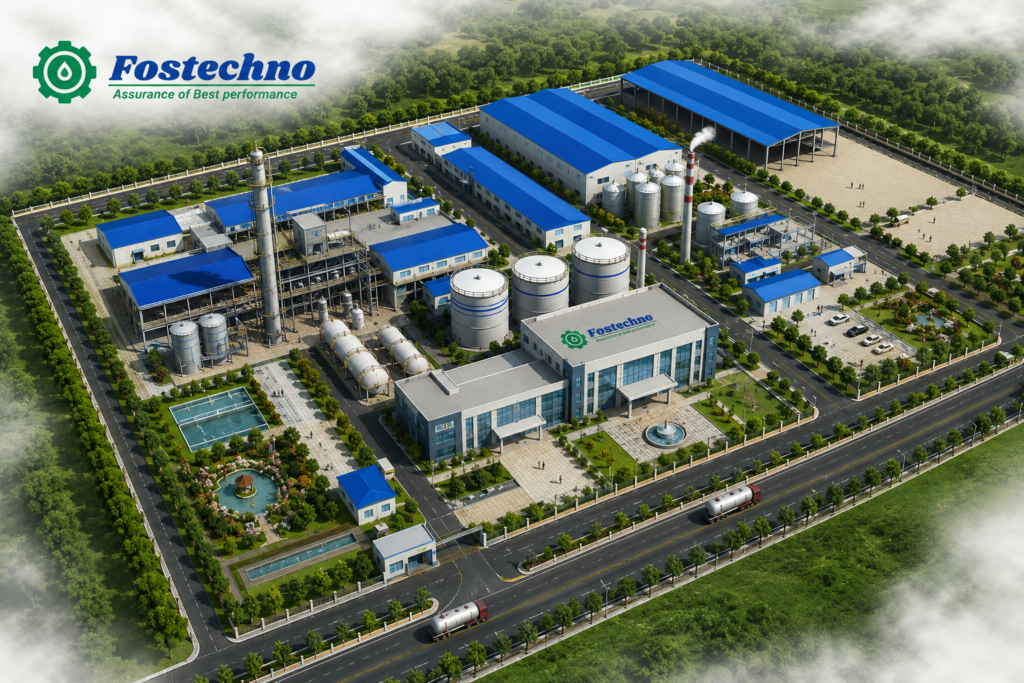
But an edible oil processing plant is not a simple purchase. It’s an engineering project that involves raw material selection, machinery, refining technology, utilities, layout, and automation — all working together to produce a consistent, safe, and market-ready product.
This guide walks through everything a business owner needs to understand before starting: how the process works, what machinery is involved, how capacity is decided, what affects project cost, and how to choose the right manufacturing partner. Whether you are planning a small unit to serve a local market or a large industrial facility for export, the fundamentals covered here apply globally.
What Is an Edible Oil Processing Plant?
An edible oil processing plant is a facility designed to convert raw oilseeds or oil-bearing materials into refined, consumable oil. It typically combines two broad functions: oil extraction (separating crude oil from the seed) and oil refining (purifying that crude oil into a clear, stable, food-grade product).
Some plants are built purely for extraction, supplying crude oil to third-party refiners. Others are integrated facilities that handle the entire journey — from raw seed intake to bottled, packaged oil ready for retail or export. The right setup depends on the business model, available raw material, and target customer.
At its core, every edible oil processing plant exists to do one thing well: extract the maximum usable oil from a seed while preserving quality, and then refine that oil to meet food safety and consumer expectations.
Edible Oil Processing Plant Process
While details vary by oilseed and desired output, most edible oil processing plants follow a broadly similar sequence of stages:
- Seed cleaning – Removing dust, stones, metal fragments, and foreign material from the incoming raw seed.
- Seed preparation – Sizing and conditioning the seed so it responds well to the next stages.
- Dehulling/decortication – Removing the outer husk or shell where the seed type requires it, improving oil yield and meal quality.
- Crushing or flaking – Breaking down the seed structure to increase the surface area available for oil release.
- Cooking/conditioning – Applying controlled heat and moisture to make oil release easier during pressing.
- Mechanical oil extraction – Pressing the conditioned seed through an expeller to separate crude oil from the solid cake.
- Filtration – Removing solid particles from the freshly extracted crude oil.
- Oil storage – Holding filtered crude oil in tanks before it moves to refining.
- Oil refining – Treating crude oil to remove gums, free fatty acids, and other impurities.
- Bleaching – Removing color pigments and residual impurities using adsorbent clay under vacuum.
- Deodorization – Removing volatile compounds responsible for smell and taste defects, typically under high temperature and vacuum.
- Final filtration and storage – Polishing the finished oil and holding it in dedicated storage tanks.
- Filling and packaging – Filling the oil into bottles, pouches, tins, or bulk containers for distribution.
It’s worth repeating: the exact process flow, and which stages are needed, depends heavily on the oilseed being processed and the quality level the business wants to achieve. A plant designed for crude oil supply will look very different from one built for bottled, retail-ready refined oil.
Types of Oilseeds Processed in an Edible Oil Plant
Different oilseeds behave differently during extraction and refining, so machinery and process parameters are often tailored to the raw material. Some of the most common oilseeds processed in edible oil plants include:
- Mustard – Widely processed for its distinct flavor profile and high demand in South Asian markets.
- Soybean – One of the most traded oilseeds globally, often processed at large industrial scale.
- Sunflower – Popular for its light taste and high oleic variants used in premium segments.
- Groundnut/Peanut – Valued for a rich flavor and strong regional demand in several markets.
- Sesame – Typically processed at smaller scale for premium, high-value oil.
- Rapeseed/Canola – A major oilseed in temperate regions, processed for both food and industrial use.
- Cottonseed – A byproduct-driven oilseed, often processed alongside cotton ginning operations.
- Safflower – A niche but growing oilseed, valued for its oil profile.
- Coconut – Processed differently from most seed oils, often through wet or dry milling methods.
Each of these requires different cleaning, dehulling, pressing pressure, and refining parameters. A plant designed to handle one seed exclusively can be more efficient, while a multi-seed plant offers flexibility to adapt to raw material availability and market pricing shifts.
Major Machinery Used in an Edible Oil Processing Plant
Understanding what each machine does — not just its name — helps a business owner make informed decisions when evaluating manufacturers and project proposals.
| Machine | Function in the Process |
|---|---|
| Seed cleaner | Removes dust, chaff, and lightweight impurities from raw seed before processing. |
| Destoner | Separates stones and heavy foreign material that could damage downstream equipment. |
| Magnetic separator | Removes tramp metal to protect crushers, expellers, and other machinery. |
| Dehuller | Strips the outer husk from seeds that require it, improving oil yield and cake quality. |
| Cracker | Breaks seeds into smaller pieces to prepare them for flaking or direct pressing. |
| Flaker | Rolls cracked seed into thin flakes, increasing surface area for better oil release. |
| Cooker/conditioner | Applies heat and moisture to the flaked material, making oil extraction more efficient. |
| Oil expeller | Mechanically presses conditioned seed to separate crude oil from the solid cake. |
| Filter press | Removes fine solid particles from freshly pressed crude oil. |
| Oil pumps | Move oil safely between process stages and storage points. |
| Crude oil storage tanks | Hold filtered crude oil before it enters the refining line. |
| Neutralization system | Removes free fatty acids from crude oil using controlled chemical treatment. |
| Bleaching system | Removes color pigments and trace impurities using adsorbent bleaching earth. |
| Deodorizer | Removes odor and flavor compounds under high temperature and vacuum conditions. |
| Vacuum system | Supports bleaching and deodorization by maintaining the low-pressure environment these processes require. |
| Heat exchanger | Recovers and transfers heat efficiently between process stages, improving energy efficiency. |
| Finished oil storage tanks | Store refined, ready-to-package oil under conditions that preserve quality. |
| Filling and packaging equipment | Fills and seals oil into bottles, pouches, tins, or bulk containers for distribution. |
A well-designed edible oil processing plant is not just a collection of these machines — it’s an integrated system where each piece is sized and matched to the others so the entire line runs smoothly without bottlenecks.
Edible Oil Processing Plant Capacity
Plant capacity is one of the first decisions a business owner needs to make, and it shapes nearly every other choice in the project — machinery sizing, utility requirements, storage, land, and staffing.
Capacity is usually expressed in TPD (tonnes per day) of raw seed processed, or sometimes in terms of finished oil output. Broadly, plants fall into three categories:
- Small-scale plants – Suited to local or regional markets, limited raw material supply, or businesses testing demand before scaling up.
- Medium-scale plants – Suited to established businesses looking to serve a wider regional market or supply other processors and packers.
- Large industrial plants – Suited to businesses targeting national distribution, export markets, or integrated agribusiness operations with consistent raw material supply chains.
There is no universal “right” capacity. The correct choice depends on factors such as:
- Availability and consistency of raw material supply
- Target market size and demand
- Available capital and financing
- Number of operating hours and shifts planned
- Whether the plant will handle a single oilseed or multiple seeds
- Long-term growth and expansion plans
Because of this, machinery selection and plant configuration should always be worked out with an engineering partner based on the buyer’s specific feedstock, desired output, and operating plan — not selected off a generic template.
Edible Oil Processing Plant Cost
One of the most common questions from business owners is about cost. It’s important to understand upfront that there is no single, fixed price for an edible oil processing plant — the actual project cost depends entirely on the specific configuration a business needs. Several factors influence the final investment:
- Plant capacity – Higher throughput generally requires larger machinery and more infrastructure.
- Type of oilseed – Different seeds require different preparation and extraction equipment.
- Extraction technology – Mechanical pressing and solvent extraction have very different cost structures.
- Refining capacity – Whether the plant refines all of its own crude oil or only a portion of it.
- Automation level – Manual, semi-automatic, and fully automated systems carry different equipment and labor cost profiles.
- Machinery specifications – Build quality, materials, and brand of components affect price.
- Utility requirements – Power, steam, water treatment, and compressed air systems add to the overall project.
- Civil construction – Building design, foundation work, and factory shed construction.
- Electrical installation – Wiring, control panels, and power distribution infrastructure.
- Storage capacity – Tank farms and warehouse space for raw material and finished product.
- Packaging requirements – The type and level of automation in filling and packaging lines.
- Land and infrastructure – Site development, access roads, and utility connections.
- Project location – Local labor costs, import duties, logistics, and regulatory requirements vary by country and region.
Because of this range of variables, any legitimate manufacturer will need to understand a buyer’s specific capacity, oilseed, and process requirements before providing a realistic project estimate. Business owners should be cautious of anyone quoting a fixed price without first understanding these details.
Mechanical Extraction vs Solvent Extraction
Choosing between mechanical (expeller) extraction and solvent extraction is one of the most important technical decisions in an edible oil project. Each has distinct strengths depending on the business goal.
| Factor | Mechanical Extraction | Solvent Extraction |
|---|---|---|
| Suitable raw materials | Most oilseeds, especially those with higher oil content | Best suited to low-oil-content seeds and residual cake from mechanical pressing |
| Oil recovery | Moderate — some oil remains in the cake | High — extracts oil more thoroughly, leaving minimal residual oil |
| Plant scale | Common in small to medium plants | Typically used in medium to large industrial plants |
| Process complexity | Relatively simple, fewer process stages | More complex, requires solvent recovery and safety systems |
| Utility requirements | Lower power and utility needs | Higher utility needs, including solvent handling and recovery systems |
| Typical applications | Independent producers, regional markets, simpler operations | Large-scale producers, export-oriented businesses, integrated crushing plants |
Many businesses start with mechanical extraction because it’s simpler to operate and maintain, then consider solvent extraction or a combination of both as they scale and want to maximize oil yield from the same raw material.
Edible Oil Refining Process
Crude oil, whether from mechanical or solvent extraction, still contains impurities that affect taste, appearance, shelf life, and food safety. Refining addresses this through several controlled stages:
- Degumming – Removes phospholipids and gum-like substances that can cause instability and cloudiness in the oil.
- Neutralization – Removes free fatty acids using an alkali treatment, improving oil stability and taste.
- Bleaching – Uses adsorbent bleaching earth under vacuum to remove color pigments and residual impurities.
- Deodorization – Removes volatile compounds responsible for odor and off-flavors, typically through high-temperature steam distillation under vacuum.
- Winterization/fractionation – Applied where needed, this step separates oil fractions that solidify at lower temperatures, improving clarity for oils stored or sold in cooler climates.
Refining matters because it directly determines whether the final product meets consumer expectations and food safety standards. A crude oil that is not properly refined may have poor shelf life, inconsistent color, or an unpleasant smell and taste — all of which affect market acceptance, regardless of how efficient the extraction stage was.
How to Choose an Edible Oil Processing Plant Manufacturer
Selecting the right engineering and machinery partner has a bigger long-term impact on the business than almost any other decision in the project. Key criteria to evaluate include:
- Engineering experience – A track record of designing plants for the specific oilseed and scale you’re targeting.
- Plant design capability – Ability to optimize layout for workflow efficiency, safety, and future expansion.
- Machinery quality – Build quality, material selection, and durability of core equipment.
- Process technology – Depth of knowledge in extraction and refining technology, not just equipment supply.
- Automation – Capability to offer the right level of automation for your budget and operational needs.
- Installation and commissioning – Experience managing on-site installation and getting the plant running to specification.
- After-sales support – Availability of technical support once the plant is operational.
- Spare parts – Easy access to spare parts to minimize downtime.
- Turnkey project capability – Ability to manage the complete project under one roof, rather than requiring the buyer to coordinate multiple vendors.
- Previous project experience – Reference plants and case studies that demonstrate real-world performance.
Business owners should treat this as a long-term partnership decision, not a one-time equipment purchase. The right manufacturer will support the plant well beyond commissioning.
Turnkey Edible Oil Processing Plant
For many business owners, especially those setting up their first plant, a turnkey edible oil processing plant is the most practical route. A turnkey project typically includes:
- Process design tailored to the chosen oilseed and capacity
- Detailed engineering and plant layout planning
- Manufacturing of all core machinery
- Piping and utility system design
- Electrical systems and control panel integration
- Automation, where required
- On-site installation
- Commissioning and performance testing
- Operator training before handover
The advantage of a turnkey approach is coordination: instead of managing separate vendors for machinery, civil work, electrical systems, and automation, the business owner works with a single engineering partner accountable for the entire project. This is particularly valuable for buyers who don’t have in-house technical teams to manage a fragmented, multi-vendor project.
Benefits of Setting Up an Edible Oil Processing Plant
There are several structural reasons why edible oil remains an attractive sector for long-term investment:
- Growing global demand – Edible oil is a food staple consumed across nearly every market and demographic worldwide.
- Multiple oilseed options – Businesses aren’t locked into a single raw material; plant design can accommodate different seeds based on regional availability.
- Value addition – Converting raw seed into refined oil and byproducts like meal or cake adds significant value compared to selling raw seed.
- Product diversification – The same core plant infrastructure can often support multiple product lines, including different oil types and packaging formats.
- Scalable production – Plants can be designed with future expansion in mind, allowing capacity to grow alongside the business.
- Integrated extraction and refining potential – Businesses can start with extraction and add refining later, or build both from the start, depending on capital and strategy.
These are structural advantages of the sector — actual business outcomes will always depend on local market conditions, raw material access, and execution.
Common Mistakes to Avoid
Many project delays and cost overruns in edible oil processing come from avoidable planning mistakes:
- Choosing machinery only on price – The cheapest equipment often costs more in the long run through downtime and poor oil yield.
- Ignoring raw material quality – Inconsistent or poor-quality seed supply undermines even the best-designed plant.
- Incorrect capacity planning – Oversizing wastes capital; undersizing limits growth and creates bottlenecks early.
- Poor plant layout – A badly planned layout creates inefficient material flow and higher operating costs.
- Underestimating utilities – Power, steam, and water systems are often underestimated during initial budgeting.
- Ignoring automation – Skipping automation to save upfront cost can increase long-term labor dependency and inconsistency.
- Not planning storage – Insufficient raw material or finished product storage disrupts continuous operations.
- Choosing an unsuitable extraction technology – Selecting solvent extraction for a small-scale operation, or mechanical-only for a business that needs maximum yield, can misalign the plant with business goals.
Avoiding these mistakes usually comes down to one thing: involving an experienced engineering partner early, during the planning stage, rather than after machinery has already been selected.
Frequently Asked Questions
1. What is an edible oil processing plant?
It’s a facility that converts raw oilseeds into consumable oil through stages of cleaning, extraction, filtration, and refining.
2. What machinery is required for an edible oil processing plant?
Core machinery includes seed cleaners, destoners, dehullers, crushers or flakers, cookers, expellers, filter presses, storage tanks, and a refining line for neutralization, bleaching, and deodorization.
3. How much does an edible oil processing plant cost?
Cost depends on capacity, oilseed type, extraction technology, automation level, and infrastructure requirements. There’s no fixed price — every project needs to be evaluated based on the buyer’s specific configuration.
4. What capacity is suitable for a new edible oil business?
It depends on raw material availability, target market, and available capital. Many new entrants start at a small or medium scale and expand as demand grows.
5. Which oilseeds can be processed in an edible oil plant?
Common options include mustard, soybean, sunflower, groundnut, sesame, rapeseed/canola, cottonseed, safflower, and coconut, each with its own processing requirements.
6. What is the difference between an oil extraction plant and an oil refinery? An extraction plant separates crude oil from the seed. A refinery purifies that crude oil into a stable, food-grade product through further treatment.
7. How does an edible oil processing plant work?
It cleans and prepares raw seed, extracts crude oil mechanically or through solvent extraction, filters it, and refines it before packaging.
8. Can an edible oil plant be customized for different oilseeds?
Yes. Plants can be designed for a single oilseed or configured flexibly to handle multiple seed types.
9. What is a turnkey edible oil processing plant?
It’s a complete project delivered by one engineering partner — covering design, machinery, installation, and commissioning — so the buyer receives a ready-to-operate facility.
10. How do I choose the right edible oil plant manufacturer?
Look at their engineering experience, machinery quality, process technology, after-sales support, and track record of completed projects across different capacities and oilseeds.
Conclusion
Setting up an edible oil processing plant is a significant, long-term engineering decision — one where the right process design, machinery selection, capacity planning, and manufacturing partner make the difference between a plant that runs efficiently for decades and one that struggles from day one.
There’s no one-size-fits-all answer. The right extraction technology, refining setup, and plant layout depend on your raw material, target market, and growth plans, and these should be worked out with an experienced engineering team rather than assumed from a generic template.
If you’re planning to set up, expand, or upgrade an edible oil processing plant, it’s worth discussing your specific capacity, oilseed, process, and project requirements with an experienced plant engineering and manufacturing partner before finalizing any decisions.
Fostechno Process & Engineering Pvt Ltd works with business owners worldwide on edible oil processing plant design, machinery, and turnkey project execution. Get in touch to discuss your project requirements at fostechnos.com.
edible oil processing plant
edible oil processing plant
edible oil processing plant
edible oil processing plant
edible oil processing plant
edible oil processing plant
edible oil processing plant



Leave a Reply