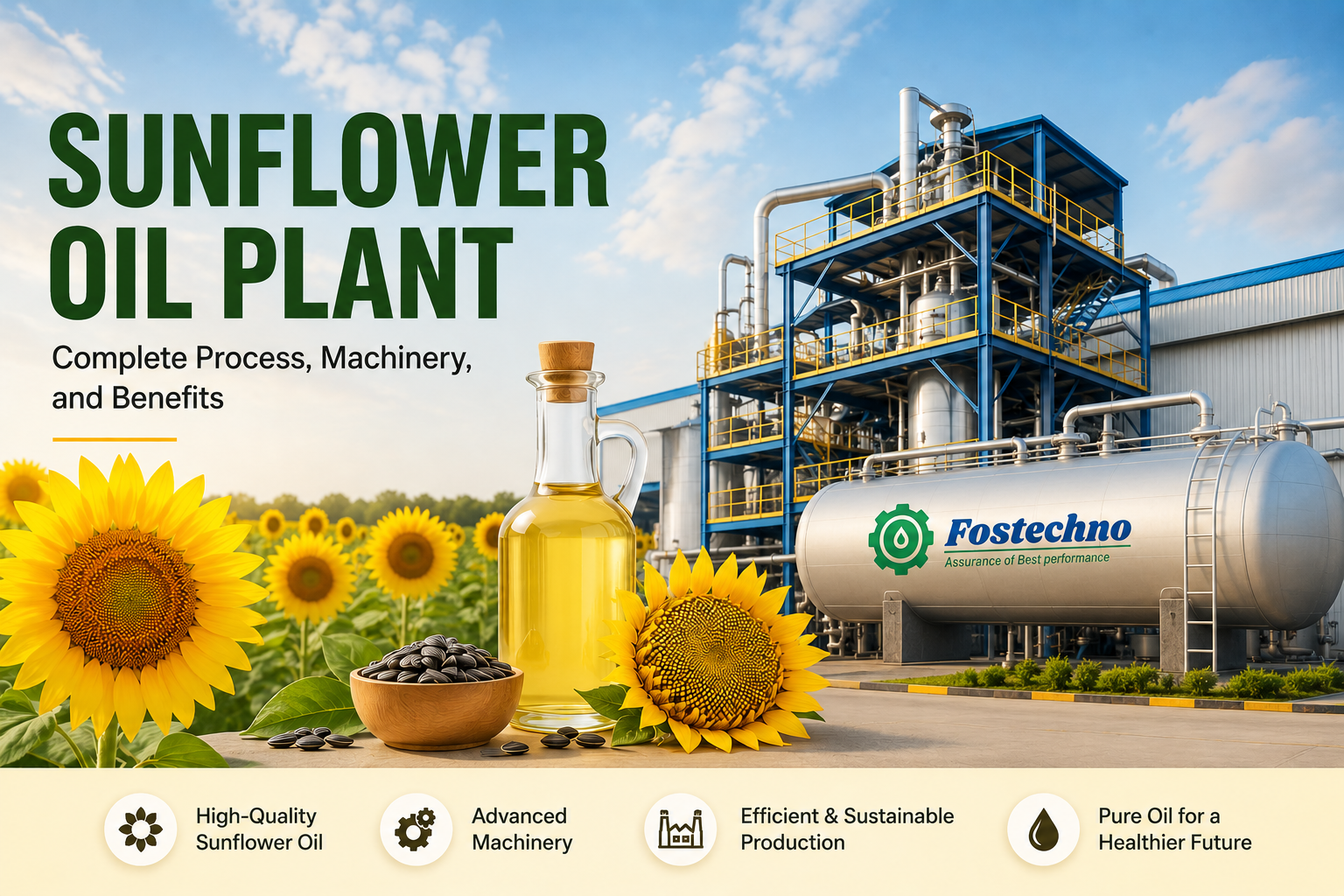
Sunflower Oil Plant: Complete Guide to Setting Up a Profitable Sunflower Oil Manufacturing Business
Sunflower oil is one of the most widely consumed edible oils worldwide due to its light taste, high nutritional value, and versatile applications in food processing. As global demand for healthy cooking oils continues to grow, investing in a sunflower oil plant presents an attractive opportunity for entrepreneurs, edible oil manufacturers, and agribusiness investors.
Whether you are planning a new sunflower oil manufacturing plant or expanding your existing edible oil business, understanding the production process, equipment requirements, plant costs, and operational considerations is essential for long-term success.
In this comprehensive guide, we explain everything you need to know about setting up a profitable sunflower oil processing plant.
What Is a Sunflower Oil Plant and How Does It Work?
A sunflower oil plant is an industrial facility designed to extract, refine, and package edible oil from sunflower seeds. The plant converts raw sunflower seeds into high-quality cooking oil through a series of mechanical and chemical processing stages.
A modern sunflower oil manufacturing plant typically includes:
- Seed cleaning systems
- Seed conditioning equipment
- Oil extraction units
- Filtration systems
- Oil refining equipment
- Storage tanks
- Packaging systems
The objective is to maximize oil recovery while maintaining product quality, food safety, and operational efficiency.
Sunflower Oil Manufacturing Process: Step-by-Step Production Flow
The sunflower oil production process involves several critical stages that transform raw sunflower seeds into refined edible oil.
Step 1: Seed Reception and Storage
Fresh sunflower seeds are received from suppliers and stored in silos or warehouses under controlled conditions.
Step 2: Cleaning
Seeds are cleaned to remove impurities such as:
- Dust
- Stones
- Metal particles
- Plant debris
Proper cleaning improves oil yield and protects downstream equipment.
Step 3: Dehulling
In some cases, sunflower seeds undergo dehulling to remove outer shells before processing. This helps improve extraction efficiency and oil quality.
Step 4: Conditioning and Cooking
Seeds are heated and conditioned to optimize moisture content and prepare them for oil extraction.
Step 5: Oil Extraction
Oil is extracted through:
- Mechanical pressing using oil expellers
- Solvent extraction for higher recovery rates
Step 6: Crude Oil Filtration
The extracted crude oil is filtered to remove suspended solids and impurities.
Step 7: Refining
The crude oil is refined to achieve edible-grade quality.
Step 8: Packaging and Distribution
Refined sunflower oil is packaged in bottles, pouches, drums, or bulk containers for commercial distribution.
Key Machinery Required for a Sunflower Oil Plant Setup
A complete sunflower oil processing plant requires specialized machinery designed for efficient operation.
Seed Preparation Equipment
- Seed cleaner
- Destoner
- Magnetic separator
- Dehuller
Oil Extraction Equipment
- Oil expeller machine
- Screw press
- Solvent extraction plant
Oil Refining Equipment
- Neutralization system
- Bleaching system
- Deodorization unit
- Filtration equipment
Utility Systems
- Steam boiler
- Air compressor
- Water treatment plant
- Storage tanks
Packaging Equipment
- Bottle filling machines
- Pouch packing systems
- Labeling machines
- Palletizing systems
Selecting high-quality machinery significantly impacts productivity and operating costs.
Sunflower Oil Plant Capacity Options: Choosing the Right Production Scale
The ideal plant capacity depends on market demand, investment budget, and raw material availability.
Small-Scale Plants
Capacity: 5–20 TPD
Suitable for:
- Local edible oil businesses
- Startups
- Regional distribution
Medium-Scale Plants
Capacity: 20–100 TPD
Suitable for:
- Growing manufacturers
- Contract processors
- Export-oriented businesses
Large-Scale Industrial Plants
Capacity: 100–1000+ TPD
Suitable for:
- Large edible oil brands
- Integrated agribusiness groups
- International markets
A detailed feasibility study helps determine the optimal production scale.
Sunflower Seed Preparation and Oil Extraction Process Explained
Proper seed preparation is critical for maximizing oil yield.
Cleaning and Grading
Impurities reduce extraction efficiency and can damage equipment. Therefore, thorough cleaning is essential.
Flaking
Flaking increases surface area and improves oil release during extraction.
Cooking
Controlled heating softens cell structures and facilitates oil recovery.
Mechanical Pressing
Oil expellers apply pressure to release oil from sunflower seeds.
Solvent Extraction
For large plants, solvent extraction is used to recover residual oil from the press cake, achieving higher extraction efficiency.
The combination of pressing and solvent extraction can significantly improve overall oil recovery rates.
Refining Process in a Sunflower Oil Plant: From Crude Oil to Edible Oil
Crude sunflower oil contains impurities that must be removed before consumption.
Degumming
Removes phospholipids and gums.
Neutralization
Eliminates free fatty acids.
Bleaching
Removes pigments, metals, and oxidation products.
Deodorization
Removes odors and volatile compounds through steam distillation.
Final Filtration
Produces clear, stable, and market-ready sunflower oil.
Refined sunflower oil meets food-grade standards and offers improved shelf life.
Sunflower Oil Plant Cost Breakdown: Investment, Equipment, and Operating Expenses
The cost of a sunflower oil plant varies based on capacity, technology, and level of automation.
Capital Investment
Major cost components include:
- Land and building
- Process machinery
- Utility systems
- Storage infrastructure
- Installation and commissioning
Operating Costs
Recurring expenses include:
- Sunflower seeds
- Labor
- Utilities
- Maintenance
- Packaging materials
- Transportation
Cost Factors
Investment depends on:
- Plant capacity
- Degree of automation
- Extraction technology
- Refining requirements
- Local regulations
A customized project report provides the most accurate investment estimate.
How to Design an Efficient Sunflower Oil Processing Plant Layout
An optimized layout improves productivity and reduces operating costs.
Key Design Considerations
Raw Material Flow
Minimize unnecessary material handling.
Utility Integration
Position boilers, compressors, and utility systems efficiently.
Worker Safety
Provide safe access routes and emergency systems.
Future Expansion
Allow space for future capacity increases.
Regulatory Compliance
Meet environmental and food safety standards.
Professional plant engineering ensures smooth operations and scalability.
Quality Standards, Certifications, and Compliance for Sunflower Oil Production
Maintaining quality standards is critical for market acceptance.
Common Certifications
- ISO 9001
- ISO 22000
- HACCP
- GMP
- FSSAI Compliance
- FDA Compliance (for export markets)
Quality Control Parameters
- Moisture content
- Free fatty acid level
- Peroxide value
- Color
- Odor
- Purity
Robust quality control systems help maintain product consistency and customer trust.
How to Choose the Right Sunflower Oil Plant Manufacturer and Technology Partner
Choosing the right technology provider can determine the success of your project.
Evaluate Industry Experience
Look for companies with proven edible oil processing expertise.
Review Previous Projects
Request references and project case studies.
Assess Engineering Capabilities
A reliable supplier should offer:
- Process design
- Equipment manufacturing
- Installation support
- Commissioning services
Check After-Sales Support
Reliable technical support minimizes downtime and improves plant performance.
Consider Turnkey Solutions
Turnkey projects simplify implementation and reduce coordination challenges.
Benefits of Investing in a Sunflower Oil Manufacturing Plant
Investing in a sunflower oil plant offers several advantages:
- Growing demand for healthy edible oils
- Strong domestic and export markets
- Attractive profit potential
- Opportunities for value-added products
- Scalability for future growth
- Long-term business sustainability
As consumer preferences shift toward healthier cooking oils, sunflower oil remains a strong market segment.
Challenges in Sunflower Oil Production and How to Overcome Them
Raw Material Price Fluctuations
Develop long-term supplier relationships and procurement strategies.
Energy Costs
Use energy-efficient equipment and process optimization techniques.
Quality Consistency
Implement strict quality assurance procedures.
Regulatory Requirements
Stay updated with local and international compliance standards.
Market Competition
Differentiate through product quality, branding, and operational efficiency.
Frequently Asked Questions About Sunflower Oil Plant Setup
How much oil can be extracted from sunflower seeds?
Oil content typically ranges from 35% to 50%, depending on seed quality and processing technology.
Is refining necessary?
Yes. Refining removes impurities and produces edible-grade sunflower oil suitable for consumers.
What is the ideal plant capacity?
The ideal capacity depends on market demand, investment budget, and raw material availability.
Can the plant be automated?
Modern sunflower oil plants can be highly automated, improving efficiency and reducing labor requirements.
How long does project implementation take?
Project timelines vary based on plant size and complexity but typically range from several months to over a year for large facilities.
Turnkey Sunflower Oil Plant Solutions: From Concept to Commissioning
Turnkey sunflower oil plant projects provide a complete solution under a single contract.
Services typically include:
- Feasibility studies
- Process engineering
- Plant design
- Equipment manufacturing
- Installation
- Commissioning
- Operator training
Turnkey execution reduces project risk and accelerates production startup.
Why Choose FOSTECHNO for Your Sunflower Oil Plant Project
FOS Technos specializes in designing and delivering advanced edible oil processing solutions for clients worldwide.
Our expertise includes:
- Sunflower oil extraction plants
- Sunflower oil refinery plants
- Turnkey edible oil projects
- Process engineering and optimization
- Customized plant capacities
- Installation and commissioning support
From concept development to commercial production, FOS Technos helps clients build efficient, reliable, and profitable sunflower oil manufacturing facilities tailored to their business objectives.
Conclusion
The sunflower oil industry continues to offer significant growth opportunities driven by increasing consumer demand for healthy edible oils. A well-designed sunflower oil plant equipped with modern extraction and refining technologies can deliver strong returns while meeting stringent quality standards.
Success depends on selecting the right plant capacity, investing in efficient equipment, maintaining product quality, and partnering with an experienced technology provider. With proper planning and execution, a sunflower oil manufacturing plant can become a highly profitable and sustainable industrial venture.

We respond within 24 hours



Leave a Reply