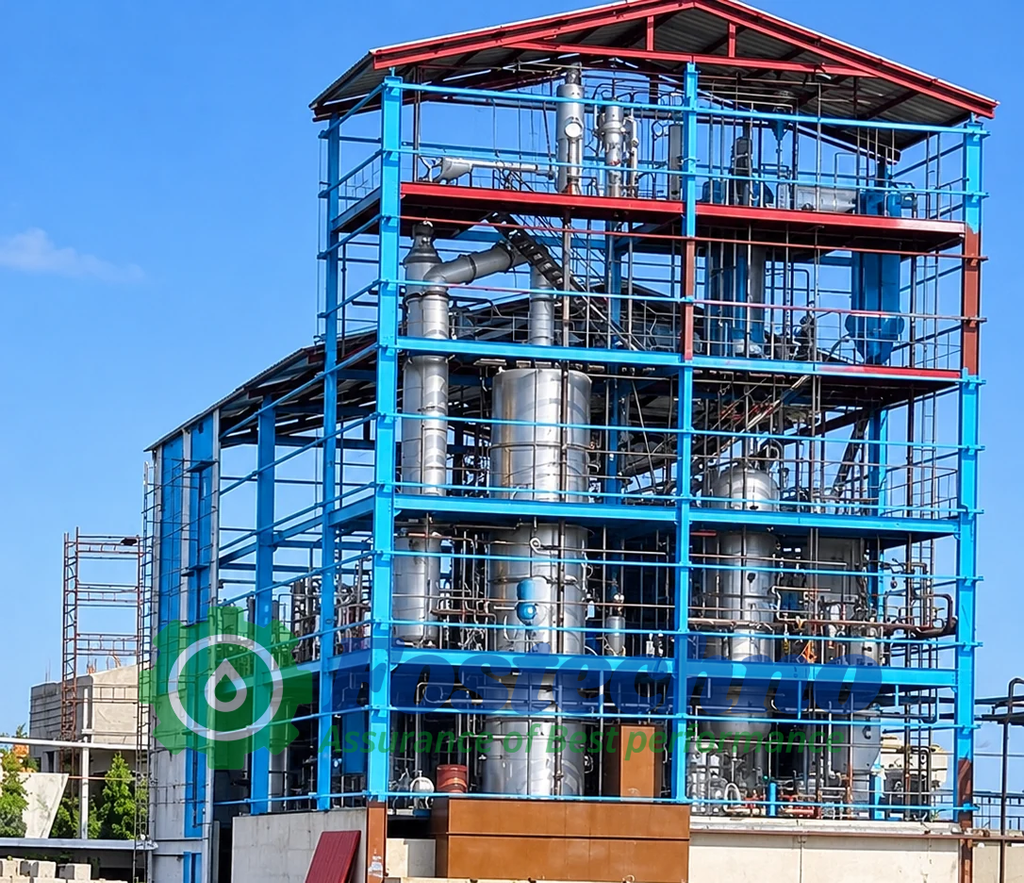
Building a World-Class Soybean Processing Facility
The global demand for edible vegetable oils and high-protein animal feed ingredients continues to experience unprecedented growth. Among all oilseeds processed globally, the soybean (Glycine max) holds a paramount position due to its unique dual commercial value: delivering high-quality edible oil alongside a rich, high-protein meal meal known as De-Oiled Cake (DOC).
Establishing an industrial soybean oil processing facility requires far more than acquiring standalone machinery; it demands a holistic process engineering approach. A successful plant must balance maximum oil yield, minimal solvent and utility consumption, strict food safety parameters, and long-term mechanical reliability.
At Fostechno Process & Engineering Private Limited, we specialize in designing, engineering, fabricating, and commissioning state-of-the-art turnkey soybean oil processing plants, solvent extraction units, and edible oil refineries. This definitive engineering guide details the complete technical architecture, unit operations, process flow, quality control standards, and turnkey execution framework necessary to build a market-leading soybean processing enterprise.
1. Raw Material Characteristics & Processing Strategy
1.1 Soybean Composition and Commercial Value
Raw soybeans typically contain:
- Crude Oil Content: 18% to 22%
- Protein Content: 38% to 42%
- Moisture Content: 10% to 13%
- Crude Fiber & Ash: 5% to 7%
Because soybeans possess a lower oil content compared to high-oil seeds like sunflower or mustard (which range from 35% to 45%), mechanical pressing alone is insufficient to extract the full oil potential economically. Mechanical expellers typically leave 6% to 8% residual oil in the cake.
Therefore, modern industrial soybean processing employs a two-stage approach:
- Preparation & Mechanical Conditioning / Pre-pressing: Preparing the seed matrix and flaking/extruding it for optimal porosity.
- Solvent Extraction: Utilizing food-grade solvent (n-Hexane) to reduce the residual oil content in the meal to less than 1.0%.
2. Seed Preparation & Pretreatment Workflow
Proper seed preparation is the foundation of high oil extraction efficiency and solvent recovery performance. Inadequate preparation leads to fine particles that clog solvent percolation beds, increase solvent carryover, and reduce oil clarity.
2.1 Mechanical Cleaning & Magnetic Separation
Raw soybeans arriving at the plant contain impurities such as straw, pods, sand, stones, and tramp iron.
- Vibrating Screen Cleaners: Multi-deck vibrating screens with aspiration channels remove light dust, chaff, and oversized foreign material.
- High-Intensity Magnetic Separators: Permanent rare-earth magnets capture ferrous particles to protect downstream flaking rolls and crushers from mechanical damage.
- De-stoners: Gravity-density de-stoners separate stones and heavy earth particles having the same dimensions as soybeans.
2.2 Cracking & De-hulling
Cracking breaks whole soybeans into 4 to 8 uniform pieces, loosening the outer hull from the cotyledon.
- Cracking Mills: Dual-roll corrugated cracking mills shear the seeds cleanly without generating excessive fine flour.
- Aspiration De-hulling Systems: Multi-stage air aspirators separate the lightweight hulls from the heavier dense cotyledon cracks. De-hulling increases the protein concentration in the final meal (producing 48% high-protein meal) and prevents fibrous hulls from absorbing oil during solvent extraction.
2.3 Conditioning & Thermal Preheating
Conditioning adjusts the moisture and temperature of cracked soybean pieces to make them pliable.
- Vertical Stack Conditioners: Steam-heated rotary conditioning drums soften the seed matrix at temperatures between 65°C and 75°C.
- Process Impact: Proper conditioning prevents flaking rolls from shattering the seeds into dust and optimizes cell-wall rupture.
2.4 Flaking & Expanding (Extrusion)
- Flaking Rolls: High-hydraulic-pressure smooth flaking rolls press conditioned soybean cracks into thin, uniform flakes (0.25 mm to 0.35 mm thickness). Flaking ruptures the microscopic oil-bearing cell walls, creating a short diffusion path for solvent extraction.
- Annular Extruders / Expanders: Passing flaked soybeans through a steam-injected expander creates dense, porous granules (cormpopped extrudates). Expanding significantly increases bed permeability in the solvent extractor, speeds up percolation rates, reduces solvent hold-up, and boosts extraction capacity.
3. Solvent Extraction Plant (SEP) Architecture
The Solvent Extraction Plant is the core chemical engineering unit where crude soybean oil is separated from the solid matrix using food-grade n-Hexane solvent.
3.1 Continuous Counter-Current Extractor
Fostechno integrates high-efficiency percolation extractors (Chain-type, Rotocel, or Loop extractors) designed for uniform solvent distribution and zero dead zones.
- Operating Principle: Porous soybean extrudates/flakes travel along a continuous moving bed. Fresh and recycled solvent (miscella) is sprayed over the bed in a counter-current wash pattern.
- Oil Residual Target: The clean solvent washes the bed until the residual oil content in the discharged wet meal is driven down to below 0.9% – 1.0%.
3.2 Desolventizer-Toaster-Dryer-Cooler (DTDC)
The wet meal leaving the extractor contains approximately 25% to 35% solvent by weight. The DTDC unit performs four vital functions in a continuous vertical tower:
- Desolventizing: Direct and indirect steam vaporizes the residual hexane from the meal.
- Toasting: Controlled thermal processing inactivates anti-nutritional factors (such as Trypsin Inhibitors and Urease activity) present in raw soybeans, vastly improving protein digestibility for animals.
- Drying: Heated air streams reduce moisture content from ~18% down to 12%.
- Cooling: Ambient air cooling stabilizes the meal temperature to safe ambient storage levels (below 40°C).
3.3 Miscella Evaporation & Distillation System
The mixture of crude soybean oil and n-Hexane (known as miscella) leaves the extractor with 25% to 30% oil concentration. It undergoes multi-stage vacuum distillation to recover 100% of the solvent without thermal degradation of the crude oil.
- 1st Stage Evaporator: Utilizes waste steam vapors from the DTDC to heat miscella under vacuum, raising oil concentration to 60–70%.
- 2nd Stage Evaporator: Operates at higher temperatures under vacuum to concentrate miscella to 95%+ oil.
- Disc-Ring Vacuum Stripper: Superheated direct steam strips final trace solvent molecules, producing crude soybean oil with a flash point exceeding 121°C and solvent traces below 50 ppm.
3.4 Solvent Vapor Recovery & Absorption System
Solvent economy is critical to operational safety and environmental sustainability.
- Multi-Pass Shell & Tube Condensers: Recover hexane vapors from the DTDC, evaporators, and extractor.
- Mineral Oil Absorption System (Final Vent Gas Scrubber): Non-condensable air vent gases pass through a packed mineral oil absorption tower that captures residual hexane vapors before releasing clean air, keeping solvent consumption extremely low.
4. Edible Soybean Oil Refining Architecture
Crude soybean oil contains natural impurities including phospholipids (gums), free fatty acids (FFA), color pigments (carotenoids/chlorophyll), trace metals, and odoriferous volatile compounds. Refining transforms dark, unpalatable crude oil into sparkling, odorless, stable Refined Bleached Deodorized (RBD) Soybean Oil.
4.1 Chemical / Enzymatic Degumming
Soybeans contain a high concentration of phospholipids (1.5% to 3.0%), categorized as Hydratable Phospholipids (HPL) and Non-Hydratable Phospholipids (NHPL).
- Process: Crude oil is heated to 70°C–80°C and dosed with food-grade phosphoric or citric acid, followed by water conditioning and high-shear mixing.
- Centrifugal Separation: High-speed disc-stack centrifuges separate the hydrated heavy gums (raw lecithin) from the light oil phase. Removing gums prevents emulsion formation during neutralization and prevents color burn during high-temperature deodorization.
4.2 Neutralization (Deacidification)
Neutralization removes Free Fatty Acids (FFA) which cause oil acidity and rancidity.
- Process: Alkali (Sodium Hydroxide / Caustic Soda) is introduced in precise stoichiometry to react with FFAs, forming insoluble sodium soaps (soapstock).
- Separator Centrifuges: Continuous disc centrifuges separate the heavy soapstock from the neutralized oil. The oil is subsequently washed with hot soft water to eliminate residual soap traces.
4.3 Adsorptive Bleaching
Bleaching removes unwanted color bodies, oxidation products, residual soap, and heavy trace metals.
- Process: Neutralized oil is mixed with activated bleaching earth (bentonite clay) and silica gel under deep vacuum (50–70 mmHg) at 95°C–105°C.
- Filtration: The oil-clay slurry passes through fully enclosed, automatic Pressure Leaf Filters (PLF). Dual PLF systems ensure continuous operation, discharging clear, de-colored oil while retaining spent earth cake.
4.4 High-Vacuum Deodorization
Deodorization is a high-temperature, high-vacuum steam stripping process that removes volatile odor-causing compounds, aldehydes, ketones, and residual free fatty acids, producing a bland, neutral-tasting oil.
- Operating Conditions: Temperatures of 240°C to 250°C under ultra-deep vacuum (1.5 to 3.0 mbar).
- Structured Packing Columns: Fostechno incorporates advanced structured packing deodorizing towers with thermal energy recovery heat exchangers. This ensures maximum contact efficiency, zero thermal alteration of essential fatty acids, and low steam consumption.
- Tocopherol & Fatty Acid Distillate Recovery: Valuable natural tocopherols (Vitamin E) and deodorizer distillate (DD) are collected in cold scrubbers as high-value chemical by-products.
5. Value-Added By-Products & Revenue Diversification
A modern Fostechno-engineered soybean processing facility maximizes returns by monetizing all process streams:
| Product Stream | Process Origin | Primary Industry Application |
|---|---|---|
| RBD Soybean Oil | Edible Oil Refinery | Culinary frying, salad oils, margarine, mayonnaise, food processing |
| High-Protein Soya Meal (DOC) | DTDC (Solvent Extraction) | Poultry feed, cattle feed, aquaculture, protein concentrates |
| Soy Lecithin | Degumming Centrifuges | Emulsifier in chocolate, bakery, pharmaceuticals, cosmetics |
| Deodorizer Distillate (DD) | Refinery Deodorizer | Source of natural Vitamin E (Tocopherols) & Phytosterols |
| Acid Oil / Soapstock | Neutralization Unit | Soap manufacturing, industrial fatty acid distillation |
| Soy Hulls | De-hulling System | High-fiber ruminant animal feed pelletizing |
6. The Fostechno Turnkey Advantage: Engineering Excellence
At Fostechno Process & Engineering Private Limited, we deliver complete end-to-end plant solutions tailored to client capacity requirements, site specifications, and automation levels.
6.1 Multi-Disciplinary Engineering Expertise
Our core strength lies in our integrated engineering team comprising process specialists, mechanical design engineers, electrical & automation experts, safety consultants, and project managers. We ensure every vessel, piping run, heat exchanger, and control system operates in perfect synergy.
6.2 Advanced Process Automation (PLC / SCADA)
Modern processing plants require precise process control to eliminate human error, optimize utility usage, and maintain consistent quality:
- Centralized Control Desk: Real-time monitoring of temperatures, pressures, solvent flow rates, and bed heights across the extraction and refining towers.
- Safety Interlocks: Automated safety shutdown systems monitor solvent vapor concentrations, pressure variances, and cooling water flow to ensure 100% plant safety.
6.3 Sustainable & Resource-Efficient Engineering
- Energy Integration: Advanced heat recovery networks capture flash steam and hot distillate heat to preheat incoming crude oil, reducing boiler load.
- Low Solvent Consumption: Precision-engineered condenser networks and vent scrubbers achieve industry-leading solvent losses below 1.5 liters per metric ton of seed processed.
- Zero Liquid Discharge (ZLD) Compatibility: Effluent treatment integration recycles process water for cooling tower makeup, protecting local ecosystems.
7. Project Execution Lifecycle with Fostechno
Partnering with Fostechno ensures a seamless transition from concept to commercial production:
- Concept & Process Customization: We analyze client feedstocks, target outputs, and spatial constraints to formulate the ideal plant configuration (from 50 TPD to 1,000+ TPD).
- Plant Layout & Civil Engineering Guidance: We provide complete structural engineering drawings, equipment foundation layouts, piping isometric designs, and cabling diagrams.
- Precision Equipment Manufacturing: All core equipment—including extractors, DTDC towers, cracking rolls, pressure leaf filters, and deodorizing columns—is fabricated using high-grade stainless and alloy steels in accordance with international pressure vessel codes.
- On-Site Installation & Mechanical Erection: Skilled Fostechno installation crews manage structural steel erection, vessel placement, piping fabrication, and electrical integration.
- Commissioning & Performance Testing: Our process engineers conduct rigorous dry runs, water trials, hot solvent testing, and full-load commercial commissioning.
- Staff Training & After-Sales Support: We train client technical staff on daily operational procedures, preventive maintenance routines, and safety protocols, backed by lifetime technical support and spare parts availability.
8. Conclusion: Partnering with Fostechno for Long-Term Profitability
Building an industrial soybean processing plant is a major long-term capital commitment. Long-term profitability depends on operational reliability, high oil yield, minimal resource waste, and superior product quality.
Fostechno Process & Engineering Private Limited brings the technological expertise, custom manufacturing capabilities, and dedicated project management required to build a world-class soybean oil extraction and refining facility.
Contact our technical sales team today to discuss your project vision, review customized plant layouts, and engineer a high-performance solution tailored to your operational goals.
- Company: Fostechno Process & Engineering Private Limited
- Specialization: Solvent Extraction Plants, Edible Oil Refineries, Seed Preparation Equipment, Turnkey Process Solutions
- Website / Contact: Reach out directly to our engineering desk for technical consultation.


Leave a Reply