> Executive Overview & Commercial Summary: Setting up a modern, high-yield sunflower oil mill plant requires an integrated engineering approach combining seed pre-treatment, high-pressure mechanical pressing, solvent extraction, and multi-stage oil refining. Sunflower seeds typically contain between 35% and 52% oil content by weight. Maximizing oil recovery yields (up to 99% total oil extraction efficiency) and producing premium, crystal-clear, refined edible oil requires precise control over hull removal, seed flaking, thermal cooking, counter-current solvent extraction, acid degumming, alkali neutralization, bleaching earth clarification, winterization dewaxing, and high-vacuum deodorization. This comprehensive guide details the complete process flow, equipment specifications, utility requirements, capital investment budgets, operational costs, and turnkey EPC execution frameworks necessary to build a globally competitive sunflower oil manufacturing enterprise.
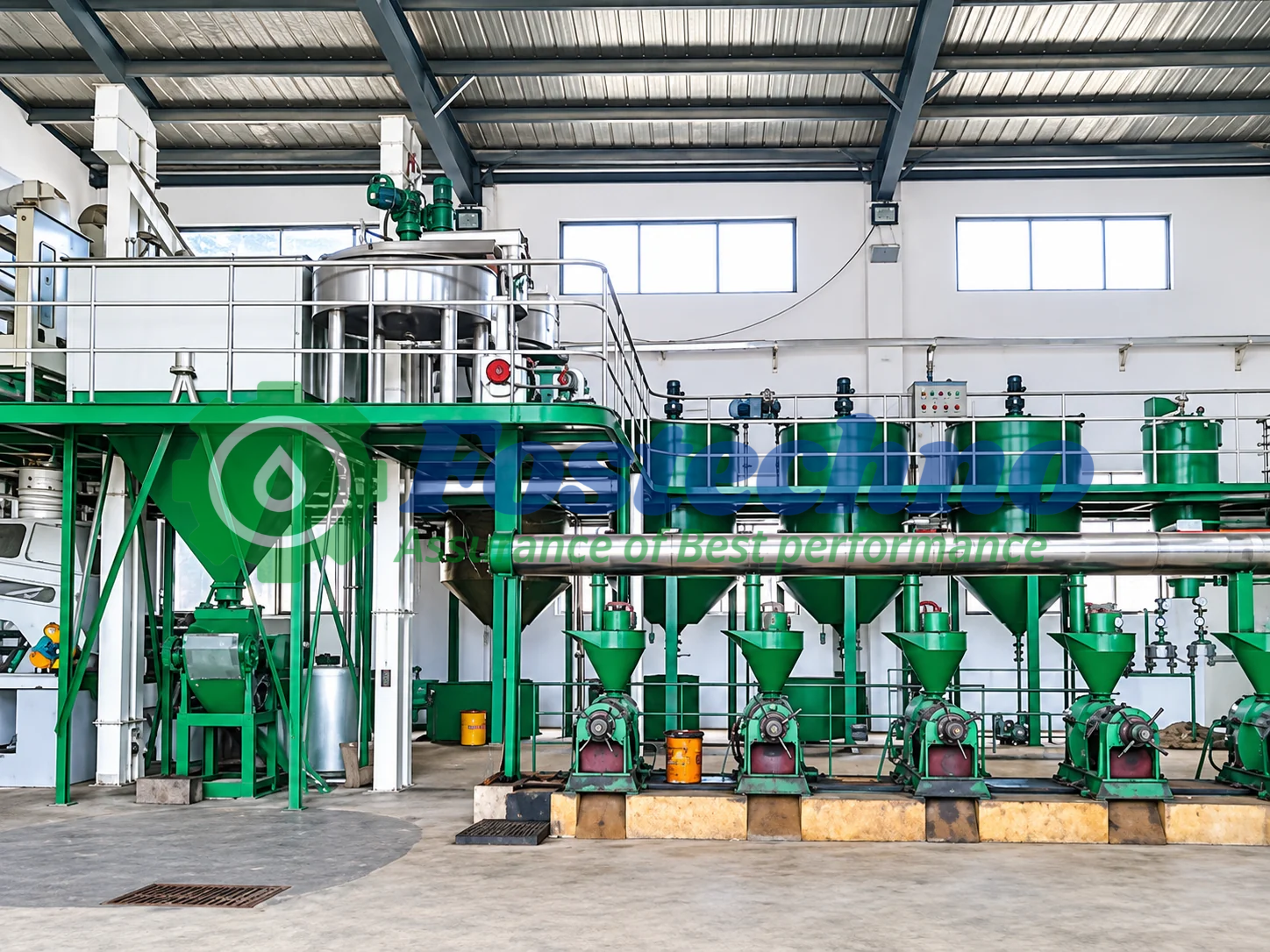
Technical Quick Reference & Key Performance Indicators (KPIs)
The following benchmark metrics define an optimized industrial sunflower oil processing plant operating under standard international manufacturing conditions:
| Parameter / KPI | Standard Commercial Value / Range | Operational Significance |
|---|---|---|
| Raw Seed Oil Content | 38% – 48% (Dry Basis) | Determines total theoretical oil yield per ton of raw seed input. |
| Seed Moisture Content | 8% – 10% (Target Pre-treatment) | Prevents seed spoilage during storage and optimizes mechanical prep. |
| Residual Hull in Kernels | 8% – 12% (After De-hulling) | Protects press internals while reducing wax contamination in crude oil. |
| Expeller Pressing Oil Yield | 65% – 75% of Available Oil | Produces high-grade virgin crude oil with low phosphatide content. |
| Residual Oil in Press Cake | 14% – 18% (Before Solvent Extraction) | Prepares press cake for optimal solvent percolation in Rotocel extractor. |
| Solvent Extraction Residual Oil | < 1.0% (In Desolventized Meal) | Maximizes overall plant oil recovery efficiency to 98.5% – 99.0%. |
| Hexane Consumption Rate | 1.5 – 2.5 kg per ton of seed processed | Key operational cost factor and environmental emissions control metric. |
| Refining Total Oil Loss | 3.5% – 5.5% (Crude to Refined) | Includes neutral oil saponification loss, bleaching adsorbates, and wax cake. |
| Refined Oil Cloud Point | 0°C for 5.5 to 24 Hours (Cold Test Pass) | Measures complete wax removal via winterization dewaxing process. |
1. Global Market Overview & Economic Viability of Sunflower Oil Processing
Sunflower oil (Helianthus annuus) ranks among the top four premium vegetable oils consumed globally, alongside palm, soybean, and canola oils. Recognized for its high smoke point (232°C / 450°F), low saturated fat profile, high oleic/linoleic acid ratios, and high Vitamin E content, refined sunflower oil commands a strong market premium in consumer retail, food service, and industrial food manufacturing sectors.
Global Demand Drivers & Supply Dynamics
- Consumer Health Shift: Growing consumer preference for non-GMO, light, cholesterol-free edible oils with high polyunsaturated (linoleic) and monounsaturated (oleic) fatty acid profiles.
- Industrial Food Application: Superior oxidative stability of High-Oleic Sunflower Oil (HOSO) makes it the preferred choice for commercial frying, snack manufacturing, packaged baked goods, and infant formulas.
- High By-product Commercial Value: Sunflower processing generates valuable secondary revenue streams. Sunflower husks serve as biomass boiler fuel or animal bedding, while desolventized high-protein sunflower meal (28%–38% crude protein) is sold at premium prices to livestock and poultry feed compounders.
Strategic Operating Models: Micro-Pressing vs. Integrated Turnkey EPC Plants
When evaluating plant investment, project developers choose between three primary operational configurations:
- Small-Scale Expeller Mill (5 to 20 TPD): Focuses purely on mechanical cold or hot pressing. Suited for localized, specialty cold-pressed organic oil markets. Oil yield is lower (leaving 6%–8% oil in cake), and crude oil requires basic settling and filtration.
- Medium Commercial Processing Plant (30 to 100 TPD): Combines seed pre-treatment, heavy-duty screw pressing, and a physical/chemical refinery unit. Press cake is sold directly to secondary solvent extraction plants or feed compounders.
- Industrial Integrated Extraction & Refinery EPC Complex (150 to 1,000+ TPD): The gold standard for global commercial viability. Features continuous pre-pressing, continuous counter-current solvent extraction, desolventizing-toaster meal drying, zero-loss hexane recovery distillation, and automated continuous refining (including dewaxing). Achieves maximum margin efficiency, minimal labor per ton, and 99% overall oil recovery.
2. Sunflower Seed Characteristics & Pre-Treatment Processing
Raw sunflower seeds arrive at the processing facility with variable moisture levels, foreign impurities, dust, and thick fibrous hulls. Proper seed preparation is essential; processing raw seeds without cleaning and de-hulling causes accelerated wear on machinery screws, reduces press capacity, absorbs crude oil into the hulls, and contaminates crude oil with high-melting waxes.
Step 2.1: Seed Cleaning and De-stoning
Raw seeds are conveyed to an automated cleaning system designed to achieve 99.5% purity:
- Vibrating Screen Cleaning Sieves: Double-deck sieve separators remove oversized impurities (stems, leaves, straw) on the top screen and fine sand/dirt on the bottom screen.
- Magnetic Separators: High-intensity neodymium magnetic drums remove tramp iron, bolts, and metal fragments to protect downstream flaking rolls and screw presses from catastrophic mechanical damage.
- Specific Gravity De-stoners: Utilize fluidizing air currents and inclined vibrating decks to separate heavy stones, glass particles, and dense mud clods that match the physical size of sunflower seeds.
Step 2.2: Impact De-hulling (De-husking) & Husk Separation
Sunflower seed hulls make up 20% to 30% of total seed weight. Hulls contain under 1% oil but over 60% crude fiber. Leaving all hulls intact reduces press capacity, absorbs valuable oil, and drastically lowers the protein concentration of the final meal.
- Impact De-hullers: Seeds are fed into high-speed centrifugal impactors where seeds strike hardened breaker plates, cracking the outer pericarp (shell) while preserving kernel integrity.
- Aspiration Separation Columns: Multi-stage zigzag air aspirators exploit density differences to lift light hulls upward into cyclone collectors, while heavy kernels drop downward.
- Optimal Hull Balance: Complete hull removal is undesirable because small amounts of hull fiber (8% to 12% residual hull content) provide necessary structural friction inside the expeller press barrel. The separated husks are pneumatically conveyed to the plant’s biomass boiler, serving as free fuel to generate steam for conditioning, solvent distillation, and deodorization.
Step 2.3: Flaking & Mechanical Cell Rupture
De-hulled seed kernels are passed through heavy-duty hydraulic double-roll flaking mills.
- Flaking Mechanism: Smooth counter-rotating chilled iron rolls compress the kernels into thin flakes with a uniform thickness of 0.3 to 0.4 mm.
- Cell Wall Breakdown: Flaking mechanically ruptures microscopic oleosomes (plant oil storage sacks), shortening the oil migration pathway during mechanical pressing and solvent diffusion.
Step 2.4: Thermal Conditioning & Cooking
Before mechanical pressing, flaked kernels pass through vertical multi-stage steam-heated conditioning cookers (Conditioners).
- Temperature & Moisture Control: Flakes are heated to 85°C – 105°C, adjusting moisture content to approximately 5.5% – 7.0%.
- Rheological Transformation: Heat lowers oil viscosity, coagulates plant proteins (making oil separation easier), ruptures remaining oil cells, inactivates destructive lipase enzymes (preventing FFA rise), and renders the seed material plastic and pliable for optimal screw press compaction.
3. Mechanical Oil Pressing (Expeller Extraction Stage)
Mechanical pressing uses high-pressure continuous screw presses (expellers) to squeeze oil out of conditioned sunflower flakes without chemical solvents.
Mechanical Pressing Workflows: Full Pressing vs. Pre-Pressing
Depending on plant capacity, processing engineers specify one of two mechanical workflows:
- Full Mechanical Pressing (Single or Double Pass):
- Applied in small-to-medium plants (5 to 40 TPD).
- The seeds are pressed under extreme pressure (over 350 bar) to squeeze out maximum oil.
- Yield Outcome: Reduces residual oil in press cake down to 6.0% – 8.0%. The cake is ground directly into animal feed.
- Continuous Pre-Pressing (For Solvent Extraction Setup):
- Applied in industrial plants (50 to 1,000+ TPD).
- The conditioned seed flakes pass through heavy-duty pre-press expellers operating under moderate pressure.
- Yield Outcome: Squeezes out 65% to 75% of total seed oil, producing a high-grade crude pressed oil. The resulting cake discharges with a porous structure and an oil content of 14% to 18%, which is ideal for solvent extraction.
Heavy-Duty Expeller Press Design & Operations
An industrial oil expeller consists of a heavy steel frame housing a rotating worm shaft fitted with progressively larger flighting collars, operating inside a stationary barrel cage lined with hardened steel bars.
- Compression Ratio: As seed material travels along the barrel shaft, the volume decreases due to the tapered shaft pitch and choke ring restriction, generating intense internal mechanical pressure.
- Oil Drainage: Expressed oil flows outward through microscopic gaps (0.25mm to 0.75mm) between the barrel cage bars, collecting in a bottom oil trough.
- Cake Discharge: Compressed press cake exits the end of the barrel past an adjustable cone choke, discharging as dense, hot slabs.
Crude Pressed Oil Clarification
Crude oil flowing from expellers contains 3% to 6% suspended seed fines (foots).
- Screening Tank / Decanter: Oil passes through an automated settling tank with continuous drag-chain scrapers or a horizontal decanter centrifuge to remove coarse solids.
- Vibrating & Leaf Filters: Screener overflow is pumped through vertical leaf filters or automatic pressure plate filters, clarifying crude pressed oil to under 0.1% insoluble impurities before sending it to crude oil storage tanks.
4. Solvent Extraction Plant (SEP) for Large-Scale Operations
While mechanical pressing alone leaves 6% to 8% oil in the cake, a Solvent Extraction Plant (SEP) uses food-grade chemical solvents (commercial Hexane) to extract virtually all remaining oil, leaving less than 1.0% residual oil in the final meal. Solvent extraction is economically essential for processing lines handling over 50 tons per day.
Step 4.1: Cake Preparation & Pelletizing / Cracking
Hot expeller cake entering the solvent extraction unit passes through breaker rolls and cake conditioners to adjust particle size (3–8 mm chunks) and temperature (55°C–60°C), ensuring uniform solvent permeability without channeling.
Step 4.2: Counter-Current Extraction in Rotocel / Loop Extractor
- Process Architecture: The prepared cake is loaded into a continuous rotary bed extractor (Rotocel) or horizontal loop extractor.
- Counter-Current Washing: As the material bed rotates or moves horizontally, it is sprayed with progressively weaker miscella (oil-hexane mixture) and finally flushed with fresh, pure liquid hexane at 55°C.
- Solvation Mechanics: Hexane penetrates porous cake particles, dissolving vegetable lipids.
- Extraction Efficiency: The liquid draining from the final stage (Rich Miscella) contains 25%–30% oil and 70%–75% hexane. The wet spent meal discharging from the bottom of the extractor retains about 30% solvent by weight.
Step 4.3: Desolventizer-Toaster-Dryer-Cooler (DTDC) Meal Processing
Wet meal containing hexane must be completely freed of solvent, toasted to neutralize anti-nutritional factors, dried, and cooled for safe storage.
- Desolventizing: Wet meal enters the top trays of the vertical DTDC tower, exposed to indirect steam heating and direct live steam injection. Live steam vaporizes hexane (boiling point ~69°C), stripping residual solvent content to under 300 ppm.
- Toasting & Conditioning: Thermal exposure at 100°C – 105°C denatures anti-nutritional compounds and improves amino acid digestibility for animal nutrition.
- Drying & Cooling: The meal moves down to lower fluidized trays, where warm air dries moisture content down to 10% – 12%, followed by ambient air cooling to within 5°C of room temperature.
- Final Product: The resulting high-protein sunflower meal is sieved, ground, and bagged or stored in bulk silos (protein content: 30%–36% depending on initial hull removal ratio).
Step 4.4: Miscella Evaporation & Distillation System
Rich miscella discharging from the extractor is processed through energy-efficient multi-effect vacuum distillation systems to separate crude sunflower oil from hexane solvent:
- 1st Stage Rising Film Evaporator: Utilizes waste steam vapors from the DTDC tower to heat miscella under partial vacuum, increasing oil concentration from 30% to 70%.
- 2nd Stage Falling Film Evaporator: Heats miscella with indirect high-pressure steam, driving oil concentration to 95%–98%.
- Vacuum Stripping Column: The concentrated oil enters a packed vacuum stripping column injected with direct live steam at 110°C – 120°C under 700 mmHg vacuum, removing final traces of hexane.
- Yield Outcome: Crude solvent-extracted sunflower oil leaves the stripper with a flash point over 121°C and residual hexane under 50 ppm.
Step 4.5: Hexane Vapor Condensation & Zero-Loss Recovery
All hexane vapors collected from the DTDC tower, miscella evaporators, stripping column, and extractor vents are directed through shell-and-tube condensers. Liquid hexane and water condensate drain into a gravity separation tank, where light hexane floats to the surface, overflows into working solvent storage tanks, and recycles back into the extraction loop. Non-condensable vent gases pass through a Mineral Oil Absorption System (Vent Scrubber) to strip residual hexane before releasing clean air, keeping solvent loss below 2.0 kg per ton of seed input.
5. Crude Sunflower Oil Refining Process (Stage-by-Stage Breakdown)
Crude sunflower oil (from pressing and solvent extraction combined) contains natural impurities including free fatty acids (FFA), phosphatides (gums), color pigments (carotenoids, chlorophyll), trace metals, micro-impurities, and high-melting waxes. If unrefined, this oil appears cloudy, forms sediment, smokes heavily during cooking, develops rancid odors, and deteriorates rapidly.
Refining transforms dark, turbid crude oil into a golden-yellow, crystal-clear, odorless, heat-stable, premium edible oil.
Stage 5.1: Water & Acid Degumming (Gums Removal)
Phosphatides (gums) are emulsifiers. Hydratable phosphatides absorb water and swell, while non-hydratable phosphatides are bound to calcium and magnesium ions. Left in oil, gums cause dark color, foaming during heating, high refining loss, and fouling in deodorizer columns.
- Acid Treatment: Crude oil is preheated to 75°C – 85°C and dosed with 0.05% – 0.2% food-grade Phosphoric Acid (85% concentration) in a high-shear mixer. Acid breaks non-hydratable calcium/magnesium phosphatide complexes, converting them into hydratable forms.
- Water Hydration: Hot softened water (1.5% to 3.0% by volume) is injected and thoroughly mixed. Hydratable gums absorb water, swell, and agglomerate into dense, insoluble gelatinous flakes.
- Centrifugal Separation: The mixture is pumped into a high-speed disk-stack industrial centrifuge. The heavy phase (wet gums/sludge) is continuously discharged from the outer bowl perimeter, while the light phase (degummed crude oil) exits from the center disk. Collected gums can be processed into commercial wet sunflower lecithin or added to spent meal.
Stage 5.2: Alkali Neutralization (Free Fatty Acid Removal)
Crude sunflower oil contains 1.0% to 4.0% Free Fatty Acids (FFA) caused by enzymatic hydrolysis within damaged seeds. FFA lowers oil smoke point and causes off-flavors.
- Caustic Soda Saponification: Dosed Sodium Hydroxide (NaOH / Caustic Soda) solution reacts selectively with FFA to form water-soluble sodium soaps (soapstock): $$\text{R-COOH (FFA)} + \text{NaOH} \rightarrow \text{R-COONa (Soap)} + \text{H}_2\text{O}$$
- Soapstock Separation: The saponified oil mixture passes through a disk-stack separator centrifuge. Heavy soapstock separates from neutral oil.
- Water Washing & Drying: Neutralized oil is washed with 10% hot soft water to strip residual soap traces (<50 ppm), re-centrifuged, and passed into a vacuum drying column to remove residual moisture to below 0.05% at 105°C under vacuum.
(Note: Modern large-scale refineries can also utilize Physical Refining, stripping FFA during high-temperature vacuum deodorization without chemical caustic neutralization, eliminating soapstock effluent).
Stage 5.3: Bleaching Clarification (Pigment & Impurity Absorption)
Neutralized, degummed oil retains dark yellow/brown carotenoid pigments, green chlorophyll, trace heavy metals (Fe, Cu), oxidation products (peroxides), and soap residues.
- Activated Bleaching Earth Addition: Oil is mixed with 0.5% – 2.0% Activated Bleaching Clay (Bentonite earth) and small amounts of activated carbon in a sealed vacuum bleaching reactor operating at 95°C – 110°C under 50–70 mmHg vacuum for 20 to 30 minutes. Vacuum conditions prevent thermal oxidation during bleaching.
- Adsorption Mechanism: The highly porous structure of activated clay adsorbs dark color pigments, breakdown products, and heavy metal ions.
- Filtration: The slurry is pumped through dual pressure leaf filters (Hermetic Vertical Leaf Filters). Bleaching earth accumulates on stainless steel filter leaves as a dense cake. Once saturated, leaf filters are automatically purged with live steam to recover residual oil from the cake, discharging dry spent earth. Bleached oil exits with a brilliant light-yellow hue (Lovibond color < 1.5 Red).
Stage 5.4: Winterization & Dewaxing (Essential for Sunflower Oil)
Sunflower oil contains 0.05% to 0.35% (500 to 3,500 ppm) natural plant waxes originating from the seed hull. Waxes are high-melting esters (melting points 75°C to 80°C). While fully soluble in warm oil, waxes crystallize into fine white needles when oil cools to room temperature (below 18°C–20°C), turning refined oil cloudy and unappealing in retail bottles on supermarket shelves.
Because consumer acceptance demands crystal-clear oil that remains transparent even in cold refrigerators, Winterization Dewaxing is a critical mandatory process step in sunflower refining.
Detailed Winterization Steps:
- Controlled Cooling: Warm bleached oil (60°C) is pumped through spiral plate heat exchangers, pre-cooling to 25°C–30°C using cold dewaxed oil effluent.
- Crystallization Maturation: Pre-cooled oil enters insulated, jacketed vertical crystallization tanks equipped with slow-speed turbine agitators (5–10 RPM). Chilled glycol/water is circulated through cooling jackets to lower oil temperature gradually from 30°C down to 6°C – 8°C at a controlled rate of 1°C to 1.5°C per hour, holding for 12 to 24 hours. Controlled slow cooling prevents micro-crystal formation, encouraging waxes to grow into large, dense, easily filterable crystalline agglomerates.
- Filter Aid Dosing: Diatomaceous earth (Kieselguhr) filter aid (0.1% to 0.2%) is injected into the slurry to form a porous pre-coat bed on filter media.
- Chilled Pressure Filtration: The cold slurry is pumped through low-temperature recessed plate chamber filter presses or horizontal leaf filter presses operating at low pressure (<3 bar). The solid wax cake remains trapped on filter cloths, while dewaxed oil passes through.
- Cold Test Verification: High-grade dewaxed oil must pass the Standard International Cold Test: holding a bottle of oil in an ice-water bath at 0°C for 24 hours without developing visible cloudiness, haziness, or wax precipitation.
Stage 5.5: Vacuum Thermal Deodorization (Odor & Taste Stripping)
Bleached and dewaxed sunflower oil retains volatile aldehyde and ketone breakdown compounds that impart an unpleasant earthy odor and bland or grassy taste. Deodorization is a high-temperature, high-vacuum steam distillation process that strips these volatile off-flavors while destroying remaining thermal peroxides and stripping residual free fatty acids.
Operational Mechanics of Deodorization:
- De-aeration: Cold dewaxed oil is drawn into a vacuum de-aerator vessel to strip dissolved air and oxygen, preventing thermal polymer formation when oil is heated.
- Extreme Thermal Processing: De-aerated oil passes through thermal oil heat exchangers, heating to 240°C – 255°C.
- High-Vacuum Distillation: The heated oil enters a vertical stainless steel continuous deodorizing tower operating under deep vacuum (1.5 to 3.0 mbar absolute pressure, generated by multi-stage steam jet ejectors and chilled liquid ring vacuum pumps). Deep vacuum reduces the boiling point of volatile odor compounds, preventing thermal degradation of neutral lipids.
- Direct Live Steam Injection: Superheated direct live steam (1.0% to 3.0% by oil weight) is sparged through tiny nozzles at the base of each tray or packed bed section. Steam bubbles sweep upward through the thin oil film, stripping away volatile aldehydes, ketones, residual pesticide residues, and free fatty acids.
- Deodorizer Distillate Recovery: Volatile vapors rising up the column pass through a high-efficiency spray scrubber. Condensing vapors yield Sunflower Deodorizer Distillate (DOD), a high-value by-product containing concentrated natural Vitamin E (tocopherols), plant sterols, and free fatty acids, purchased by pharmaceutical and nutraceutical manufacturers.
- Heat Recovery Economizer & Polish Filtration: Hot deodorized oil exiting the tower passes through a heat recovery economizer to pre-heat incoming cold feed oil, recovering up to 80% of thermal energy. The oil is cooled to 40°C, dosed with 0.005% food-grade citric acid (chelating trace metals for oxidative stability), and passed through fine 1-micron polish security filters before transferring to nitrogen-blanketed refined oil storage tanks.
6. Machinery Selection, Plant Capacities & Equipment Specifications
Selecting machinery for a sunflower oil processing facility depends directly on target daily processing throughput (TPD = Tons Per Day). Engineering design must balance mechanical durability, electrical efficiency, thermal recovery, and automation sophistication.
Equipment Selection Matrix by Processing Scale
| Processing Scale | Small Commercial (10 – 30 TPD) | Medium Industrial (50 – 150 TPD) | Large Integrated EPC (200 – 1000+ TPD) |
|---|---|---|---|
| Pre-treatment System | Basic Cleaner, Rotary De-huller, Flat Cooker | Automated Screen Cleaner, Impact De-huller, Flaking Roll, Vertical Cooker | Continuous Cleaning Line, Air Aspirator De-hulling, Hydraulic Flaker, Multi-stage Cooker |
| Pressing Machinery | Single Pass Heavy Screw Expeller (6% Cake Oil) | Continuous Pre-press Expellers (16% Cake Oil) | Multi-Unit Parallel Pre-Press Line (16% Cake Oil) |
| Extraction Technology | Not Applicable (Sold as Cake) | Continuous Rotocel Solvent Extraction Plant | Continuous Loop or Rotocel SEP with DTDC & 2-Stage Vacuum Evaporation |
| Refining System | Batch Refinery (Degumming, Bleaching, Deodorizer Pots) | Semi-Continuous / Continuous Refinery with Crystallizer Dewaxing | Fully Automated Continuous Refinery with PLC/SCADA Control & Winterization |
| Automation Level | Manual Valve Control + Local Control Panel | PLC Control Panel with Mimic Display | Complete Distributed Control System (DCS) / SCADA Central Control Room |
| Primary Building Space | 400 – 800 m² | 1,500 – 3,500 m² | 8,000 – 25,000 m² Industrial Campus |
7. Infrastructure, Plant Layout & Utility Load Calculations
Designing an efficient plant layout ensures smooth material flow, minimizes piping runs, prevents cross-contamination, and complies with international safety and environmental regulations.
Utility Consumption Benchmarks (Per Ton of Seed Input)
- Electrical Power: 45 to 65 kWh per ton of seed processed (includes motors for flakers, presses, fans, pumps, and cooling tower drives).
- Steam Consumption: 350 to 480 kg per ton of seed (for seed cooking, DTDC meal desolventizing, miscella evaporation, and vacuum deodorization).
- Cooling Water Circulation: 25 to 35 m³ per ton of seed processed (circulating water at 28°C inlet, cooled via mechanical evaporative cooling towers).
- Fuel Requirement: If utilizing a biomass boiler fueled by on-site sunflower husks, the plant operates fuel-neutral, requiring zero external coal, oil, or gas for steam generation.
Safety & Environmental Compliance Protocols
- ATEX Zone 1 / Zone 2 Explosion Proofing: The Solvent Extraction Plant building must be located at least 30 meters from open flames (boilers, electrical substations). All motors, light fixtures, junction boxes, and instrumentation within the solvent area must carry certified explosion-proof (Ex-d / ATEX) protection ratings due to volatile hexane vapors.
- Effluent Treatment Plant (ETP): Refinery wash water containing soapstock, acidic condensate, and floor washings passes through an ETP equipped with dissolved air flotation (DAF), anaerobic digestors, and aerobic aeration basins to lower BOD (<30 mg/L) and COD (<100 mg/L) before discharge. Zero Liquid Discharge (ZLD) systems recycle treated water back to cooling towers.
8. Turnkey EPC & Project Execution Roadmap
Building an industrial oil processing facility requires disciplined project management, custom equipment fabrication, civil coordination, and precise commissioning. Partnering with a specialized Turnkey EPC (Engineering, Procurement, and Construction) contractor ensures project delivery on schedule and within budget.
Stage 1: Engineering Design & Feasibility
- Conduct raw seed analysis, local utility survey, and environmental impact assessments.
- Generate 3D plant layout CAD drawings, Piping and Instrumentation Diagrams (P&ID), electrical single-line diagrams, and civil foundation loads.
Stage 2: Precision Machinery Fabrication
- Fabricate high-pressure expeller shafts, heavy chilled-iron flaking rolls, stainless steel Rotocel extractors, winterization crystallizer tanks, and high-vacuum deodorization towers using certified food-grade SS304/SS316 stainless steel and pressure vessel steel.
Stage 3: Site Erection & Mechanical Installation
- Deliver equipment to the project site. EPC field engineers supervise civil foundation bolt setting, structural steel erection, heavy equipment rigging, high-pressure steam piping, process piping, and explosion-proof electrical wiring.
Stage 4: Commissioning & Turnkey Handover
- Dry Commissioning: Test motor rotations, sensor calibrations, valve actuation, and PLC control sequences.
- Hydrostatic & Pressure Testing: Check all solvent lines, vacuum columns, and steam boilers for leak-tight integrity.
- Hot Seed Commissioning: Feed raw seeds through the pre-treatment, expellers, extraction plant, and refinery, tuning process variables to achieve target oil yield, meal desolventization, and cold-test clear oil output.
- Operator Training & Handover: Train local engineers and plant operators on safe operating procedures, maintenance schedules, process troubleshooting, and safety protocols before transferring operational ownership.
9. Frequently Asked Questions (FAQ)
Q1: What is the average oil recovery percentage from sunflower seeds in an industrial plant?
Answer: Raw sunflower seeds contain between 38% and 48% total oil. In a modern integrated plant combining mechanical pre-pressing and continuous solvent extraction, total oil recovery efficiency reaches 98.5% to 99.0% of available seed oil, leaving under 1.0% residual oil in the final desolventized sunflower meal.
Q2: Why is winterization (dewaxing) mandatory for sunflower oil refining, but not for palm or soybean oil?
Answer: Sunflower seed hulls contain natural high-melting waxes (500 to 3,500 ppm). Unlike soybean oil, which has minimal wax, these waxes dissolve in warm sunflower oil but crystallize into solid white needles when oil cools below 18°C. Without winterization dewaxing (slow chilling to 6°C–8°C followed by filtration), bottled sunflower oil becomes cloudy and forms sediment on retail shelves.
Q3: What is the difference between Expeller Pressed Sunflower Oil and Solvent Extracted Sunflower Oil?
Answer: Expeller pressing uses mechanical pressure to squeeze out oil without chemical solvents, yielding pure, virgin oil with low gums, but leaving 6%–8% oil behind in the cake. Solvent extraction uses food-grade Hexane solvent to dissolve and extract remaining oil from the press cake, lowering residual oil below 1.0%. In large industrial plants, both crude oil streams are combined and refined together to achieve maximum profitability.
Q4: How much land and civil space is required to build a 100 TPD sunflower oil mill plant?
Answer: A 100 TPD complete integrated plant (including seed cleaning, expellers, solvent extraction, refinery, biomass boiler, meal storage, refined oil tank farm, and administrative offices) requires approximately 15,000 to 20,000 square meters (3.7 to 5.0 acres) of total industrial plot area, with 4,000 to 6,000 m² under roof coverage.
Q5: Can the biomass boiler run completely on waste sunflower husks?
Answer: Yes. Sunflower husks make up 20% to 25% of seed weight and possess a high calorific heating value (~18,000 kJ/kg). In plants equipped with de-hulling pre-treatment, separated husks generate 100% of the steam required for seed conditioning, solvent distillation, and vacuum deodorization, making the factory completely self-sufficient in thermal energy without purchasing external boiler fuel.
10. Partner With Us: Turnkey EPC Solutions for Global Sunflower Oil Plants
Are you planning to establish a new sunflower oil processing enterprise, expand an existing mill, or upgrade your refinery technology?
As a premier global EPC engineering and machinery manufacturing contractor, we provide complete end-to-end turnkey solutions tailored to your capacity requirements — from 10 TPD commercial expeller units to 1,000+ TPD fully automated industrial extraction and refining complexes.
Our Turnkey Engineering Capabilities Include:
- Custom Process Design: Full 3D CAD layout, P&ID engineering, and energy recovery optimization.
- State-of-the-Art Machinery Manufacturing: Heavy-duty screw expellers, hydraulic flaking mills, Rotocel solvent extractors, winterization dewaxing systems, and high-vacuum deodorizing columns.
- Global Execution & On-Site Installation: Complete civil guidance, structural erection, piping, electrical automation (PLC/SCADA), and site management anywhere in the world.
- Guaranteed Performance Metrics: Guaranteed oil recovery yields (>99%), low hexane consumption (<1.5 kg/ton), zero-cloudiness winterized oil output, and full environmental compliance.
- Lifetime Technical Support: Rapid spare parts dispatch, remote diagnostic support, and ongoing operational operator training.
Take the Next Step Toward Your Oil Mill Project
Contact our senior engineering design team today to request a Custom Technical Proposal, 3D Plant Layout, or Detailed Financial Feasibility Report for your project. Submit your project requirements, target capacity (TPD), and location to connect directly with our plant installation engineers.
| sunflower oil mill plant |
| sunflower oil extraction plant |
| sunflower oil refineries |
| sunflower seed oil production |
| sunflower seeds for oil extraction |


Leave a Reply