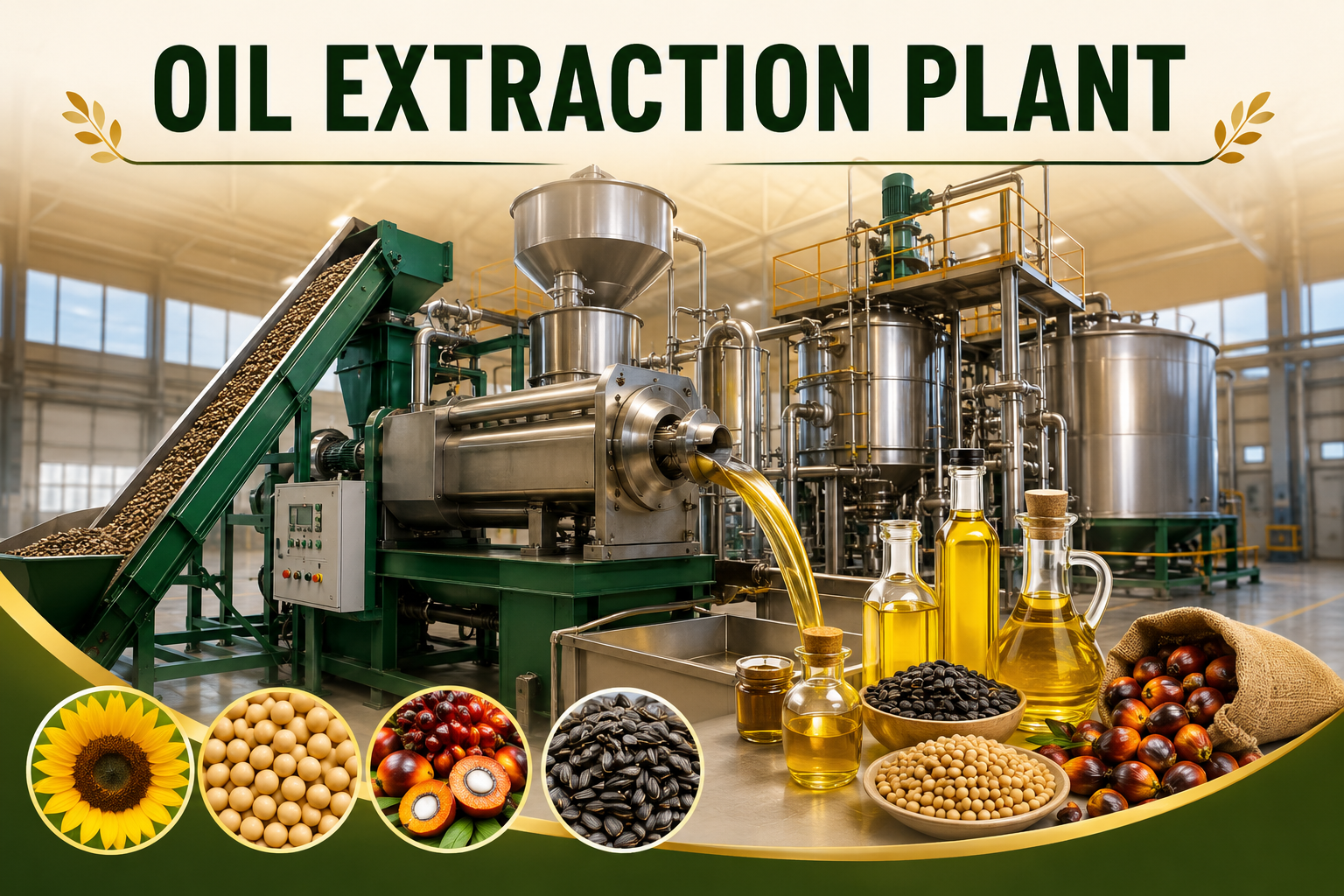
Oil Extraction Plant: Complete Guide to Setup, Process, Cost & Machinery (2026)
Whether you are planning to start a new edible oil business or perhaps scale an existing one, understanding how an oil extraction plant works is the first step toward success. Additionally, from small-scale oil expeller machines to large commercial solvent extraction plants, this guide covers everything you need to know — clearly and practically.
What Is an Oil Extraction Plant?
An oil extraction plant is an industrial facility designed to extract crude oil from raw materials such as oilseeds, nuts, and herbs. Specifically, these raw materials typically include soybeans, mustard, sunflower seeds, groundnuts, sesame seeds, rice bran, cottonseed, and rapeseed.
Once the oil is extracted, it goes through further processing and refining to produce edible, cosmetic, or industrial-grade oil. Consequently, an oil extraction plant is not just a single machine — it is a complete system of machinery, processes, and quality-control steps working together.
Moreover, the global demand for vegetable oil continues to rise steadily. As a result, setting up a well-planned edible oil extraction plant has become one of the most profitable agro-processing businesses in both developing and developed countries.
Two Core Oil Extraction Methods
Before you invest in an oil extraction machine or set up a plant, it is essential to understand the two primary extraction methods used in commercial oil production today.
1. Mechanical Extraction (Oil Expeller / Screw Press)
In the first instance, mechanical extraction uses high physical pressure and friction to squeeze oil directly out of seeds. This method is carried out using an oil expeller machine, also commonly called a screw press.
Key advantages of mechanical extraction include:
- Furthermore, no chemical solvents are used in this process, making it highly suitable for cold-pressed and natural oils.
- Lower initial setup cost compared to solvent-based systems
- Moreover, this method is ideal for small-scale and medium-scale operations ranging from 1 to 50 Tons Per Day (TPD).
- In addition to the process benefits, the resulting oil retains more natural nutrients and flavors.
However, it is worth noting that mechanical extraction typically leaves 6–8% residual oil in the seed cake. Therefore, while it is efficient for small businesses, larger operations often move to solvent-based methods to maximize oil recovery.
2. Solvent Extraction Process
In essence, the solvent extraction process uses an organic chemical solvent, typically hexane. Through this method, the solvent dissolves and extracts any remaining oil from pre-pressed seed cakes. Because of its high efficiency, this method is widely considered the industry standard for high-capacity commercial plants.
Some key facts about solvent extraction:
- It achieves over 95% oil recovery from seeds, significantly reducing waste
- It is ideal for large-scale operations from 50 TPD up to 2,000+ TPD
- The extracted oil, called miscella, is then distilled to remove the solvent and recover crude oil
- Both the oil and the de-oiled meal (used as animal feed) are high quality
Furthermore, many modern commercial oil extraction plants use a combination of both methods — called pre-press and solvent extraction — to get the best of both worlds: natural pressing first, followed by solvent extraction of the residual cake.
Step-by-Step Workflow of an Oil Extraction Plant
To better prepare for your project, understanding the typical workflow of a seed oil processing plant is vital, as it helps you plan your setup more effectively. In this regard, here is how the process generally unfolds:
Step 1: Seed Preparation
To begin the workflow, the first stage involves cleaning the raw oilseeds thoroughly. During this phase, dirt, stones, metal particles, and other impurities are removed using vibrating screens and magnetic separators. Depending on the seed type, dehulling or cracking may also be carried out at this stage. For example, a groundnut oil extraction plant requires decorticating the shells before processing, while a sunflower oil extraction plant needs hull removal to improve oil quality.
Step 2: Conditioning and Cooking
Next, the cleaned seeds are heated and conditioned. This step ruptures the oil-bearing cells within the seeds, making it much easier for oil to flow out during extraction. Proper conditioning significantly improves the overall oil yield and quality.
Step 3: Extraction
Fundamentally, this is the core stage of the oil seed processing plant. In this step, the conditioned seeds are fed into an oil expeller machine for mechanical pressing. In larger plants using the pre-press and solvent extraction method, the partially pressed cake is then transferred to a solvent extractor, where hexane dissolves the remaining oil.
Step 4: Filtration and Oil–Cake Separation
After extraction, the crude oil contains solid particles and impurities. Therefore, it is passed through a filter press or centrifugal clarifiers to remove these solids. The leftover solid material — called oil cake or meal — is dried, cooled, and bagged for use as animal feed or fertilizer.
Step 5: Oil Refining
Finally, the crude oil is sent for refining. The oil refining process typically involves:
- Degumming — removes phospholipids and gums
- Neutralization — eliminates free fatty acids
- Bleaching — removes color pigments
- Deodorization — removes unwanted odors and flavors
After refining, the oil is ready for packaging and commercial use.
Types of Oil Extraction Plants by Seed Type
One of the most important decisions when planning an edible oil extraction plant setup is choosing the right seed type. Different seeds require different machinery configurations and processing parameters.
Here is a quick overview of the most common types:
| Seed Type | Key Characteristics | Typical Plant Size |
|---|---|---|
| Soybean oil extraction plant | High protein meal, widely used globally | 100–2000+ TPD |
| Sunflower oil extraction plant | Light flavor, popular for cooking | 50–500 TPD |
| Groundnut oil extraction plant | Rich flavor, high oil content | 5–200 TPD |
| Mustard oil extraction plant | Popular in South Asia, pungent flavor | 5–100 TPD |
| Sesame oil extraction plant | Premium oil, often cold-pressed | 1–50 TPD |
| Rice bran oil extraction plant | High-value oil, requires solvent extraction | 100–1000 TPD |
| Cottonseed oil extraction plant | Industrial and edible uses | 50–500 TPD |
| Rapeseed oil extraction plant | Used globally for cooking and biodiesel | 100–2000 TPD |
As you can see, the seed type directly influences the scale, machinery, and process design of your plant.
Oil Extraction Plant Cost: What to Expect
The oil extraction plant cost varies widely depending on several key factors:
1. Plant Capacity (TPD)
A small-scale plant processing 5–10 TPD costs significantly less than a commercial plant handling 500+ TPD. Small expeller-based plants can start from approximately ₹10–25 lakh in India, while large solvent extraction plants may require ₹5 crore or more.
2. Extraction Method
Mechanical expeller plants are generally less expensive to set up than solvent extraction plants. However, solvent plants offer better oil recovery and long-term profitability at higher capacities.
3. Degree of Automation
A fully automatic oil extraction plant for seeds comes with PLC-based controls, automated feeding systems, and integrated monitoring. Consequently, it costs more upfront but reduces labor costs and improves consistency.
4. Turnkey vs. Partial Supply
Many oil extraction plant manufacturers offer complete turnkey solutions — from feasibility studies and plant design to machinery supply, installation, and commissioning. These packages often represent better value than sourcing equipment piecemeal.
5. Location and Infrastructure
Civil construction, land, utilities, and logistics also add to the total oil extraction plant project cost.
How to Set Up an Oil Extraction Plant: Key Steps
If you are wondering how to set up an oil extraction plant, here is a practical roadmap to follow:
Step 1: Market Research and Feasibility Study
To begin with, you must identify your target market, raw material availability, and competition. Ultimately, conducting a proper feasibility study helps you choose the right seed type, plant capacity, and extraction method.
Step 2: Choose the Right Scale
Decide whether you need a small-scale oil extraction plant (1–10 TPD) or a commercial oil extraction plant (50 TPD and above). Your budget, market size, and growth plans should guide this decision.
Step 3: Select a Reliable Manufacturer
Look for experienced oil extraction plant machinery manufacturers and suppliers. Reputable companies like Muez Hest, Tinytech India, and Spectec India design and install plants globally, offering both small expeller units and large integrated solvent extraction systems.
Step 4: Obtain Licenses and Approvals
Depending on your country and location, you will need food processing licenses, environmental clearances, and factory registrations before starting operations.
Step 5: Civil Work and Utility Setup
Prepare the plant site, construct the building, and set up utilities such as water supply, electricity, steam, and effluent treatment.
Step 6: Equipment Installation and Commissioning
Work closely with your oil extraction plant supplier to install and commission all machinery. Staff training is equally important at this stage.
Step 7: Trial Runs and Quality Testing
Run the plant on trial batches and test the oil quality before full commercial production begins.
Mechanical vs. Solvent Extraction: Which Is Right for You?
Selecting the correct extraction method is undoubtedly one of the most critical decisions in your oil extraction plant project. To help you make an informed choice, here is a side-by-side comparison of the two primary methods:
| Factor | Mechanical Extraction | Solvent Extraction |
|---|---|---|
| Oil recovery | 85–92% | 95–99% |
| Best for | 1–50 TPD small/medium plants | 50 TPD+ large commercial plants |
| Chemical use | None | Hexane solvent |
| Oil type | Cold-pressed, natural | Refined commercial oil |
| Setup cost | Lower | Higher |
| Profitability at scale | Moderate | High |
In summary, mechanical extraction is perfect for small-scale oil extraction plants and premium cold-pressed oil brands. On the other hand, solvent extraction is the right choice for high-volume commercial oil extraction plants that need maximum yield and cost efficiency.
Finding the Right Oil Extraction Plant Manufacturer
When sourcing oil extraction plant machinery, always evaluate manufacturers based on the following:
- Years of experience and number of installed plants
- Range of plant capacities offered (from small to large scale)
- After-sales service and spare parts availability
- Ability to offer turnkey project execution
- References from existing customers in your region
Platforms such as IndiaMART’s Oil Plant Machinery Directory list a wide range of oil extraction plant suppliers offering both individual machines and complete plant setups. Additionally, visiting an installed plant before placing your order is always a smart move.
10 Frequently Asked Questions (FAQs)
Q1. What is an oil extraction plant?
Essentially, an oil extraction plant is an industrial facility that extracts crude oil from oilseeds—such as soybean, sunflower, mustard, and groundnut—using mechanical or solvent-based methods. Following this extraction, the oil undergoes refining to make it suitable for commercial use.
Q2. What is the difference between mechanical and solvent extraction?
Mechanical extraction uses a screw press to physically press oil from seeds, while solvent extraction uses hexane to dissolve remaining oil from pressed cakes, achieving over 95% oil recovery.
Q3. How much does an oil extraction plant cost?
The cost depends on capacity and method. A small 5–10 TPD mechanical plant can start from ₹10–25 lakh, while a large 500 TPD solvent plant may cost ₹5 crore or more.
Q4. Which seeds are best for an oil extraction plant?
To begin with, among the various options available, soybeans, sunflower seeds, groundnuts, mustard, sesame, rice bran, cottonseed, and rapeseed are widely considered to be the most commonly processed seeds in commercial oil extraction plants.
Q5. What is the minimum capacity for a commercial oil extraction plant?
Most commercial edible oil extraction plants start at 50 TPD and above, though small-scale mechanical oil mills can operate profitably at 1–10 TPD.
Q6. What is residual oil in cake?
Residual oil in cake is the oil that remains in the seed cake after mechanical pressing. Solvent extraction removes this residual oil, increasing total oil recovery significantly.
Q7. Is a solvent extraction plant safe?
Yes. Modern continuous solvent extraction plants are designed with rigorous safety systems to handle and recover hexane safely, minimizing risk when operated properly.
Q8. Can one plant process multiple seed types?
Indeed, many multi-seed oil extraction plants are designed to handle different seeds with adjustable settings. Consequently, this design makes them versatile for changing raw material availability.
Q9. What licenses are needed to set up an oil extraction plant?
Generally speaking, you will need food processing licenses, environmental clearances, fire safety approvals, and local factory registrations. However, keep in mind that these specific requirements vary greatly by country and region.
Q10. Where can I find reliable oil extraction plant manufacturers?
Reputable manufacturers include Muez Hest, Tinytech India, Spectec India, and Goyum Screw Press. You can also explore listings on IndiaMART for a wide range of oil extraction plant machinery suppliers.
Conclusion
Setting up an oil extraction plant is a significant but rewarding investment. Whether you start with a small oil expeller machine or build a full-scale solvent extraction plant, the key is careful planning, choosing the right machinery, and partnering with experienced manufacturers.
To summarize, the most important steps are understanding your seed type and market, choosing the right extraction method for your scale, and working with a reliable oil extraction plant supplier who can support you from project planning through to commissioning. With the edible oil market growing rapidly, there has never been a better time to enter the oil mill plant business.
Are you looking to set up an edible oil extraction plant?
If so, contact a certified oil extraction plant manufacturer today. By doing this, you can receive a customized feasibility study and a precise machinery quotation for your project.



Leave a Reply