If you have been searching for This guide answers all three in one place, using real project-report data, current machinery pricing patterns, and the licensing checklist you will actually need in India.

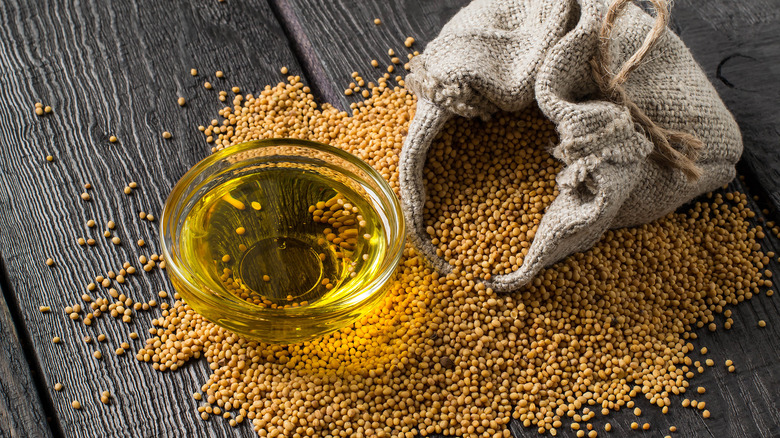
Mustard oil holds a permanent place in Indian kitchens — from Bengal’s shorshe dishes to Punjab’s sarson da saag to the pungent kachi ghani oil used across North India for cooking, pickling, and massage. That steady, culturally rooted demand is exactly why small and mid-size entrepreneurs continue to invest in mustard oil processing units year after year. But before you spend a single rupee, you need clarity on the machinery, the process flow, the real cost structure, and the compliance requirements. That is what we will walk through below.
What Is a Mustard Oil Plant?
A mustard oil plant (known regionally as a sarso oil plant or sarson oil plant) is a commercial food-processing facility that converts raw mustard seeds into edible mustard oil through a defined sequence of cleaning, pressing, filtering, and packaging. Unlike a household chakki or a tiny cottage press, a proper plant is engineered around continuous throughput, consistent oil recovery, and food-safety compliance.
At its core, every mustard oil plant — whether it processes half a tonne or fifty tonnes a day — performs the same four jobs:
- Clean the raw seed of dust, stones, and foreign matter
- Extract oil from the seed using mechanical or solvent-based methods
- Filter the crude oil to remove sediment and seed particles
- Store and pack the finished oil for the market
The scale, automation level, and additional refining stages you choose determine where your project falls on the cost spectrum — and that is the part most buyers get wrong, because they compare a Rs 2.5 lakh mini setup with a Rs 17 lakh semi-automatic line without understanding what separates them.
Why “Sarso Oil Plant” and “Sarson Oil Plant” Mean the Same Thing
Search behaviour around this keyword is split largely because of regional spelling. “Sarso” is the more common Hindi/Punjabi transliteration for mustard, while “sarson” is the fuller phonetic spelling used in phrases like sarson da saag. Both terms point to the identical machinery and process as a mustard oil plant — there is no technical difference. If you are researching suppliers, you can use these terms interchangeably without worrying about missing relevant listings.
Core Components of a Mustard Oil Plant
A commercial mustard oil setup is built from a chain of machines, each solving one specific problem in the production line. Understanding what each one does will help you evaluate quotations intelligently instead of just comparing a single total price.
1. Seed Cleaning Section
Raw mustard seed arriving from the mandi carries dust, husk, small stones, and broken seeds. A seed cleaner — usually a vibrating screen or rotary cleaner paired with an aspiration/dust-collection system — removes this foreign matter before the seed reaches the expeller. Skipping or under-investing in this stage is one of the most common mistakes new operators make, because contaminated feedstock accelerates wear on the expeller worm shaft and lowers final oil clarity.
2. Seed Heating / Cooking (Optional Stage)
Some processors pass cleaned seed through a steam-heated cooking kettle before pressing. Heating softens the seed and can modestly raise oil yield, but it also alters flavour and aroma. Traditional kachi ghani (cold-pressed) mustard oil deliberately skips or minimizes this step, since cold pressing at low temperature preserves the pungency and characteristic aroma that Indian consumers specifically pay a premium for.
3. Oil Expeller / Screw Press
This is the heart of the plant. A rotating screw inside a perforated barrel compresses the seed, generating friction and pressure that forces oil out through small holes while pushing the residual solid — the oil cake — out the other end. Mustard seed typically holds 38–45% oil content, and a well-tuned expeller run through a proper multi-stage pressing cycle can recover a large majority of that in the crude oil, leaving a cake with roughly 6–7% residual oil that is sold separately as high-protein animal feed.
4. Filter Press
Freshly expelled oil is cloudy, carrying fine seed particles called “foots” or sediment. A plate-and-frame filter press — using cloth, polypropylene, or stainless-steel plates — strains this out, producing the clear, bright oil that consumers expect on the shelf. Many plants also add a secondary polishing filter for extra clarity before bottling.
5. Material Handling: Bucket Elevator & Screw Conveyor
As throughput scales up, moving seed and cake by hand becomes impractical. Bucket elevators lift seed vertically into the cleaning and pressing line, while screw conveyors move material horizontally between stages. These aren’t optional extras on anything beyond a mini plant — they are what keeps a medium-capacity line running without constant manual labour.
6. Storage Tanks and Packaging Line
Filtered oil is held in mild-steel or stainless-steel storage tanks before being pumped into bottles, pouches, or tins. Entry-level setups use manual or semi-automatic filling machines; higher-capacity plants invest in volumetric automatic filling and sealing lines to cut labour cost per litre.
7. Boiler / Steam Generation (For Larger Plants)
If your process includes a cooking or conditioning stage, or if you plan to add a refining section later, a small boiler or thermic fluid heater becomes part of the capital equipment list.
8. Control Panel
A unified electrical panel houses the motor controllers, starters, and safety cut-offs for the entire line — a small line item that is nonetheless essential for safe, continuous operation.
Cold Pressing vs Solvent Extraction: Which Should You Choose?
This is the single biggest strategic decision for a new mustard oil plant owner, and it shapes almost every other choice you make afterward.
Expeller / cold pressing (kachi ghani) uses only mechanical pressure, no heat or chemicals. It is the preferred route for entrepreneurs targeting the retail edible-oil market, because it preserves the natural pungency, colour, and aroma that Indian households associate with genuine mustard oil. It is also the more accessible entry point — capital requirements are lower, and the process is simpler to learn and operate.
Solvent extraction uses a chemical solvent, typically hexane, to pull a higher percentage of oil out of the cake, followed by a stage to strip the solvent back out. It delivers a higher oil yield and is standard practice at large industrial scale, but the resulting oil has a milder character and generally needs further refining before it is market-ready. Solvent extraction plants also carry significantly higher capital cost, stricter safety and environmental compliance, and are rarely the right starting point for a first-time entrepreneur.
For most readers researching “mustard oil plant” or “sarso oil plant” with a first-unit mindset, an expeller-based cold-press line is the practical, proven starting point — and it is the model reflected in almost every government project report and small-industry case study on this business.
Mustard Oil Plant Cost in India: A Realistic Breakdown
Cost is the question every buyer actually wants answered, and it varies significantly by capacity and automation. Based on current market listings and an official Detailed Project Report filed under the Ministry of Food Processing Industries’ PM-FME scheme, here is a grounded breakdown.
Small to Mid-Size Plant (Around 5 TPD)
Market data on 5 tonnes/day mustard oil setups shows a wide price band — commonly cited between roughly ₹2.49 lakh and ₹16.90 lakh — with the spread driven almost entirely by:
- Manual vs semi-automatic vs fully automatic operation
- Single-stage vs multi-stage pressing
- Whether a filtration and polishing section is included
- Build quality (mild steel vs stainless steel contact parts)
- Brand, warranty, and after-sales support
Government Project-Report Cost Model (Micro Unit)
A model Detailed Project Report published for the PM-FME scheme (targeting a unit producing 1,10,000 litres of mustard oil per annum, alongside oil cake as a by-product) lays out fixed capital investment as follows:
| Head | Approx. Cost |
|---|---|
| Land development & civil work | Rs 4.00 lakh |
| Plant & machinery (expeller, kettle, filter press, motor, accessories) | Rs 6.30 lakh |
| Other fixed assets (furniture, fittings, trays) | Rs 2.00 lakh |
| Working capital margin | Rs 2.15 lakh |
| Contingencies | Rs 0.62 lakh |
| Total project cost | Rs 15.07 lakh |
Within the machinery head alone, the report itemizes a heavy-duty oil expeller (250 kg/hr capacity) at roughly Rs 2.6 lakh, a cooking/feeding kettle at Rs 38,000, an 18-plate filter press at Rs 1.25 lakh, a 20HP motor with starter at Rs 65,000, plus spares and fittings — a useful reference point when you’re comparing supplier quotations line by line rather than accepting a single bundled figure.
Working Capital You Should Budget Separately
Machinery is only part of the picture. The same project model shows a working capital requirement of roughly Rs 6.45 lakh in year one, covering raw seed stock, finished-goods inventory, and receivables — money that is easy to underestimate when entrepreneurs focus only on equipment cost.
What Drives Cost Up or Down
- Capacity: A mini 1–2 TPD unit costs a fraction of a 10+ TPD line
- Automation: Manual feeding vs PLC-controlled continuous lines
- Material of construction: MS parts are cheaper; food-grade SS extends equipment life and hygiene compliance
- Refining addition: Degumming, neutralization, bleaching, and deodorization stages add substantial cost but are only necessary if you’re producing refined (not kachi ghani) oil
- Packaging automation: Manual filling vs automatic volumetric filling and sealing
Step-by-Step Mustard Oil Manufacturing Process
Understanding the actual production flow helps you plan floor space, staffing, and utility connections correctly.
Step 1 — Seed Procurement and Drying: Mustard seed is sourced fresh from farmers or mandis. If moisture content is high, seeds are sun-dried or mechanically dried first, since excess moisture accelerates rancidity and lowers extraction efficiency.
Step 2 — Seed Cleaning: Seeds pass through the cleaner to strip out dust, stones, husk, and undersized or broken seed.
Step 3 — Heating (Optional): For non-kachi-ghani lines, cleaned seed is briefly heated in a kettle to raise yield and improve cake protein value for animal feed.
Step 4 — Multi-Stage Pressing: Seed is fed into the expeller, typically run through three to four pressing stages to maximize oil recovery, leaving a low-residual-oil cake behind.
Step 5 — Filtration: Crude oil passes through the filter press to remove sediment, followed by an optional polishing filter for extra clarity.
Step 6 — Optional Refining: If the business plan targets refined oil rather than traditional kachi ghani, the filtered oil goes through degumming, neutralization, bleaching, and deodorization.
Step 7 — Storage: Clear oil is pumped into holding tanks, kept away from heat and light to prevent oxidation.
Step 8 — Packaging and Dispatch: Oil is filled into bottles, pouches, or tins in market-appropriate sizes and moved to distribution.
Licenses and Registrations You Will Need
Setting up a legally compliant mustard oil plant in India generally requires the following approvals — the exact list can vary slightly by state:
- FSSAI License — mandatory for any edible oil manufacturing unit
- GST Registration — for tax compliance and interstate sale
- MSME / Udyam Registration — unlocks subsidy schemes and easier institutional lending
- Factory Act License — required once you cross the applicable worker/power-usage threshold
- Fire Safety NOC — from local fire department
- Pollution / Environmental Clearance — particularly relevant if you later add a solvent extraction or boiler-heavy process
- Electricity Load Sanction — industrial connection for your motor and boiler load
- Mandi Act Registration — if you’re directly procuring seed from agricultural markets
- Change of Land Use (CLU) — if the plant site isn’t already zoned industrial
- Labour Law Registrations — ESIC and EPFO once staff count crosses statutory limits
Building this checklist into your project timeline early avoids costly delays after machinery has already arrived on site.
Raw Material: Where Mustard Seed Comes From
India’s mustard seed production is concentrated in a handful of states, and sourcing logistics should factor directly into where you locate your plant. Rajasthan is the dominant grower, contributing close to half of national output, followed by Madhya Pradesh, Haryana, and Uttar Pradesh. National consumption of mustard oil has grown steadily for decades and now runs into the millions of metric tons annually, with the overwhelming majority used directly for cooking and the remainder for pickling and raw culinary use. That scale of steady, non-seasonal demand is part of why mustard oil processing remains an attractive small-industry category year after year.
Is a Mustard Oil Plant Profitable? What the Numbers Show
Rather than relying on vague promises of “high profit,” it helps to look at an actual government-modeled financial projection for a small mustard oil unit. A PM-FME scheme project report for a micro unit producing 1.1 lakh litres of oil annually (with capacity utilization ramping from 50% in year one to 70% by year five) projects:
- Gross profit margin climbing from roughly 14% in year one to over 16% by year five
- Net profit after tax rising from about Rs 1.4 lakh in year one to Rs 6.5 lakh by year five
- Average Debt Service Coverage Ratio (DSCR) of 3.63 — a healthy indicator for loan eligibility
- Break-even point around 40–43% of installed capacity, meaning the unit turns profitable well before running at full capacity
These figures reinforce a simple point: profitability in this business is driven less by exotic strategy and more by consistent capacity utilization, disciplined raw-material buying, and reliable machinery uptime. A plant that stands idle due to poor equipment or seed shortages erodes margins fast, which is exactly why choosing dependable, well-specified machinery matters as much as the headline purchase price.
Choosing the Right Mustard Oil Plant Machinery Partner
Given how much cost and profitability hinge on equipment reliability, seed-to-oil recovery efficiency, and after-sales support, your choice of machinery supplier deserves as much diligence as your choice of business model. When evaluating vendors, look closely at:
- Line-item quotations, not bundled lump-sum pricing — so you can compare expeller capacity, filter press plate count, and motor rating apples-to-apples
- Food-grade construction on all oil-contact parts
- Installation and commissioning support, including operator training
- Spare parts availability, since worm shafts, cages, and filter cloths are wear items you’ll need to replace routinely
- Reference installations you can actually visit or verify
- Scalability — can the line be upgraded from mini to mid-capacity without a full rebuild
Fostechno works with entrepreneurs at exactly this decision point — helping you match plant capacity, budget, and automation level to your actual business goals rather than a generic package, so your investment in a mustard oil plant, sarso oil plant, or sarson oil plant setup is backed by the right machinery from day one.
Types of Mustard Oil Plants by Capacity
Not every entrepreneur needs the same scale, and matching plant type to your realistic seed supply and market reach matters more than chasing the biggest machine on a supplier’s list.
Mini Mustard Oil Plant (below 1 TPD): Best suited to home-based or village-level entrepreneurs, often paired with a single expeller and a basic filter setup. Investment is modest, footprint is small, and it’s an ideal way to test demand before scaling.
Small Commercial Plant (1–5 TPD): The most common starting point for first-time business owners, matching the capacity level covered in most government project reports. This range balances manageable capital outlay with enough throughput to serve a local or district-level market, including retail bottling.
Mid-Size Plant (5–15 TPD): Suited to entrepreneurs targeting regional distribution, wholesale supply to grocery chains, or B2B supply to caterers and hotels. At this scale, automation in material handling and packaging starts paying for itself through labour savings.
Large / Industrial Plant (15 TPD and above): Typically combines expeller pressing with solvent extraction and a full refining line, aimed at national-brand production or export. Capital requirements, compliance obligations, and technical staffing needs are substantially higher, and this scale is rarely a first-unit decision.
Choosing correctly here isn’t just about budget — it’s about matching machinery capacity to how much seed you can reliably procure and how much finished oil you can realistically sell, since idle capacity is one of the fastest ways to erode the profit margins discussed above.
Common Mistakes First-Time Mustard Oil Plant Owners Make
Having reviewed how project costs, machinery, and profitability actually play out, a few recurring mistakes are worth calling out directly:
- Underinvesting in seed cleaning. Skimping on the cleaner to save a modest amount upfront leads to faster wear on the expeller and lower-quality oil — a false economy that costs more in maintenance and rejected stock.
- Ignoring working capital. Entrepreneurs often budget precisely for machinery but underestimate the cash needed to hold 15–30 days of raw seed and finished-goods stock, as reflected in the working capital figures cited earlier.
- Skipping licensing until after installation. FSSAI, fire NOC, and pollution clearances can take weeks to months; starting this process only after machinery arrives delays your revenue timeline unnecessarily.
- Buying capacity you can’t feed. A larger expeller sitting idle because seed supply or market demand can’t match it is a common cause of poor break-even performance.
- Overlooking the by-product revenue. Oil cake is a genuine secondary income stream; plants that don’t have a buyer lined up for it are leaving margin on the table.
- Choosing the cheapest quote without checking build quality. Mild-steel components that touch oil directly can compromise both hygiene compliance and product shelf life compared to food-grade stainless steel.
Marketing and Selling Your Mustard Oil
Production is only half the business. Mustard oil in India sells through several channels, and most successful small processors use a mix rather than relying on one:
- Local retail and kirana stores, where bulk tins and smaller consumer-pack bottles both move well
- Modern trade — supermarkets and departmental stores — which increasingly favour well-packaged, clearly labelled branded oil over loose or unbranded supply
- B2B supply to hotels, restaurants, and caterers who consume oil in larger volumes and value consistency over branding
- Direct-to-consumer and D2C online channels, an increasingly viable route for kachi ghani oil marketed on its cold-pressed, chemical-free positioning
- Wholesale mandi and trader networks, useful for moving volume quickly, though typically at thinner margins than branded retail
A clear FSSAI-compliant label, consistent batch quality, and dependable supply are what convert a one-time buyer into a repeat customer — and that consistency loops directly back to having reliable, well-maintained machinery on your production floor.
Frequently Asked Questions
What is the minimum investment to start a mustard oil plant?
A basic mini expeller-based setup can start in the low lakhs, while a more complete small-commercial line with cleaning, pressing, and filtration typically falls in the Rs 6–17 lakh range depending on capacity and automation, before accounting for land, building, and working capital.
How much oil does mustard seed yield?
Mustard seed generally contains 38–45% oil by weight, though actual expeller recovery depends on seed quality, moisture content, and the number of pressing stages used.
Is kachi ghani oil the same as cold-pressed mustard oil?
Yes. Kachi ghani refers to the traditional cold-pressing method that avoids added heat, preserving the natural pungency and aroma that most Indian consumers specifically look for.
What is the by-product of a mustard oil plant, and is it valuable?
The de-oiled cake left after pressing is high in protein and sold as animal feed — a meaningful secondary revenue stream that project reports factor directly into overall profitability.
Can I start a mustard oil plant as a home-based or micro enterprise?
Yes. Schemes like PM-FME specifically support micro and home-based food processing units, including mustard oil processing, with subsidy support for eligible entrepreneurs upgrading an existing small operation.
How long does it take to set up a mustard oil plant?
For a mini to small-commercial unit with machinery readily available, installation and commissioning typically takes a few weeks once civil work and utility connections are ready — though licensing timelines can extend the overall project schedule.
Final Thoughts
A mustard oil plant is one of the more accessible entry points into food processing in India — the machinery is well understood, the raw material supply chain is mature, and consumer demand has grown steadily for decades. But the difference between a plant that struggles and one that hits healthy margins by year three almost always comes down to two things: getting the machinery specification right for your target capacity, and staying on top of licensing and working-capital planning from day one.
If you’re evaluating a mustard oil plant, sarso oil plant, or sarson oil plant setup and want machinery guidance matched to your budget and capacity goals, Fostechno can help you plan the right configuration before you commit capital.
mustard oil plant
mustard oil plant
mustard oil plant
mustard oil plant
mustard oil plant
mustard oil plant
mustard oil plant
mustard oil plant
mustard oil plant
mustard oil plant
mustard oil plant
mustard oil plant
mustard oil plant
mustard oil plant



Leave a Reply