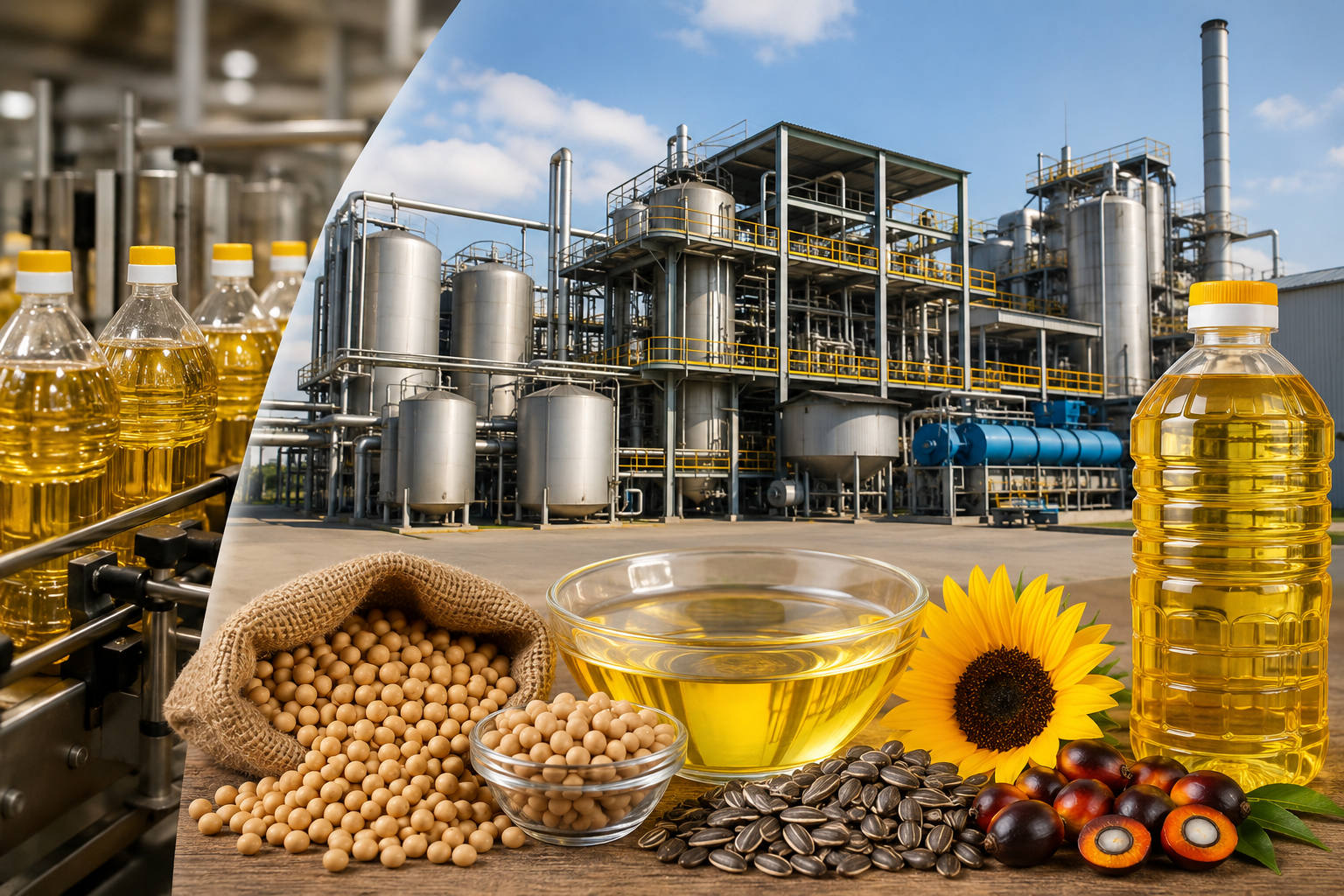
Vegetable Oil Plant : Complete Guide to Setup, Process, Cost & Business in India (2026)
If you are thinking about starting a vegetable oil plant in India, then you have come to the right place. Moreover, the vegetable oil industry is one of the most profitable manufacturing businesses in India today. In addition, the global vegetable oil market is growing fast. Therefore, this complete guide will help you understand everything — from the process and machinery to cost and profit.
Furthermore, India is the world’s largest importer of vegetable oil. However, domestic production is still low. As a result, the government is now strongly supporting local oil plant businesses through subsidies and schemes. So, this is the right time to invest in a vegetable oil plant.
What is a Vegetable Oil Plant?
Essentially, a vegetable oil plant processes raw oilseeds—such as soybean, mustard, sunflower, groundnut, or cottonseed—into edible cooking oil. Additionally, the plant refines the crude oil to remove impurities, odors, and harmful substances. As a result, the final product is clean, safe, and ready for cooking.
Vegetable oils have been used for thousands of years. In fact, archaeological evidence shows that olive oil was first produced around 6000 BC. Today, vegetable oils serve many purposes beyond cooking. They are also used in soaps, cosmetics, biodiesel, lubricants, and paints.
Types of Vegetable Oil Plants
Vegetable oil plants are generally categorized into two types, which are determined by their specific capacity and operational style:
1. Batch Type Vegetable Oil Plant
A batch type plant processes oil in fixed batches. It is suitable for small-scale businesses. Furthermore, the capacity ranges from 5 tons to 25 tons per day. The investment is lower, but the operating cost is higher compared to continuous plants.
2. Continuous Type Vegetable Oil Plant
A continuous type plant runs non-stop and is suitable for medium to large businesses. Moreover, it processes 30 tons per day or more. Therefore, it has better efficiency, lower utility consumption, and higher return on investment (ROI).
Quick Comparison: Batch vs Continuous Plant
| Feature | Batch Type | Continuous Type |
| Capacity | 5–25 TPD | 30+ TPD |
| Operation | Manual (Batch by Batch) | Automatic (Non-stop) |
| Investment | Lower | Higher |
| Operating Cost | Higher | Lower |
| Quality | May vary | Consistent |
| Best For | Small businesses | Medium to large businesses |
| ROI | Moderate | Higher |
How Does a Vegetable Oil Plant Work? (Step-by-Step Process)
The vegetable oil plant process starts from raw seeds and ends with refined edible oil. Here is the complete process explained simply:
Step 1: Seed Preparation (Pretreatment)
To begin with, the plant cleans and dehulls the raw oilseeds. Furthermore, it removes stones, dust, and foreign materials. Subsequently, the machinery grinds the seeds into a coarse meal. Finally, the system heats the meal before oil extraction begins. This step is important because it increases the oil yield.
Step 2: Oil Extraction
Moving to the next stage, the plant extracts oil from the seeds using one of two primary methods. To begin with, it employs mechanical pressing—the screw expeller method—where the machinery presses seeds under high pressure to obtain crude oil. Alternatively, the facility may utilize solvent extraction, a process involving a chemical solvent like hexane. Significantly, solvent extraction provides a higher yield of 40 to 43 percent. In contrast, mechanical pressing typically yields only 34 to 37 percent.
Step 3: Degumming
After extraction, the crude oil contains phospholipids called gums. Therefore, phosphoric acid is added to the oil at 65 to 70 degrees Celsius. As a result, the gums are separated and removed. This step is important because gums can cause the oil to go bad quickly.
Step 4: Neutralization
Then, caustic soda (NaOH) solution is added to the degummed oil. Consequently, free fatty acids (FFA) react with caustic soda to form soap. This soap is separated from the oil using centrifuges. Furthermore, the removed soap stock can be used in soap manufacturing.
Step 5: Water Washing
After neutralization, residual soap remains in the oil. Therefore, the oil is washed with 10 to 15 percent soft water at 95 degrees Celsius. As a result, soap traces are removed. The washed oil is then dried in a vacuum dryer.
Step 6: Bleaching
To proceed, the plant adds bleaching earth (clay) to the oil at 95 to 105 degrees Celsius under a vacuum. As a result of this process, the clay effectively adsorbs color pigments, trace metals, and other impurities. Consequently, the oil becomes significantly lighter in color. Finally, the machinery uses pressure leaf filters to remove the spent earth from the mixture.
Step 7: Dewaxing (For Certain Oils)
Some oils — such as sunflower, corn, and cottonseed oil — contain waxes. Therefore, a dewaxing step is needed. The oil is cooled to crystallize the waxes. Then the wax crystals are filtered out. As a result, the oil stays clear even in cold temperatures.
Step 8: Deodorization
Finally, the bleached oil is heated to 240 to 260 degrees Celsius under high vacuum. Steam is passed through the oil to strip out bad odors, flavors, and any remaining free fatty acids. Moreover, this step also lightens the color of the oil further. After deodorization, the refined oil is cooled and sent to storage tanks.
Physical Refining vs Chemical Refining — Which is Better?
There are two main refining methods used in vegetable oil plants. Both have their advantages. Therefore, choosing the right one depends on the type of oil you are processing.
Physical Refining
Physical refining does not use caustic soda. Instead, it removes free fatty acids directly through steam distillation. Therefore, it is best for oils with high FFA content. These include rice bran oil, palm oil, palm kernel oil, hazelnut oil, and shea butter. Moreover, physical refining causes less oil loss and preserves important nutrients like Oryzanol in rice bran oil.
Chemical Refining
Chemical refining uses caustic soda to neutralize free fatty acids. It is ideal for soft oils with low FFA, such as soybean oil, sunflower oil, mustard oil, corn oil, cottonseed oil, and groundnut oil. In addition, chemical refining recovers phospholipids as liquid lecithin, which adds extra value to your business.
Vegetable Oil Plant Machinery — Complete List
Setting up a vegetable oil plant requires several machines. Here is the complete list of equipment needed:
- Oil Expeller / Screw Press — for mechanical oil extraction
- Seed Cleaner — to remove dust, stones, and foreign material
- Dehuller / Decorticator — to remove seed shells
- Flaker — to flatten seeds before extraction
- Solvent Extraction System — for high-yield oil extraction
- Degumming Vessel & Mixer — for phosphoric acid treatment
- Neutralization Centrifuge — for caustic soda treatment
- Bleaching Unit with Vacuum — for color and impurity removal
- Pressure Leaf Filters — for filtering spent bleaching earth
- Deodorizer (Vacuum Tower) — for removing odors at high temperature
- Dewaxing Crystallizer — for sunflower and corn oil
- Thermic Fluid Heater / Boiler — for heat supply
- Storage Tanks — for crude and refined oil storage
- Oil Filter Press — for small-scale filtration
- Filling & Packaging Machine — for bottling and sealing
Vegetable Oil Plant Setup Cost in India (2025)
The setup cost of a vegetable oil plant in India depends on the production capacity. Here is a clear breakdown:
| Plant Size | Investment (Approx.) | ROI Period |
| 5 TPD (Small Scale) | Rs. 7 Lakh – Rs. 10 Lakh | 6–12 Months |
| 10–20 TPD (Medium Scale) | Rs. 25 Lakh – Rs. 45 Lakh | 12–18 Months |
| 30+ TPD (Large Scale) | Rs. 60 Lakh and above | 18–24 Months |
| Minimum Start Investment | Rs. 20 Lakh | 12–18 Months |
Furthermore, the average profit margin in the vegetable oil business is 25 to 40 percent. Therefore, it is one of the most profitable manufacturing businesses in India.
Top Vegetable Oil Plant Manufacturers in India
To successfully set up a vegetable oil plant, you will need to buy machinery from a reliable manufacturer. Consequently, I have listed the top companies in India below:
1. Spectec Techno Projects — New Delhi
Spectec India is one of the leading manufacturers of edible oil refinery plants. They offer both physical and chemical refining plants. Moreover, they have a global presence in over 20 countries including Nepal, Bangladesh, Egypt, Ghana, Nigeria, and the Philippines.
2. Goyum Screw Press — Ludhiana, Punjab
Goyum is a well-known manufacturer and exporter of oil expellers and refinery plants. They provide batch type plants from 5 to 25 TPD and continuous type plants from 30 TPD onwards. In addition, they serve clients in over 50 countries worldwide.
3. Mectech Process Engineers — Gurgaon, Haryana
Mectech is a 50-year-old company specializing in vegetable oil refining and solvent extraction plants. Furthermore, they have completed projects in Argentina, Germany, Indonesia, Malaysia, UAE, Vietnam, and many other countries.
4. Pemac Projects
Pemac Projects supplies comprehensive cooking oil processing solutions for various types of edible oils and niche fats. They are known for their turnkey project delivery.
Global Vegetable Oil Market Size & Trends (2025)
The vegetable oil market is growing rapidly. Therefore, investing in a vegetable oil plant is a smart business decision. Here are the key market facts:
- Global vegetable oil market size in 2025: USD 418 Billion
- Expected market size by 2030: USD 593 Billion
- CAGR (2025–2030): 7.27 percent
- Asia Pacific holds 48.73 percent of global market share
- India is the world’s largest importer of vegetable oil
- India’s annual vegetable oil consumption: over 24 million tons
- Palm oil has the largest market share at 28.56 percent
- Sunflower oil is the fastest growing segment
- Soybean oil CAGR: 5.9 percent (2024–2030)
Moreover, the Indian government’s Aatmanirbhar Bharat initiative is encouraging domestic oil production. As a result, subsidies and credit support are now available for oil plant businesses. Therefore, this is the best time to start a vegetable oil plant in India.
Oil Crop Yield Comparison — Which Oilseed is Most Profitable?
Choosing the right oilseed is very important for your vegetable oil plant business. Here is a comparison of oil yield per hectare per year:
| Oil Crop | Yield (Tons/Hectare/Year) | Smoke Point |
| Palm Oil | 4.0 (Highest) | 235°C |
| Coconut Oil | 1.4 | 175°C |
| Sunflower Oil | 0.6 | 227°C |
| Canola / Mustard Oil | 0.75 | 204°C |
| Soybean Oil | 0.45 | 238°C |
| Groundnut (Peanut) Oil | ~0.5 | 232°C |
Uses of Vegetable Oil Beyond Cooking
Many people think vegetable oil is only used for cooking. However, vegetable oils have many industrial and commercial uses. Therefore, a vegetable oil plant can serve multiple markets. Here are the main uses:
- Cooking and Frying — most common use in households and restaurants
- Food Processing — used in margarine, salad dressings, baked goods, and snacks
- Biodiesel Production — vegetable oils are used as feedstock for biofuel
- Soap and Detergent Manufacturing — palm oil and coconut oil are key ingredients
- Cosmetics and Skincare — used in creams, lotions, and hair care products
- Pharmaceuticals — used as a base in medicines and supplements
- Paints and Varnishes — linseed oil is used in wood treatment products
- Lubricants — biodegradable hydraulic fluids and engine lubricants
- Electrical Insulators — vegetable oils are biodegradable and non-toxic
- Animal and Poultry Feed — used in feed mills for livestock
How to Start a Vegetable Oil Plant Business in India — Step-by-Step
Starting a vegetable oil plant business requires careful planning. Therefore, follow these steps to launch successfully:
- Do Market Research — Understand demand for oil types in your region
- Choose Your Oilseed — Select the most available and profitable raw material
- Select Plant Capacity — Start with 5 to 10 TPD for low investment
- Create a Business Plan — Include investment, cost, and ROI projections
- Register Your Business — Get GST, FSSAI license, and factory registration
- Find the Right Location — Choose near oilseed farms to reduce raw material cost
- Buy Quality Machinery — Contact top manufacturers like Spectec, Goyum, or Mectech
- Arrange Finance — Apply for MUDRA loan, NABARD scheme, or bank finance
- Install the Plant — Get professional installation and commissioning support
- Start Production and Marketing — Sell locally and build brand gradually
Why Choose FOSTECHNO for Your Vegetable Oil Plant?
Choosing the right machinery manufacturer is one of the most important decisions when setting up a vegetable oil plant. FOSTECHNO Process & Engineering Pvt. Ltd. is a leading manufacturer of edible oil refinery plants, solvent extraction plants, and turnkey vegetable oil processing solutions in India.
Key Advantages of FOSTECHNO
- Complete Turnkey EPC Solutions
- Plant Capacities from 5 TPD to 500 TPD
- Energy-Efficient Refinery Technology
- Higher Oil Recovery & Better ROI
- Customized Plant Design & Engineering
- Installation, Commissioning & Training Support
- After-Sales Technical Assistance
- Suitable for Soybean, Mustard, Sunflower, Groundnut, Rice Bran, and Palm Oil Processing
With years of industry experience and advanced engineering capabilities, FOSTECHNO helps entrepreneurs and manufacturers establish profitable vegetable oil processing businesses with reliable and efficient machinery.
Get a Free Vegetable Oil Plant Project Consultation
Are you planning to start a vegetable oil plant in India?
Our experts can help you with:
- Detailed Project Report (DPR)
- Plant Capacity Selection
- Machinery Recommendation
- Plant Layout Design
- Cost Estimation & ROI Analysis
- Installation & Commissioning Support
Whether you need a small-scale oil mill or a large continuous refinery plant, our team can provide a customized solution based on your business requirements.
Contact FOSTECHNO today to discuss your vegetable oil plant project and get expert guidance.
Top 10 Frequently Asked Questions (FAQ) About Vegetable Oil Plant

Q1. What is a vegetable oil plant?
A vegetable oil plant is a manufacturing unit that processes raw oilseeds — such as soybean, mustard, sunflower, or groundnut — into refined edible cooking oil. The plant includes seed preparation, oil extraction, and refining equipment.
Q2. How much does it cost to set up a vegetable oil plant in India?
The cost to set up a vegetable oil plant in India depends on the size.
- A small 5 TPD plant costs Rs. 7 lakh to Rs. 10 lakh.
- A medium 10 to 20 TPD plant costs Rs. 25 lakh to Rs. 45 lakh.
- A large 30 TPD plant costs Rs. 60 lakh or more.
Q3. Which oilseed is best for a vegetable oil plant in India?
Mustard, soybean, and groundnut are the most popular oilseeds in India. However, sunflower oil is the most popular with consumers. Palm oil has the highest yield per hectare. Therefore, the best choice depends on your location and raw material availability.
Q4. What is the difference between physical and chemical refining in a vegetable oil plant?
Regarding the refining methods, physical refining removes free fatty acids through steam distillation without using chemicals.
Consequently, this method is best for high-FFA oils like rice bran and palm oil.
In contrast, chemical refining uses caustic soda to neutralize fatty acids.
Therefore, this approach is ideal for low-FFA oils like soybean and sunflower oil.
Q5. What is the profit margin in the vegetable oil business?
The average profit margin in the vegetable oil business in India is 25 to 40 percent.
Furthermore, the ROI period for a medium-scale plant is 12 to 18 months.
Therefore, it is considered one of the most profitable manufacturing businesses in India.
Q6. Which is better — batch type or continuous type vegetable oil plant?
A batch type plant is better for small businesses with low investment. However, a continuous type plant is more efficient for medium to large businesses. Continuous plants have lower operating costs, consistent quality, and higher ROI. Therefore, continuous type is the better long-term choice.
Q7. What licenses are required to start a vegetable oil plant in India?
To start a vegetable oil plant in India, you need FSSAI license for food safety, GST registration, factory license under the Factories Act, trade license from local authority, and pollution control board certificate. Moreover, you may also need BIS certification for edible oil standards.
Q8. What is the vegetable oil market size in India?
India consumes over 24 million tons of vegetable oil annually and is the world’s largest importer of vegetable oil. Moreover, the global vegetable oil market is valued at USD 418 billion in 2025 and is expected to reach USD 593 billion by 2030. Therefore, there is huge demand and opportunity in this sector.
Q9. Which are the best vegetable oil plant manufacturers in India?
The top vegetable oil plant manufacturers in India are:
Spectec Techno Projects (New Delhi),
Goyum Screw Press (Ludhiana, Punjab),
Mectech Process Engineers (Gurgaon, Haryana),
Pemac Projects.
All of them offer turnkey solutions and have global project experience.
Q10. Is vegetable oil plant a good business in India in 2026?
Yes, a vegetable oil plant is an excellent business in India in 2026. This is because India depends heavily on vegetable oil imports.
Furthermore, the government’s Aatmanirbhar Bharat initiative supports domestic oil production with subsidies. Therefore, starting a vegetable oil plant now offers strong profit potential and long-term growth.
Q11. Which is the best vegetable oil plant manufacturer in India?
Notably, FOSTECHNO Process & Engineering Pvt. Ltd. is among the leading vegetable oil plant manufacturers in India.
Furthermore, the company offers complete turnkey refinery and oil processing solutions that feature modern technology, high efficiency, and comprehensive technical support.
Q12. How can I get a project report for a vegetable oil plant?
Specifically, you can consult experienced vegetable oil plant manufacturers like FOSTECHNO for a detailed project report, machinery selection, plant layout planning, investment estimation, and turnkey implementation support.
Conclusion
To summarize, a vegetable oil plant is one of the most profitable manufacturing businesses in India. Moreover, the demand for edible oil is growing every year. Therefore, starting a vegetable oil plant with the right planning, machinery, and location can give you excellent returns.
In addition, the government is actively supporting the vegetable oil industry through the Aatmanirbhar Bharat initiative and NABARD schemes. So, if you are thinking about starting a vegetable oil plant business, then now is the perfect time to take action.
Furthermore, whether you choose a small 5 TPD batch plant or a large continuous refinery, the key is to start with good market research and a reliable machinery supplier. As a result, your vegetable oil plant business can grow steadily and become a strong source of income for years to come.



Leave a Reply