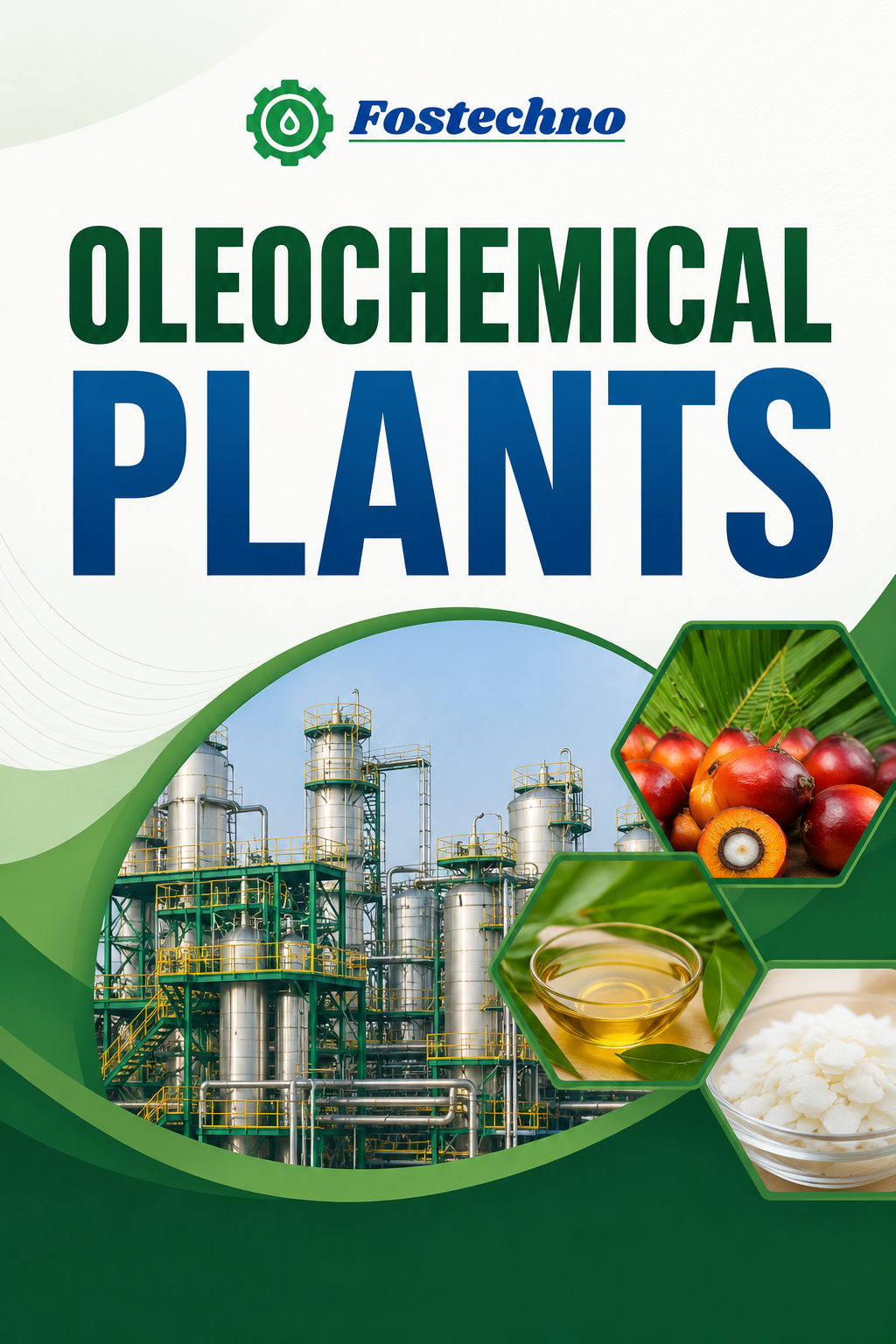
Oleochemical Plants: The Complete Guide to Products, Processes, and Profitable Investment in 2026
The global shift toward bio-based, sustainable manufacturing is reshaping industrial chemistry at its core. At the center of this transformation sits the oleochemical plant — a specialized facility that converts natural fats and oils into a vast range of high-value industrial ingredients. Whether you are an investor evaluating a new venture, a manufacturer exploring backward integration, or a business leader seeking to understand the supply chain behind everyday products, understanding how oleochemical plants work is no longer optional. It is a strategic necessity.
This guide walks you through everything that matters: what these plants produce, how they operate, why investment is accelerating in 2026, and what it takes to build one successfully — particularly in India.
What Is an Oleochemical Plant and Why Is It Important Today?
An oleochemical plant is an industrial facility that processes vegetable oils, animal fats, and other natural lipid-based feedstocks into chemical derivatives known as oleochemicals. These derivatives, in turn, serve as the building blocks for thousands of products used across a wide range of industries. For example, manufacturers use them in personal care products, pharmaceuticals, food processing, detergents, lubricants, and agrochemicals.
The term oleochemical comes from the Latin word oleum, meaning oil. Unlike petrochemicals, which companies derive from fossil fuels, manufacturers produce oleochemicals from renewable biological resources. As a result, many industries increasingly prefer them to reduce their environmental impact and meet sustainability goals.
Today, oleochemical plants play a vital role in the global chemical industry because three major market forces continue to drive their growth.
First
, sustainability is becoming a top priority for businesses worldwide. Consequently, brands in the FMCG, cosmetics, and packaging sectors are committing to bio-based sourcing. As demand for environmentally friendly products grows, manufacturers increasingly rely on natural chemical inputs. Therefore, oleochemical plants benefit directly from this shift toward sustainable materials.
Second
Many countries have abundant access to raw materials. For instance, India, Indonesia, Malaysia, and Brazil produce large quantities of palm oil, coconut oil, tallow, and other oil-rich feedstocks. As a result, oleochemical manufacturers in these regions enjoy strong supply chains and competitive production costs.
Third
Downstream industries continue to expand rapidly. In particular, growing demand for detergents, surfactants, cosmetics, and specialty chemicals is increasing the need for oleochemical intermediates. Consequently, manufacturers are investing in additional production capacity to meet market requirements.
Furthermore, the global oleochemicals market exceeded USD 25 billion in 2024. Industry experts also expect the market to grow at a compound annual growth rate of 6–7% through 2030. As manufacturers adopt more bio-based ingredients, demand continues to rise. Therefore, oleochemical plants are well-positioned to capitalize on new opportunities and support the global transition toward sustainable chemical production.
How Oleochemical Plants Turn Natural Oils into High-Value Industrial Products
The Core Conversion Principle
The fundamental chemistry inside an oleochemical plant involves breaking down triglycerides — the molecular structure of fats and oils — into their component parts. This happens through two primary industrial reactions: hydrolysis and transesterification.
In hydrolysis, triglycerides are reacted with water under high temperature and pressure. The reaction splits the triglyceride molecule into fatty acids and crude glycerine. This is the most common route in large-scale oleochemical production.
During transesterification, a triglyceride reacts with an alcohol, typically methanol, in the presence of a catalyst. This reaction produces fatty acid methyl esters (FAME) and glycerine. Manufacturers widely use FAME as biodiesel and as a raw material for further chemical processing.
From Raw Oil to Refined Derivatives
After the initial cleavage process, manufacturers process the resulting fatty acids and glycerine through several additional stages. They separate fatty acids into individual fractions—lauric, myristic, palmitic, stearic, and oleic—while each fraction serves specific industrial applications. Refiners purify glycerine to meet pharmaceutical and food-grade standards. They also use processes such as hydrogenation, ethoxylation, and sulphonation to convert these intermediates into higher-value specialty chemicals.
This multi-stage value addition makes an oleochemical plant financially attractive. Through integrated processing, manufacturers can convert a single tonne of crude palm oil into products that generate three to five times more value than the original feedstock.
Top Products Made in Oleochemical Plants: Fatty Acids, Glycerine, Surfactants and More
Fatty Acids
Fatty acids are the primary output of most oleochemical plants. They are produced by splitting oils or fats through hydrolysis or saponification. Key fatty acid fractions include:
- Lauric acid — derived mainly from coconut and palm kernel oil; used in soaps, detergents, and personal care
- Stearic acid — from palm or tallow; used in rubber, cosmetics, and pharmaceuticals
- Oleic acid — from palm or sunflower oil; used in lubricants, textiles, and specialty chemicals
- Palmitic acid — from palm oil; used in food applications and soaps
Glycerine (Glycerol)
Fatty acid production generates glycerine as a co-product and one of the most commercially valuable oleochemical outputs. Manufacturers refine it to 99.7 percent purity and supply it to the pharmaceutical, food and beverage, personal care, and tobacco industries. The global glycerine market alone exceeds USD 2 billion annually.
Fatty Alcohols
Produced by hydrogenating fatty acids or their methyl esters, fatty alcohols are key raw materials for surfactants, emollients, and emulsifiers. Cetyl alcohol, stearyl alcohol, and lauryl alcohol are among the most widely used.
Methyl Esters (FAME)
Fatty acid methyl esters serve dual roles: as biodiesel feedstock and as intermediates in the production of surfactants and lubricants. Their market is expanding with biofuel mandates in India, the EU, and Southeast Asia.
Surfactants
Oleochemical-based surfactants — including sodium lauryl sulphate, sodium laureth sulphate, and alkyl polyglucosides — are the workhorses of the detergent and shampoo industries. Bio-based surfactants command a premium over their petrochemical equivalents in markets where “natural” or “green” labeling is commercially valuable.
Soap Noodles
A direct downstream product of fatty acid neutralization with caustic soda, soap noodles are the raw material for bar soap manufacturing. India and Southeast Asia are major exporters of soap noodles to Africa and the Middle East.
Why Businesses Are Investing in Oleochemical Plants in 2026
Investment in oleochemical plant capacity has been accelerating for well-documented reasons. In 2026, several converging factors are making this sector particularly attractive for new entrants and expansion projects.
Regulatory tailwinds are significant. The EU’s Green Deal, India’s extended producer responsibility norms, and the US Inflation Reduction Act all favor bio-based chemical production. Manufacturers sourcing synthetic chemicals face increasing scrutiny and compliance costs, while oleochemical suppliers benefit from preferential positioning.
Backward integration strategies are driving corporate investment. Large FMCG companies such as Hindustan Unilever, Dabur, and Godrej Consumer are increasingly strengthening their upstream supply chains for surfactants and fatty acids to ensure reliable access to key raw materials. Setting up captive oleochemical production reduces their raw material exposure and improves margin stability.
Export opportunity is another powerful incentive. India’s chemical exports have been growing steadily, and oleochemicals represent a high-value, relatively underexplored export category. African detergent manufacturers and Middle Eastern personal care companies continue to increase their demand for oleochemical products, and Indian producers can effectively meet this growing market demand.
Import substitution is also a factor. India currently imports significant quantities of refined fatty alcohols and specialty esters from Malaysia and Europe. Domestic production capacity is below demand, and the government’s push for Aatmanirbhar Bharat (self-reliant India) creates policy and financial incentives for local plant investment.
Applications of Oleochemicals in FMCG, Pharma, Cosmetics, and Detergents
FMCG and Home Care
Oleochemicals are the backbone of the home care industry. Surfactants derived from coconut or palm kernel oil make up a significant portion of every laundry detergent, dish soap, and floor cleaner on the market. FMCG manufacturers across the globe consume enormous volumes of soap noodles, fatty acid soaps, and glycerine.
Personal Care and Cosmetics
The cosmetics industry is one of the most demanding consumers of high-purity oleochemical derivatives. Fatty alcohols function as emollients, thickeners, and emulsifiers in creams, lotions, and conditioners. Glycerine is a universal humectant. Esters derived from fatty acids — such as isopropyl myristate and cetearyl ethylhexanoate — serve as skin-feel modifiers and carriers in premium formulations.
Pharmaceuticals
Pharmaceutical-grade glycerine is used as a solvent, humectant, and excipient in tablets, syrups, and topical preparations. Stearic acid and its derivatives appear in tablet coatings and suppository bases. The pharmaceutical application of oleochemicals requires stringent quality specifications, making this a high-margin but technically demanding segment.
Lubricants and Industrial Applications
Industries increasingly adopt oleochemical-based lubricants and metalworking fluids because they seek biodegradable alternatives to mineral oil products. Fatty acid esters offer good lubricity, thermal stability, and lower toxicity. Applications include hydraulic fluids, textile lubricants, and food-grade machinery lubricants.
Agrochemicals
Oleochemical derivatives serve as emulsifiers, adjuvants, and carriers in pesticide and herbicide formulations. Methyl esters function as spray carriers that improve active ingredient penetration. This is a smaller but growing application segment.
How Oleochemical Plants Support Sustainable and Bio-Based Manufacturing
Sustainability is no longer a marketing claim — it is a procurement criterion for major global buyers. Oleochemical plants directly support the transition to bio-based manufacturing in several ways.
Carbon footprint reduction: Bio-based chemicals generally carry a lower life-cycle carbon intensity compared to their petrochemical equivalents. Oleochemical producers can document and certify this advantage to satisfy Scope 3 emissions requirements from downstream customers.
Circular economy integration: Glycerine, a by-product of fatty acid production, serves the food, pharmaceutical, and personal care industries instead of becoming waste. Companies use spent bleaching earth from the refining process as fuel or a soil amendment. Modern oleochemical plants incorporate zero-liquid-discharge systems and recover energy from process heat to improve sustainability and efficiency.
RSPO certification: The Roundtable on Sustainable Palm Oil provides a globally recognized certification framework for sustainable palm feedstock. Oleochemical plants sourcing RSPO-certified oils can access premium markets and meet the procurement standards of European and North American buyers.
Replacing petrochemicals: Each tonne of oleochemical surfactant or lubricant that displaces a fossil-fuel-derived equivalent reduces dependence on non-renewable resources. This substitution narrative is increasingly powerful with investors, regulators, and customers alike.

Key Process Steps in an Oleochemical Plants: From Feedstock to Final Product
Understanding the plant process helps in planning capacity, utilities, and downstream integration.
Step 1: Feedstock Receipt and Storage
Road and rail tankers deliver crude vegetable oils and fats to the plant, where operators store them in temperature-controlled tanks. For example, palm oil requires heated storage to prevent solidification. Quality control teams test the feedstock for free fatty acid content, moisture levels, and iodine value immediately upon arrival.
Step 2: Pre-treatment and Refining
Crude oils often contain impurities including gums, free fatty acids, pigments, and trace metals. Degumming, neutralization, bleaching, and deodorization steps bring the oil to the specification required for downstream processing.
Step 3: Splitting / Hydrolysis
The refined oil enters a continuous high-pressure splitting unit — typically operating at 250°C and 50 bar — where it reacts with water to produce crude fatty acid and sweet water (dilute glycerine solution).
Step 4: Fatty Acid Distillation
Manufacturers distill crude fatty acids under vacuum to separate them into different chain-length fractions. This step shapes the product portfolio because engineers can design the plant to produce C12, C14, C16, C18, or blended fatty acid cuts based on market requirements.
Step 5: Glycerine Recovery and Refining
The splitter produces sweet water, and processors evaporate it and run it through ion exchange to produce crude glycerine. They then distill the crude glycerine and treat it with activated carbon to produce refined glycerine with 99.5 to 99.7 percent purity.
Step 6: Downstream Conversion (Optional)
Depending on the plant design, fatty acids may be further processed into fatty alcohols (via hydrogenation), methyl esters (via esterification), or soap noodles (via neutralization with caustic soda). Each downstream unit adds capital cost but significantly improves product value and margin.
Step 7: Storage, Quality Control, and Dispatch
Finished products are stored in dedicated tanks or silos, tested against customer or international specifications, and dispatched by bulk tanker, drum, or flexibag depending on the product and destination.
What to Consider Before Setting Up an Oleochemical Plants in India
India presents a compelling opportunity for oleochemical plants investment, but the setup requires careful planning across multiple dimensions.
Feedstock Strategy
India is a major producer of palm, soybean, cottonseed, and castor oil. However, domestic palm oil production is limited, and significant quantities of crude palm oil are imported from Malaysia and Indonesia. A realistic feedstock strategy — including import logistics, pricing hedges, and alternative oil flexibility — is essential before committing to a plant design.
Location and Infrastructure
Plants located near Kandla, Mundra, Hazira, or Kakinada ports benefit from efficient crude oil import logistics. Proximity to industrial zones with reliable power, water, steam, and effluent treatment infrastructure reduces setup cost and operating risk.
Regulatory Compliance
Oleochemical plants in India require clearances from the Ministry of Environment, Forest and Climate Change (MoEFCC) for environmental impact assessment. State Pollution Control Board approvals, factory licenses, and fire safety certificates are also mandatory. Engaging with a project consultant experienced in chemical plant regulatory processes can shorten the approval timeline significantly.
Scale and Product Mix
Techno-economic viability typically begins at 50 to 100 tonnes per day of feedstock processing capacity. Smaller plants are possible but face higher unit costs. The product mix — whether the plant focuses on commodity fatty acids, refined glycerine, or specialty esters — significantly determines profitability and customer targeting.
Utility Requirements
Oleochemical plants are energy-intensive. High-pressure steam, cooling water, compressed air, and significant electrical power are required. Plants that integrate captive power generation or waste heat recovery systems achieve better operating economics.
Challenges in Oleochemical Plants Projects: Feedstock, Cost, and Compliance
No industrial project is without risk. Understanding the key challenges in oleochemical plants development allows for better planning and mitigation.
Feedstock price volatility is the most significant operating risk. Palm oil prices are linked to global commodity markets and can swing by 30 to 40 percent within a single year. Plants that can process multiple feedstock types — palm, coconut, tallow, or castor oil — have a built-in hedge against single-commodity price risk.
High capital cost is a barrier to entry. A mid-scale integrated oleochemical plants with fatty acid, glycerine, and soap noodle units can require an investment of INR 50 to 150 crore depending on capacity and configuration. Accessing debt financing requires detailed bankable project reports and experienced technical consultants.
Environmental compliance is non-negotiable and increasingly stringent. Effluent treatment, air emission controls, and solid waste management must be designed into the plant from day one. Retrofitting environmental systems after commissioning is significantly more expensive.
Technical manpower in specialized oleochemical processing remains relatively scarce in India. Plants need process engineers, quality chemists, and maintenance technicians with relevant experience. Partnering with a turnkey manufacturer that provides training and operational support reduces this risk.
How the Right Oleochemical Plants Manufacturer Can Improve Project Success
The choice of plant manufacturer or EPC (Engineering, Procurement, and Construction) partner is perhaps the most consequential decision in any oleochemical plant project. The right partner brings not just equipment, but process knowledge, regulatory experience, and long-term operational support.
What to Look For in a Plant Manufacturer
A credible oleochemical plant manufacturer should have proven experience in designing and commissioning plants across a variety of product configurations. More importantly, the company should provide references from successfully operating plants rather than relying solely on project proposals or conceptual designs.
In addition, prospective buyers should verify the manufacturer’s track record by reviewing actual plant performance. For example, process guarantee data, energy consumption benchmarks, and product quality specifications should be readily available for evaluation. Furthermore, these performance metrics should come from operating facilities and be independently verifiable whenever possible.
As a result, investors can make more informed decisions and reduce project risks. Ultimately, choosing an experienced manufacturer with a proven operational history helps ensure reliable plant performance, consistent product quality, and long-term profitability.
Turnkey vs. Component-Based Supply
Turnkey manufacturers take responsibility for the entire project from engineering design through commissioning. This reduces coordination risk for the investor but requires careful contract structuring around performance guarantees, penalty clauses, and warranty terms. Component-based supply, where the investor coordinates multiple vendors, offers more flexibility but requires significant in-house project management capability.
After-Sales Support
Oleochemical plants are long-term investments that typically operate for 20 to 30 years or even longer with proper maintenance. Therefore, choosing the right plant manufacturer is an important decision that can affect performance for decades.
In addition to supplying the plant, the manufacturer should provide reliable after-sales support throughout its operating life. For example, easy access to spare parts, technical troubleshooting, and process optimization services can help maintain smooth operations and reduce downtime.
Furthermore, ongoing support allows plant operators to improve efficiency, maintain product quality, and adapt to changing market requirements. As a result, the plant can achieve better productivity and lower operating costs over time.
Ultimately, strong long-term support from the original manufacturer plays a key role in maximizing profitability and ensuring the economic success of the oleochemical plants.
Customization for Local Conditions
Indian market conditions — feedstock availability, utility costs, end-product demand — differ from European or Southeast Asian markets. A manufacturer with experience in Indian plant projects will design for local feedstock quality variation, power outage resilience, and domestic product specifications rather than applying a generic global template.
The economics of oleochemical production are compelling, the market tailwinds are strong, and the strategic rationale for investment in India has rarely been clearer. Whether you are entering the sector for the first time or expanding existing capacity, the decision to invest in an oleochemical plant deserves the same rigor you would apply to any major capital commitment: clear product strategy, sound feedstock planning, the right regulatory pathway, and an experienced project partner.
Looking to set up an oleochemical plants? Connect with our engineering team for customized plant design, manufacturing, and turnkey project support — from feasibility to commissioning.
Frequently Asked Questions About Oleochemical Plants
1. What Is an Oleochemical Plants?
An oleochemical plant converts natural oils and fats into valuable chemical products. Manufacturers use raw materials such as palm oil, coconut oil, soybean oil, and animal fats to make fatty acids, glycerine, fatty alcohols, methyl esters, and surfactants.
These products are widely used in soaps, detergents, cosmetics, pharmaceuticals, food processing, lubricants, and many industrial applications. As industries move toward sustainable and bio-based materials, demand for oleochemical products continues to grow worldwide.
2. What Raw Materials Does an Oleochemical Plants Use?
Oleochemical plants mainly use vegetable oils and animal fats as feedstocks. Common raw materials include:
- Palm oil
- Palm kernel oil
- Coconut oil
- Soybean oil
- Castor oil
- Tallow
The type of oil affects product quality, yield, and production costs. Many modern plants can process multiple feedstocks to improve flexibility and profitability.
3. What Products Does an Oleochemical Plant Produce?
An oleochemical plants can produce several valuable products, including:
- Fatty acids
- Refined glycerine
- Fatty alcohols
- Fatty acid methyl esters (FAME)
- Soap noodles
- Bio-based surfactants
Integrated plants may also produce specialty esters, amides, and amines for cosmetic and industrial applications.
4. How Does Oil Splitting Work in an Oleochemical Plants?
Oil splitting is the main process used to produce fatty acids and glycerine.
Manufacturers feed refined oil and water into a high-pressure splitting column. Heat and pressure break the oil molecules into crude fatty acids and sweet water. The sweet water contains glycerine, while the fatty acids move to purification and distillation units.
This process forms the foundation of most oleochemical production facilities.
5. How Much Does It Cost to Set Up an Oleochemical Plants in India?
The investment depends on plant size, production capacity, and product range.
A small to medium fatty acid and glycerine plant may require an investment of INR 30–60 crore. Large integrated plants with soap noodle, methyl ester, or hydrogenation units can require INR 80–200 crore or more.
A detailed project report helps investors estimate the exact project cost and expected returns.



Leave a Reply