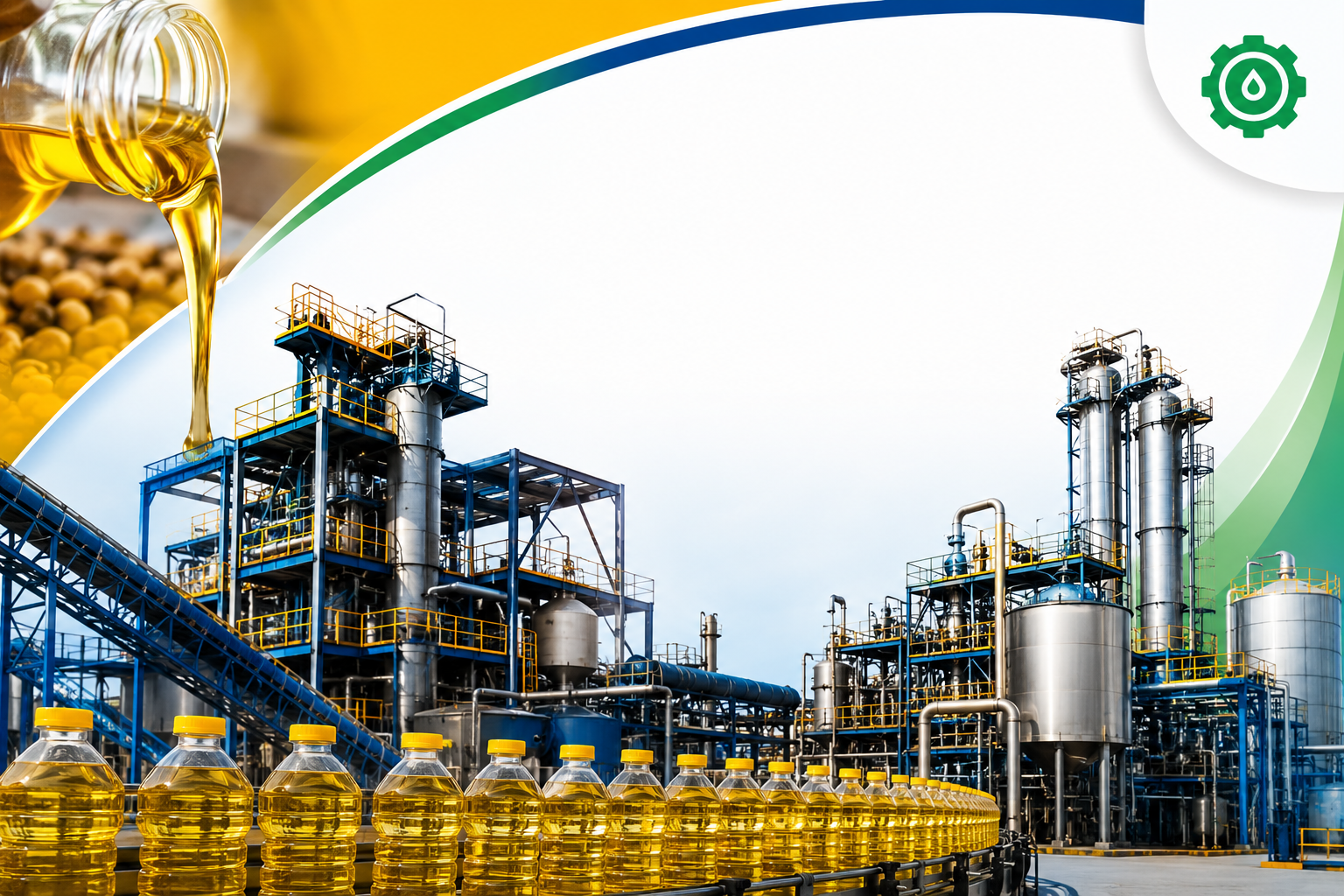
Edible Oil Processing Plant: How to Build a Profitable Oil Manufacturing Business from Seed to Shelf
Introduction
The edible oil industry is one of the few food-processing sectors where demand remains consistent regardless of market conditions. Every household, restaurant, food manufacturer, and commercial kitchen depends on edible oils daily. However, many investors enter the market believing that purchasing machinery alone is enough to build a successful edible oil processing plant.
In reality, profitability depends on much more than equipment selection. Raw material sourcing, plant layout, oil recovery efficiency, energy consumption, refining technology, packaging strategy, and market positioning all influence the return on investment.
At FOSTECHNO, we have observed that the most successful edible oil manufacturers are not necessarily the ones with the largest plants. They are the companies that design their processing facilities around operational efficiency, product quality, and long-term scalability.
This guide explains how modern edible oil processing plants are planned, built, and optimized for maximum profitability.
What Is an Edible Oil Processing Plant and Why Is It More Than Just Machinery?
An edible oil processing plant is an integrated manufacturing system that converts oil-bearing seeds into refined cooking oil ready for consumers and industrial buyers.
Many first-time investors focus only on purchasing machines. However, an edible oil processing plant functions as a complete ecosystem where every process affects the next stage.
For example:
- Poor seed cleaning reduces oil quality.
- Incorrect cooking temperatures lower extraction efficiency.
- Inefficient refining increases production costs.
- Improper packaging reduces shelf life.
A successful plant is designed so that every stage works together seamlessly.
This is why experienced manufacturers focus on process engineering rather than simply buying equipment.
The Business Opportunity Behind Edible Oil Manufacturing
One reason edible oil manufacturing remains attractive is that demand comes from multiple industries simultaneously.
Retail Market
Consumers purchase cooking oil daily through supermarkets and local stores.
Food Processing Industry
Snack manufacturers, bakeries, confectionery companies, and packaged food producers require edible oils in large volumes.
Hospitality Sector
Hotels, restaurants, and catering businesses consume significant quantities of cooking oil every day.
Export Market
Many countries import refined edible oils due to limited domestic production capacity.
This diversified demand creates multiple revenue streams for plant owners.
Step-by-Step Journey of Oil Inside an Edible Oil Processing Plant
Rather than viewing production as separate stages, think of it as a transformation journey.
Stage 1: Raw Material Selection
The quality of the final oil begins with the quality of seeds.
Manufacturers typically process:
Higher-quality seeds produce higher-quality oil and better extraction yields.
Stage 2: Preparation for Extraction
Seeds are cleaned, graded, and conditioned.
This preparation stage determines how effectively oil can be extracted later.
Stage 3: Oil Recovery
This is where profitability is often won or lost.
Even a small improvement in oil recovery percentage can generate substantial additional revenue over a year.
Modern plants use advanced expellers and extraction systems to maximize yield.
Stage 4: Refining and Purification
Crude oil contains impurities that affect taste, appearance, and shelf life.
Refining transforms crude oil into a premium consumer product through:
- Degumming
- Neutralization
- Bleaching
- Deodorization
Stage 5: Packaging and Distribution
The final stage converts production into revenue.
Efficient packaging systems allow manufacturers to serve:
- Retail consumers
- Commercial kitchens
- Industrial buyers
- Export markets
The Hidden Cost Factors Most Investors Ignore
When people search for edible oil processing plant costs, they often focus only on machinery prices.
However, machinery is only one part of the investment.
Other major expenses include:
Utilities
Electricity, steam generation, and water treatment significantly affect operating costs.
Storage Infrastructure
Raw materials and finished products require proper storage facilities.
Quality Control Systems
Testing laboratories help maintain product consistency and regulatory compliance.
Logistics
Transportation costs influence profitability more than many investors realize.
Plants located near raw material sources often enjoy substantial cost advantages.
Why Plant Layout Matters More Than Most People Realize
A poorly designed factory can increase operational costs for years.
An optimized plant layout reduces:
- Material handling time
- Labor requirements
- Energy consumption
- Product losses
The best-performing facilities are designed before equipment is purchased.
This ensures smooth movement of materials from seed intake to final packaging.
Choosing the Right Capacity: Bigger Is Not Always Better
Many investors assume larger plants automatically generate higher profits.
This is not always true.
Small-Scale Plants
Ideal for:
- Regional brands
- Startups
- Farmer cooperatives
Advantages:
- Lower investment
- Faster break-even
- Easier management
Medium-Scale Plants
Ideal for businesses planning regional expansion.
These plants often provide the best balance between investment and profitability.
Large-Scale Plants
Suitable for:
- National brands
- Export-oriented companies
- Industrial suppliers
Large facilities can achieve lower production costs per ton but require stronger market demand.
The smartest strategy is selecting capacity based on actual market opportunities rather than ambition alone.
The Future of Edible Oil Processing Plants
The industry is evolving rapidly.
Modern plants increasingly focus on:
Automation
Automated systems improve consistency and reduce labor dependence.
Energy Efficiency
Lower energy consumption directly improves profit margins.
Sustainable Production
Manufacturers are reducing waste and improving resource utilization.
Smart Monitoring Systems
Digital technologies help operators track performance in real time.
Plants built today should be designed with future expansion and technological upgrades in mind.
Common Mistakes New Investors Make
After working with edible oil manufacturers, several mistakes appear repeatedly.
Buying Equipment Before Planning
Machinery should support business goals—not define them.
Ignoring Market Research
Production capacity should match market demand.
Choosing Lowest-Cost Equipment
Cheaper equipment often leads to higher maintenance costs.
Underestimating Working Capital
Many projects focus on setup costs while overlooking operating expenses.
Poor Supplier Selection
An experienced turnkey partner can prevent costly mistakes during installation and commissioning.
Why Turnkey Edible Oil Processing Plants Deliver Faster Returns
Managing multiple suppliers can delay projects and create technical problems.
A turnkey solution simplifies the process by providing:
- Engineering design
- Plant layout planning
- Equipment manufacturing
- Installation
- Commissioning
- Operator training
This approach minimizes risk and helps manufacturers begin production faster.
For many investors, the reduced downtime alone justifies the investment in a turnkey project.
Conclusion
Building an edible oil processing plant is not simply about extracting oil. It is about creating a manufacturing system capable of producing consistent quality, maximizing oil recovery, minimizing operating costs, and supporting long-term growth.
The most successful plants are designed around profitability from day one. They combine efficient machinery, intelligent plant layout, reliable refining technology, and scalable production systems.
Whether you are planning a soybean oil plant, sunflower oil processing facility, rice bran oil refinery, or a multi-seed edible oil manufacturing unit, choosing the right engineering partner can significantly influence the success of your investment.
At FOSTECHNO, we help businesses transform ideas into fully operational edible oil processing plants through customized turnkey solutions designed for performance, efficiency, and sustainable growth.

We respond within 24 hours



Leave a Reply