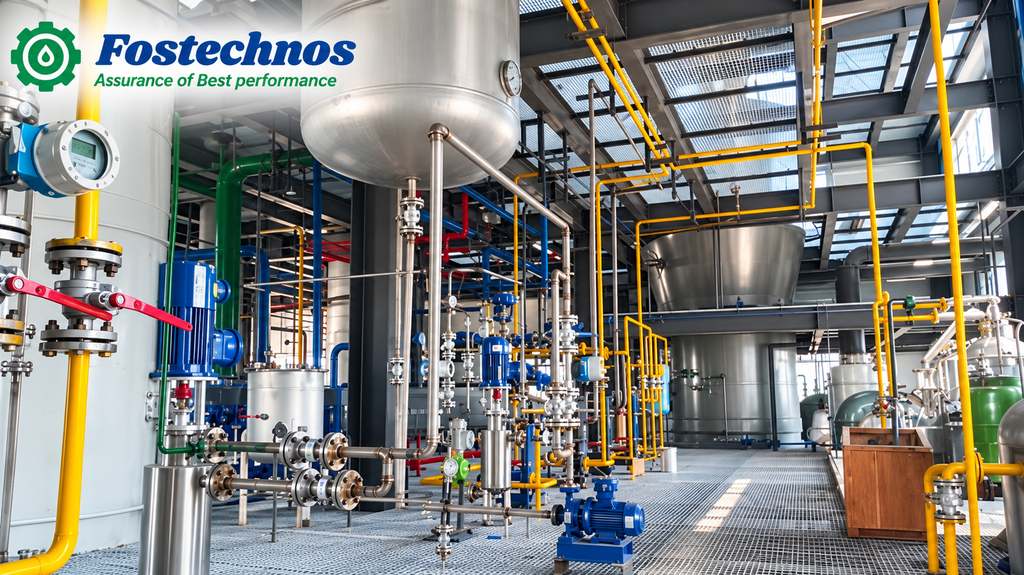
What Is an Edible Oil Refinery?
An edible oil refinery is an industrial plant that turns crude vegetable oil into clean, safe, light-coloured and neutral-tasting cooking oil. It does this through a series of controlled steps: degumming, neutralization (deacidification), bleaching, deodorization and, for some oils, winterization. Each step removes a specific group of unwanted substances such as gums, free fatty acids, pigments, odour compounds and waxes, while keeping the oil’s nutritional value intact.
That is the short answer. The rest of this guide is the long one, written for people who want to really understand how a refinery works, and especially for entrepreneurs, oil mill owners and project planners who are thinking about setting up their own edible oil refinery plant.
If you have ever wondered why the oil you buy in a shop looks clear and golden while freshly pressed oil is cloudy, dark and strong-smelling, you already understand why refineries exist. Let us walk through it properly.
Why Crude Oil Needs Refining
When oil is pressed from a seed or extracted with a solvent, what comes out is crude oil. It is mostly triglycerides, which is the part we actually want, but it also carries a long list of companions that nobody wants in a bottle of cooking oil.
These include:
- Phospholipids and gums, which make the oil cloudy and cause it to deposit sediment in storage and foam or smoke during frying.
- Free fatty acids (FFA), which give a sharp, soapy taste, speed up spoilage and lower the smoke point.
- Colour pigments such as chlorophyll and carotenoids, which make the oil look dark or greenish.
- Oxidation products and trace metals such as iron and copper, which push the oil toward rancidity.
- Odour and flavour compounds, some pleasant in a cold-pressed oil, but unwelcome when you want a neutral frying or cooking oil.
- Waxes, found in oils like sunflower, corn and rice bran, which turn the oil hazy when it is cold.
- Moisture, dirt and fine particles carried over from the seed.
A refinery removes these in a deliberate order. The order matters, because each stage prepares the oil for the next one. Skip or rush a step and the problem shows up later as dark colour, short shelf life or off-flavours.
There is also a market reason. Packaged oil brands, food manufacturers, bakeries, restaurants and export buyers all expect consistent colour, taste, clarity and shelf life from one batch to the next. Crude oil cannot deliver that consistency. A refinery can.
Crude Oil vs Refined Oil: What Actually Changes?
People often ask whether refined oil is “worse” than crude or cold-pressed oil. The honest answer is that they are different products for different jobs.
| Feature | Crude Oil | Refined Oil |
|---|---|---|
| Appearance | Cloudy, darker | Clear, light colour |
| Smell and taste | Strong, seed-specific | Neutral, mild |
| Free fatty acids | Higher | Reduced to low levels |
| Gums and phosphatides | Present | Removed |
| Shelf life | Shorter | Longer |
| Smoke point | Lower | Higher, better for frying |
| Consistency between batches | Variable | Uniform |
Refining does remove some minor components along with the impurities. That is a known trade-off. Good plant design and well-controlled operating conditions keep those losses small and protect the oil’s quality, which is a big part of what separates a well-run refinery from a careless one.
The Edible Oil Refining Process, Step by Step
This is the heart of any edible oil refinery. Whether the plant processes 10 tons per day or 1,000 tons per day, the same core logic applies.
Step 1: Degumming
Degumming is the first cleaning stage. Its job is to remove phospholipids (also called gums or phosphatides) from the crude oil.
Why does this matter? Gums hold on to water and metals, they form sludge during storage, and if you leave them in, they cause trouble in every later step. They increase soap formation during neutralization, they foul bleaching earth, and they darken the oil at high temperature.
There are several ways to degum an oil:
- Water degumming: Hot water is mixed into the oil. Hydratable gums swell, separate out and are removed by a centrifuge. It is simple and works well for oils with mostly hydratable phospholipids.
- Acid degumming: A small dose of food-grade acid such as phosphoric or citric acid converts non-hydratable gums into a form that can be separated. Many refineries use this, especially for soybean, sunflower and rapeseed oil.
- Enzymatic degumming: Specific enzymes break down phospholipids so they can be removed with less oil loss. It is popular in modern plants that want better yield.
- Super or total degumming: A more thorough acid-based method that prepares the oil for physical refining.
A well-run degumming section sets the tone for the whole refinery. If phosphorus in the oil is not brought down properly here, you will fight the consequences all the way to deodorization.
Step 2: Neutralization (Deacidification)
Neutralization removes free fatty acids. FFA is the main indicator of how “acidic” or degraded a crude oil is, and it has a direct effect on taste, stability and smoke point.
There are two routes.
Chemical neutralization (alkali refining): The oil is treated with a measured amount of caustic soda solution. The alkali reacts with the free fatty acids and forms soap, known as soapstock, which is separated from the oil in a centrifugal separator. The oil is then washed with hot water and dried under vacuum to remove leftover soap and moisture.
Physical refining (steam stripping): Instead of using alkali, the free fatty acids are removed during deodorization by steam distillation under high vacuum. This route suits oils with high FFA and low gum content after proper pretreatment, such as palm oil, palm kernel oil, coconut oil and rice bran oil.
Choosing between the two is a major design decision, and we cover it in a separate section below.
Step 3: Bleaching
Bleaching is not about making oil white with chemicals. It is an adsorption process. The oil is heated under vacuum and mixed with a small proportion of bleaching earth, sometimes with activated carbon added. The earth is typically dosed at a fraction of a percent up to about two percent of the oil weight, depending on how dark or contaminated the oil is.
The bleaching earth acts like a sponge. It traps:
- colour pigments such as chlorophyll and carotenoids,
- traces of soap left after neutralization,
- residual phospholipids,
- oxidation products,
- trace metals.
After a set contact time, the oil goes through filters (pressure leaf filters or similar), which separate the spent earth from the clear bleached oil. A polishing filter then catches any fine particles that slipped through.
The performance of this step depends on temperature, vacuum, contact time, earth quality and how well the oil was prepared earlier. Because bleaching earth holds oil as it is discarded, good plants pay attention to filter design and earth dosing to keep oil loss under control.
Step 4: Deodorization
Deodorization is the final and most important quality step. The bleached oil is heated to a high temperature, commonly in the range of roughly 230 to 260 degrees Celsius depending on the oil and the design, and exposed to stripping steam under deep vacuum.
Under these conditions, volatile compounds are carried away. This takes out:
- unpleasant odours and flavours,
- remaining free fatty acids (the main event in physical refining),
- residual pesticides and other volatile contaminants,
- breakdown products of oxidation.
What is left is a neutral, bland, stable oil. Many plants also include a heat bleaching effect here, where pigments such as carotenoids are thermally broken down.
Two practical points are worth knowing. First, deodorization conditions must be balanced. Too little heat or poor vacuum leaves flavour behind. Excessive temperature for too long can form unwanted process contaminants and affect heat-sensitive nutrients. Second, the material recovered from this section, called fatty acid distillate, is a useful by-product that other industries buy.
Step 5: Winterization and Dewaxing (Optional)
Some oils, including sunflower, corn and rice bran oil, contain natural waxes. These are harmless but they crystallize when the oil gets cold, and the bottle turns cloudy in a fridge or in winter weather.
Winterization (also called dewaxing) solves this. The oil is chilled in a controlled way so that waxes form crystals, which are then filtered out. The result is oil that stays clear even at low temperatures. If you plan to sell sunflower or rice bran oil in premium packaging, this step is worth serious thought.
Step 6: Fractionation and Other Downstream Options
Some refineries go beyond the core steps. Fractionation separates an oil into liquid and solid fractions. The best-known example is palm oil, which is split into palm olein (liquid, used as cooking oil) and palm stearin (harder, used in shortenings, margarine and industrial products). Other downstream options include blending, hydrogenation or interesterification for specialty fats, and packaging lines.
If your business plan involves specialty fats or multiple finished products, mention this early to your plant supplier, because it affects layout and utilities from day one.
Physical Refining vs Chemical Refining
This is one of the questions we are asked most often, so here is a clear comparison.
| Point | Chemical Refining | Physical Refining |
|---|---|---|
| How FFA is removed | Reacted with caustic soda into soapstock | Stripped by steam under vacuum |
| Best suited for | Oils with lower FFA, such as soybean, sunflower, groundnut, cottonseed | High FFA oils such as palm, palm kernel, coconut, rice bran |
| Gum removal needed before | Standard degumming | Very thorough degumming and bleaching |
| By-product | Soapstock | Fatty acid distillate |
| Effluent | Soapy wash water needs treatment | Generally less wash water effluent |
| Neutral oil loss | Can be higher because soap carries some oil | Generally lower when well designed |
A few real-world notes. Many refineries that run several different oils choose chemical refining because it is forgiving. Plants dedicated to palm or rice bran lean toward physical refining. Some plants are designed to handle both routes, which gives flexibility if your raw material changes with the season.
The right choice comes from your raw material, not from fashion. That is why a good supplier will ask about your crude oil specifications before recommending anything.
Types of Edible Oil Refinery Plants
Edible oil refinery plants are broadly classified by how oil moves through them.
Batch Type Refinery
In a batch refinery, a fixed quantity of oil is processed in a vessel from start to finish, then the next batch begins. Batch plants are usually built for smaller capacities, commonly in the range of about 5 to 25 tons per day.
Where batch plants work well:
- Small and medium oil mills adding refining to their existing crushing or extraction operation.
- Businesses that process different oils at different times.
- Start-ups that want a simpler operation and lower automation requirements.
- Regional brands serving a local market.
Things to keep in mind: Batch plants need more operator involvement, and batch-to-batch consistency depends on discipline and training.
Semi-Continuous Refinery
Semi-continuous plants sit in the middle. Some stages, for example degumming and neutralization, run continuously while others, such as bleaching, may run in batches. This works for medium capacities and gives better control than a pure batch plant without the full scale of a continuous system.
Continuous Type Refinery
A continuous refinery keeps oil flowing through every stage without stopping. These plants are designed for larger volumes, typically 30 tons per day and above, up to several hundred or even thousands of tons per day at the biggest facilities.
Where continuous plants work well:
- Large oil processors with steady supply of one or a few oils.
- Businesses that want tight, consistent quality and high automation.
- Operations that need to run around the clock.
Things to keep in mind: Continuous plants reward steady feed and long runs. Changing oils frequently is harder, and the plant needs capable technical staff.
Quick Comparison
| Feature | Batch | Semi-Continuous | Continuous |
|---|---|---|---|
| Typical capacity | 5 to 25 TPD | Medium | 30 TPD and above |
| Automation | Low to moderate | Moderate | High |
| Flexibility for different oils | High | Moderate | Lower |
| Product consistency | Operator dependent | Good | Excellent |
| Best for | Small and mid-size mills | Growing businesses | Large-scale production |
Which Oils Can an Edible Oil Refinery Process?
A single plant can often handle many oils with the right settings, though each oil has its own personality.
- Soybean oil: High in gums, so strong degumming is essential. Widely refined worldwide.
- Sunflower oil: Contains waxes, so winterization is commonly added. Responds well to chemical refining.
- Palm oil: High in FFA and carotenoids. Usually physically refined and often fractionated into olein and stearin.
- Rice bran oil: Rich in FFA, wax and valuable minor components such as oryzanol. Needs careful dewaxing and a well-planned process to preserve quality.
- Groundnut (peanut) oil: Relatively easy to refine. Popular in many Indian and Asian markets.
- Mustard oil: Often sold with its characteristic pungency, so refining decisions depend on what the market wants.
- Cottonseed oil: Needs attention to gossypol and strong colour removal.
- Rapeseed and canola oil: Need good degumming and attention to sulphur compounds.
- Coconut and palm kernel oil: Lauric oils, mostly physically refined.
- Corn oil: Contains waxes, usually winterized.
Before you commit to a plant design, list the oils you expect to run in the first year and the oils you might add later. That one list guides almost every engineering decision.
Main Equipment Inside an Edible Oil Refinery Plant
Looking at a refinery for the first time can feel overwhelming, so here is a plain-language list of what you will find.
- Crude oil storage tanks: Hold incoming crude oil, often with heating coils.
- Degumming reactors and mixers: Where water or acid is blended into the oil.
- Centrifugal separators: Separate gums or soapstock from the oil at high speed.
- Neutralizer and wash system: Handle alkali dosing, mixing and water washing in chemical refining.
- Vacuum dryer: Removes moisture before bleaching.
- Bleacher: A vacuum vessel with agitation where oil and bleaching earth meet.
- Filters: Pressure leaf filters, polishing filters and bag filters.
- Heat exchangers: Recover heat between hot and cold streams so energy is not wasted.
- Deodorizer: A high-temperature, high-vacuum column or vessel with stripping steam.
- Vacuum system: Steam ejectors or mechanical vacuum equipment that create deep vacuum.
- Thermic fluid heater or boiler: Supplies heat at the temperatures the process needs.
- Cooling tower and chilling system: For cooling water and, where needed, winterization.
- Pumps, piping and instrumentation: The circulatory and nervous system of the plant.
- Control panel: Manual, semi-automatic or fully automated, depending on the plant.
- Effluent treatment plant: Treats wash water and other waste streams.
- Refined oil storage and packing section: Where finished oil is stored and filled into tins, pouches or bottles.
In a modern plant, heat recovery and good insulation are not optional extras. They are part of what keeps the process stable and the operation efficient.
By-Products of an Edible Oil Refinery
A refinery does not just make oil. It also creates valuable side streams, and managing them well is part of running a responsible, organized plant.
- Soapstock and acid oil: Come from chemical neutralization. Used in soap making, fatty acid production and animal feed industries.
- Gums and lecithin: From degumming. Soybean and sunflower gums can be processed into lecithin, a well-known food and industrial emulsifier.
- Fatty acid distillate: Collected during physical refining and deodorization. Used in the oleochemical and feed sectors.
- Spent bleaching earth: Contains some retained oil. Needs proper handling and disposal or reuse according to local regulations.
- Wax: From winterization. Used in various industrial and cosmetic applications.
When you speak with plant suppliers, ask how each by-product is collected, stored and handled. A plant that has planned for its by-products runs cleaner and safer.
Quality Parameters Every Refinery Should Monitor
A refinery that does not test properly is flying blind. A basic in-house laboratory is a core part of the plant, not a luxury. Key parameters include:
- Free fatty acid (FFA): The main measure of oil acidity.
- Peroxide value (PV): Shows early oxidation.
- Moisture and volatile matter: Affects stability and safety.
- Colour: Measured on standard scales such as Lovibond.
- Phosphorus content: Confirms how well degumming worked.
- Soap content: Checked after neutralization and washing.
- Residual bleaching earth and insoluble impurities: Checked after filtration.
- Odour and taste: Evaluated by trained staff.
- Cloud point or cold test: For winterized oils.
It is also smart to be aware of process contaminants such as 3-MCPD esters and glycidyl esters, which can form when oils are exposed to very high temperatures during refining. Plants serving export markets and large food manufacturers increasingly need to show that these are controlled. Careful design of the deodorization step and good pretreatment help keep them low.
How to Set Up an Edible Oil Refinery Plant: A Practical Step-by-Step Guide
This section is for readers who are seriously thinking about starting an edible oil refinery business. We will keep it practical. Think of it as a roadmap you can follow from idea to first batch of refined oil.
Step 1: Define Your Business Model Clearly
Before thinking about machines, answer a few basic questions.
- Will you sell refined oil in bulk to other companies, or pack it under your own brand?
- Will you buy crude oil from the market, or refine oil from your own oilseed crushing plant?
- Which oils will you handle in the beginning?
- Which customers or regions will you serve?
A refinery that supplies bulk oil to food manufacturers is a very different project from one that fills branded pouches for retail shops. Your answers shape the plant size, the packing section and even the location.
Step 2: Understand Your Raw Material Supply
A refinery is only as good as its crude oil supply. Think about where the crude will come from, how consistent the quality is and how it will reach your plant. Request sample specifications such as FFA, moisture, phosphorus and colour. If you are importing crude oil, consider the port, logistics and storage arrangements as part of the plan.
If your supply is seasonal or varies between oil types, tell your plant designer early. A flexible design can handle it. A rigid design cannot.
Step 3: Choose the Right Capacity and Plant Type
Capacity should match your raw material supply and your market, not just your ambition. A practical way to think about it:
- If you plan to start small and grow gradually, a batch or semi-continuous plant in the 5 to 25 TPD range is a common starting point.
- If you already have steady supply and a clear market for larger volumes, a continuous plant from 30 TPD upward makes sense.
- If you expect to scale up soon, ask your supplier to design the layout and utilities so you can expand later without rebuilding everything.
Step 4: Pick a Refining Route
Based on your oils, decide between chemical refining, physical refining or a plant that can do both. As discussed earlier, high-FFA oils like palm and rice bran lean toward physical refining, while a multi-oil plant often prefers chemical refining or a dual-route design.
Step 5: Select a Suitable Location
Location matters more than most beginners expect. Look at:
- Access to raw material: Proximity to oilseed crushers, ports or crude oil suppliers.
- Road connectivity: Heavy tankers need good roads.
- Reliable power and water supply.
- Land for expansion, effluent treatment and by-product storage.
- Zoning and industrial area rules in your region.
- Availability of skilled and semi-skilled labour.
- Distance from residential areas, because odour and effluent require responsible management.
Step 6: Understand Licences and Compliance
Requirements differ by country and state, so always confirm the latest rules locally. In India, for example, entrepreneurs typically need to look at:
- Business registration (company, LLP or proprietorship) and GST registration.
- FSSAI licence for food manufacturing.
- Factory licence and approvals under applicable labour and safety laws.
- State Pollution Control Board consent to establish and consent to operate.
- Boiler or pressure vessel approvals where applicable.
- Fire safety clearance.
- Weights and measures registration for packaged goods.
- Trademark registration if you plan to brand your oil.
An experienced consultant or plant supplier can guide you through this paperwork, which can otherwise feel like a maze.
Step 7: Plan Utilities and Infrastructure
A refinery is a utility-hungry facility. You will need to plan for:
- Steam or thermic fluid heating for the process.
- Electricity with backup arrangements.
- Process and cooling water, ideally with recycling.
- Compressed air for instruments and valves.
- Effluent treatment sized for the chosen refining route.
- Storage tanks for crude oil, refined oil, chemicals and by-products.
- A laboratory for quality checks.
- Safe storage for chemicals such as caustic soda and acids.
Sharing your utility plan with the supplier at the start avoids unpleasant surprises during installation.
Step 8: Prepare the Plant Layout
A good layout lets raw material flow in one direction, from crude oil receiving to refining to storage and dispatch, without crossing paths. It keeps the hot sections away from the people-heavy areas, gives easy access for maintenance and leaves room for fire safety equipment. Make sure tankers can enter, load and exit smoothly.
Step 9: Choose a Reliable Technology and Equipment Partner
This is the decision that shapes everything that follows. When evaluating suppliers, check:
- Experience: How many refineries have they actually installed, and of what type?
- Reference plants: Can you visit working installations and talk to the owners?
- Process knowledge: Do they ask about your oils and your market, or just push a standard model?
- Material quality: Food-grade stainless steel in contact zones, solid fabrication and reliable instruments.
- Turnkey capability: Design, manufacture, installation, commissioning and training under one roof.
- After-sales support: Spare parts, service visits and technical help when you need it.
- Documentation: Drawings, operating manuals and maintenance schedules.
- Guarantees: Clear commitments on oil quality, capacity and utility consumption.
Do not choose a supplier based only on a glossy brochure. A refinery lives for decades, and the relationship with your supplier lasts as long.
Step 10: Build the Team
You do not need a huge staff, but you do need the right people:
- A plant manager or production head with refining experience.
- Trained operators for each section.
- A chemist or lab technician.
- A maintenance engineer or technician.
- Safety and quality personnel.
- Sales and logistics staff.
Many plant suppliers offer operator training during commissioning. Take full advantage of it.
Step 11: Installation, Commissioning and Trial Runs
Once equipment arrives, installation, piping, electrical work and instrumentation follow. Then comes commissioning: running the plant with real crude oil, tuning temperatures, vacuum levels, chemical doses and flow rates until the refined oil meets target specifications.
Expect a learning period. The first batches teach you how your specific crude behaves. Record everything, including settings, test results and observations, because that data becomes your operating knowledge.
Step 12: Quality Systems and Market Entry
Before selling at scale, set up basic quality systems. Food safety programmes such as HACCP and standards like ISO 22000 or FSSC 22000 increase buyer confidence, particularly for institutional and export customers. Then build your sales channels, packaging, branding and distribution.
Common Mistakes to Avoid When Planning a Refinery
Learning from other people’s mistakes is the best education available, so here are the ones we see most often.
- Choosing a plant before understanding raw material. The crude oil specification should drive the design, not the other way round.
- Ignoring effluent and waste handling. Regulators and neighbours both care about this, and retrofitting is painful.
- Underestimating utilities. Steam, power and water shortages stop production faster than any machine fault.
- Skipping the laboratory. Without testing, you cannot control quality or solve problems.
- Poor pretreatment. Weak degumming makes every later step harder.
- No plan for expansion. Even a small plant should leave room to grow.
- Neglecting operator training. Good machines in untrained hands give poor oil.
- Not planning by-product handling. Soapstock, spent earth and distillate must go somewhere safe.
- Overlooking safety. Hot oil, vacuum systems, steam and chemicals demand safe procedures, guards and training.
- Rushing licences. Starting construction before key approvals are clear creates delays later.
Turnkey Plant or Separate Equipment?
Some entrepreneurs consider sourcing equipment piece by piece from different vendors. It can work for very experienced teams, but for most new refinery projects, a turnkey approach is safer. One responsible party takes charge of design, process guarantees, installation and commissioning. When something does not perform, you know exactly who to call.
A turnkey supplier also brings proven process know-how. Refining is a chemistry-driven operation, and small details such as mixing intensity, vacuum stability and heat integration change the final oil quality dramatically.
Sustainability and Modern Trends in Edible Oil Refining
The industry has been changing steadily, and it helps to know where it is heading.
- Energy efficiency: Better heat recovery, improved insulation and optimized vacuum systems reduce the energy needed per ton of oil.
- Enzymatic and gentler processes: These aim to improve yield and reduce chemical use.
- Lower process contaminants: Refiners are paying close attention to 3-MCPD and glycidyl esters through process optimization.
- Water recycling and better effluent treatment: Responsible water use is becoming a baseline expectation.
- Automation and digital monitoring: Sensors and control systems improve consistency and reduce human error.
- Circular use of by-products: Distillates, gums and soapstock are being turned into useful products instead of waste.
- Traceability: Buyers increasingly want to know where the oil came from and how it was processed.
If you design your plant with these in mind from the start, you will be better prepared for tighter regulations and more demanding customers.
Frequently Asked Questions About Edible Oil Refineries
What is an edible oil refinery?
An edible oil refinery is a processing plant that purifies crude vegetable oil into safe, clear, neutral-tasting cooking oil by removing gums, free fatty acids, colour, odour and waxes.
What are the main steps in edible oil refining?
The main steps are degumming, neutralization (or physical deacidification), bleaching and deodorization. Winterization or dewaxing is added for oils that contain waxes, such as sunflower, corn and rice bran oil.
What is the difference between physical and chemical refining?
Chemical refining removes free fatty acids using an alkali, creating soapstock. Physical refining removes them by steam distillation under vacuum during deodorization. Physical refining suits high-FFA oils like palm and rice bran, while chemical refining is common for soybean, sunflower and groundnut oils.
What is the difference between a batch and a continuous refinery?
A batch refinery processes oil in fixed quantities and is typically used for smaller capacities of around 5 to 25 tons per day. A continuous refinery processes oil in an uninterrupted flow and is generally used for 30 tons per day and above, with higher automation and consistency.
Which oils can be processed in an edible oil refinery?
Common feedstocks include soybean, sunflower, palm, rice bran, groundnut, rapeseed, cottonseed, corn, coconut and palm kernel oil. Plant settings are adjusted for each oil.
Why is bleaching done in edible oil refining?
Bleaching removes colour pigments, traces of soap, residual gums, oxidation products and trace metals using bleaching earth, which improves colour, taste and shelf life.
What happens during deodorization?
The oil is heated to a high temperature and treated with steam under deep vacuum. This strips volatile compounds that cause odour and flavour, along with remaining free fatty acids, leaving a neutral oil.
Is refined oil safe to consume?
Yes. Refined edible oil produced in a properly operated plant and tested for quality is safe and meets food standards. Refining is what removes contaminants and makes oil suitable for everyday cooking.
What by-products does an edible oil refinery produce?
Common by-products are soapstock, acid oil, gums or lecithin, fatty acid distillate, spent bleaching earth and wax. Many of these are sold to soap, feed, oleochemical and food ingredient industries.
What licences are needed to start an edible oil refinery in India?
Typical requirements include business and GST registration, an FSSAI licence, factory and safety approvals, State Pollution Control Board consent, boiler approvals where applicable and fire safety clearance. Always confirm current rules with local authorities or a qualified consultant.
How do I choose the right edible oil refinery plant?
Start with your crude oil type and supply, decide your target capacity, choose between batch, semi-continuous and continuous designs, select physical or chemical refining, and then work with an experienced turnkey supplier who can show working reference plants.
How long does it take to set up a refinery?
The timeline depends on plant size, approvals, civil work and equipment delivery. Smaller batch plants generally move faster than large continuous plants. A good supplier will give you a clear schedule covering design, manufacturing, installation and commissioning.
Final Thoughts
An edible oil refinery is where raw, rough crude oil becomes the clear, stable, reliable cooking oil that households, restaurants and food companies depend on. The science is straightforward once you see it in order: remove the gums, take out the free fatty acids, clear the colour, strip the odour, and, where needed, remove the waxes. The craft lies in doing each step well, with the right equipment for your specific oil.
If you are planning to enter this industry, remember three things. Let your raw material guide your plant design. Plan utilities, effluent and by-products from day one. And choose a technology partner who shares their knowledge honestly and stands behind their work.
Planning to Set Up Your Own Edible Oil Refinery? Let Us Help
Setting up a refinery is a big decision, and you should not have to figure it out alone. Whether you are an oil mill owner looking to add refining, an entrepreneur entering the edible oil business, or an existing refiner planning an upgrade, we can guide you through every stage: choosing the right plant type, selecting the refining route, planning layout and utilities, and understanding the process from crude oil to finished product.
Talk to our team today:
- Company: FOSTECHNO Process & Engineering Private Limited
- Phone / WhatsApp: +91 9696177472
- Email: info@fostechnos.com
- Website: FOSTECHNOS.COM
Tell us which oil you want to process and your planned capacity, and we will help you map out the next steps for your edible oil refinery project.


Leave a Reply