Introduction
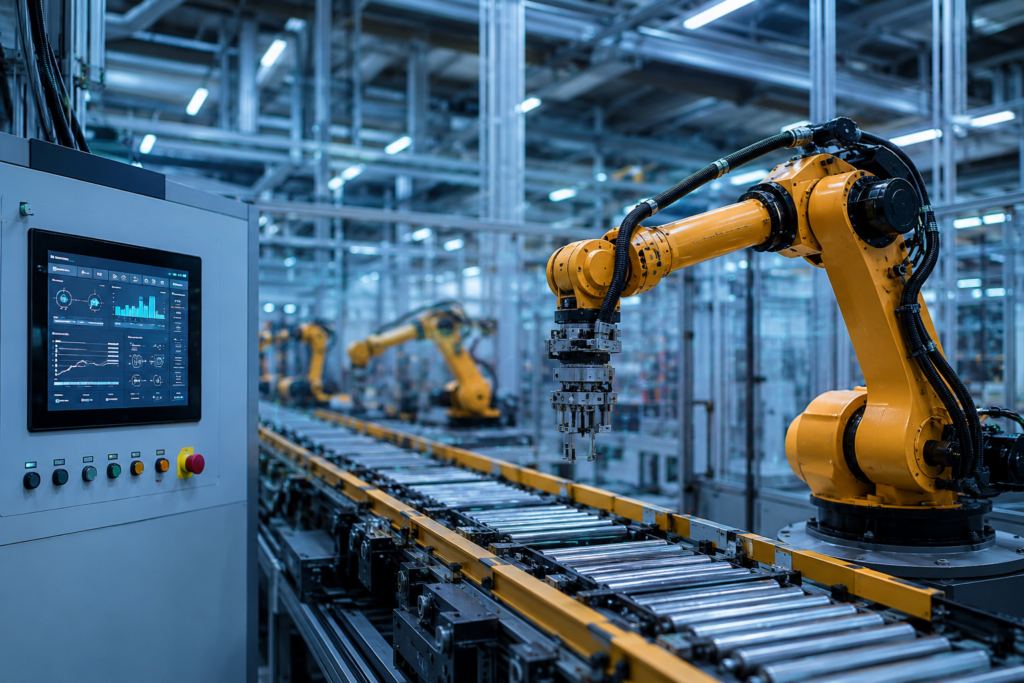
Plant automation is transforming modern industries by improving productivity, reducing operational costs, increasing safety, and delivering better product quality. In today’s competitive manufacturing environment, industries can no longer depend entirely on manual operations. Companies are adopting advanced automation systems to improve efficiency and remain competitive in global markets.
From edible oil refineries and chemical plants to pharmaceutical industries and food processing units, automation is becoming the backbone of modern manufacturing.
Plant automation uses technologies like PLC systems, SCADA software, industrial sensors, robotics, and Industrial IoT to monitor and control industrial processes automatically. These systems help industries achieve faster production, lower downtime, and better operational accuracy.
What is Plant Automation?
Plant automation refers to the use of computerized control systems and smart technologies to operate industrial machinery and processes with minimal human intervention.
Automation systems can control:
- Motors
- Pumps
- Conveyors
- Valves
- Boilers
- Packaging systems
- Temperature and pressure systems
The main goal of industrial automation is to improve manufacturing efficiency while reducing human errors and operational costs.
Why Plant Automation is Important
Industrial competition is increasing rapidly. Companies that continue using outdated manual systems often face:
- Low production efficiency
- High labor costs
- Frequent downtime
- Product quality issues
- Energy wastage
- Slow production speed
Plant automation solves these problems through intelligent process control and real-time monitoring.
Key Benefits of Plant Automation
Increased Productivity
Automated machines work continuously with higher speed and precision, increasing production capacity.
Reduced Human Error
Automation ensures consistent operations and minimizes production mistakes.
Better Product Quality
Automated systems maintain process accuracy, improving product consistency and customer satisfaction.
Lower Operational Costs
Industries can reduce labor expenses, maintenance costs, and material wastage.
Improved Workplace Safety
Automation reduces human exposure to dangerous industrial environments and hazardous chemicals.
Real-Time Monitoring
Modern automation systems provide live operational data for faster decision-making.
Major Components of Plant Automation Systems
PLC (Programmable Logic Controller)
PLC is the core controller of industrial automation systems.
It automatically controls machines based on programmed logic.
PLC systems are widely used because they are:
- Reliable
- Fast
- Flexible
- Easy to troubleshoot
SCADA Systems
SCADA (Supervisory Control and Data Acquisition) systems help industries monitor and control plant operations in real time.
SCADA software provides:
- Live production data
- Alarm notifications
- Remote monitoring
- Historical reports
- Energy monitoring
Industrial Sensors
Sensors collect operational data from industrial equipment.
Common sensors include:
- Temperature sensors
- Pressure sensors
- Flow sensors
- Level sensors
- Vibration sensors
Sensors play a critical role in automation accuracy.
HMI (Human Machine Interface)
HMI screens allow operators to interact with automation systems.
Operators can:
- Monitor machine status
- Adjust process settings
- View alarms
- Analyze production data
Modern HMI systems are highly user-friendly and touchscreen-based.
Industrial Robotics
Robots are increasingly used in manufacturing industries for:
- Packaging
- Material handling
- Welding
- Assembly operations
- Product inspection
Industrial robotics improves production speed and operational precision.
Types of Plant Automation
Fixed Automation
Used for repetitive mass production operations.
Best for high-volume manufacturing industries.
Programmable Automation
Suitable for industries requiring flexible production changes.
Common in batch manufacturing systems.
Flexible Automation
Advanced systems capable of adapting automatically to different production requirements.
Widely used in smart factories and Industry 4.0 manufacturing.
Applications of Plant Automation in Different Industries
Oil Extraction Plants
Automation improves:
- Oil recovery efficiency
- Temperature control
- Production monitoring
- Process safety
Chemical Industries
Automation controls:
- Chemical mixing
- Pressure systems
- Reactor monitoring
- Safety systems
This improves operational accuracy and reduces industrial risks.
Food Processing Industries
Automation helps maintain:
- Hygiene standards
- Product consistency
- Packaging speed
- Temperature control
Pharmaceutical Industries
Automation ensures:
- Precision manufacturing
- Batch consistency
- Quality control
- Sterile production environments
Renewable Energy Plants
Automation systems optimize:
- Power monitoring
- Battery management
- Energy efficiency
- Remote diagnostics
Industry 4.0 and Smart Factories
Plant automation is now evolving into Industry 4.0.
Industry 4.0 combines:
- Artificial Intelligence (AI)
- Industrial IoT
- Robotics
- Cloud Computing
- Big Data Analytics
- Smart Sensors
This creates intelligent factories capable of self-monitoring and predictive maintenance.
Features of Smart Factories
- Real-time monitoring
- AI-driven analytics
- Predictive maintenance
- Energy optimization
- Remote operations
- Automated reporting
Smart factories improve operational efficiency and reduce production downtime.
Future Trends in Plant Automation
AI-Based Automation
Artificial Intelligence is improving:
- Production planning
- Quality inspection
- Fault prediction
- Machine optimization
AI-powered factories are becoming more common worldwide.
Predictive Maintenance
Predictive maintenance systems use sensors and analytics to identify equipment failures before breakdowns occur.
This reduces downtime and maintenance costs.
Digital Twin Technology
Digital twins create virtual models of industrial plants.
Industries can test operational changes digitally before implementing them physically.
Industrial IoT (IIoT)
Industrial IoT connects machines through smart networks.
IIoT enables:
- Remote monitoring
- Real-time analytics
- Smart alerts
- Data-driven decision-making
Challenges in Plant Automation
Although automation provides many benefits, industries may face some challenges.
High Initial Investment
Automation systems require significant upfront costs.
However, long-term operational savings usually provide excellent ROI.
Skilled Workforce Requirement
Industries need trained engineers and technicians for:
- PLC programming
- SCADA operation
- System maintenance
- Troubleshooting
Cybersecurity Risks
Connected industrial systems can face cyber threats.
Industries must implement:
- Secure networks
- Firewalls
- Data encryption
- Access control systems
Plant Automation vs Traditional Manufacturing
| Feature | Traditional Manufacturing | Automated Plant |
|---|---|---|
| Production Speed | Slow | High |
| Human Dependency | Very High | Low |
| Accuracy | Moderate | Excellent |
| Downtime | Frequent | Reduced |
| Energy Efficiency | Lower | Higher |
| Product Consistency | Variable | Consistent |
| Safety Standards | Moderate | Advanced |
Automation clearly delivers better long-term industrial performance.
Why Plant Automation is the Future
Modern industries must focus on:
- Higher productivity
- Energy efficiency
- Operational safety
- Sustainability
- Faster manufacturing
- Better product quality
Plant automation supports all these goals.
Companies investing in automation today gain:
- Better profitability
- Improved production control
- Reduced downtime
- Long-term business growth
The future of manufacturing belongs to intelligent, connected, and automated industrial systems.
Conclusion
Plant automation is revolutionizing industries across the world. Technologies such as PLC systems, SCADA software, robotics, AI, Industrial IoT, and predictive maintenance are helping industries achieve smarter and more efficient manufacturing operations.
From oil extraction plants and chemical industries to food processing and renewable energy plants, automation improves productivity, safety, quality, and profitability.
As Industry 4.0 continues to grow, smart factories will become the new standard of industrial manufacturing.
Businesses that adopt automation early will lead the industries of the future.
Frequently Asked Questions (FAQs)
What is plant automation?
Plant automation is the use of automated systems and technologies to control industrial processes with minimal human intervention.
What are the benefits of industrial automation?
Industrial automation improves productivity, reduces downtime, lowers operational costs, improves safety, and enhances product quality.
What is the role of PLC in automation?
PLC systems automatically control industrial machines and processes based on programmed instructions.
What is SCADA used for?
SCADA systems are used for real-time monitoring, control, reporting, and analysis of industrial operations.
Which industries use plant automation?
Industries such as oil extraction, food processing, pharmaceuticals, chemicals, renewable energy, and manufacturing use automation extensively.
About Fostechnos
Fostechnos provides advanced industrial engineering and plant automation solutions focused on smart manufacturing, operational efficiency, energy optimization, and future-ready industrial growth.



Leave a Reply